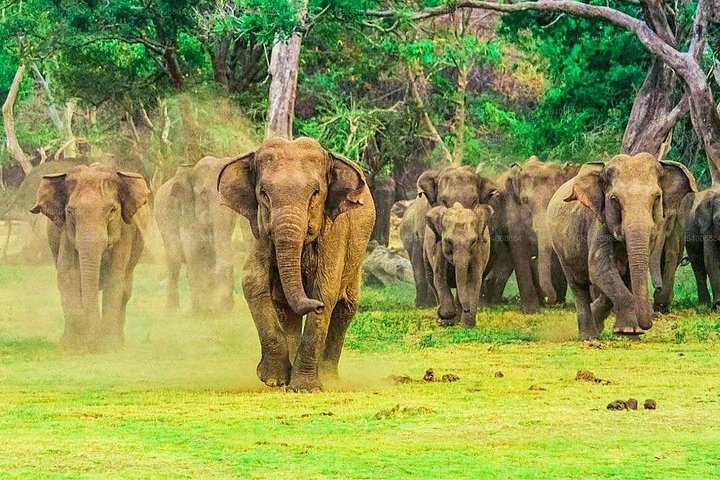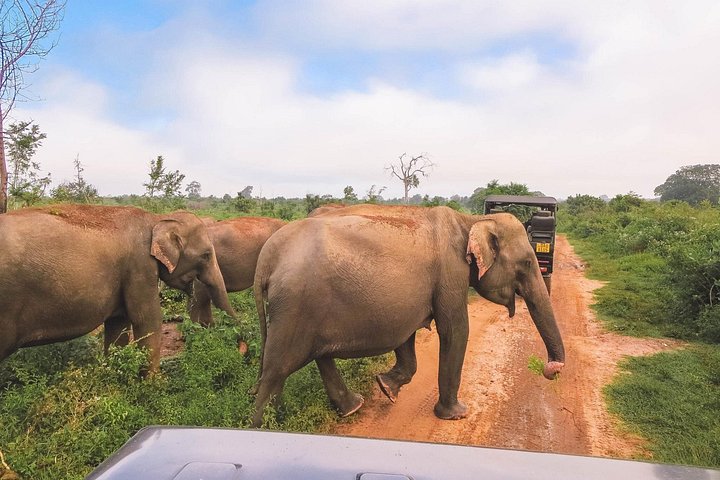
Bundala is smaller and quieter than Yala, and its appeal is different. The park protects a mosaic of brackish lagoons, salt pans, dunes, scrub and mangrove along the south-east coast, and it is recognised internationally as a wetland of importance for waterbirds, as well as a biosphere reserve. Thousands of birds winter here, including flamingos, pelicans, painted storks, spoonbills, sandpipers, plovers and many other waders that arrive from northern Europe and Asia. A jeep safari in Bundala follows sandy tracks that skirt the lagoons and shoreline, with stops for birdwatching at viewpoints and hides. Flamingos are the star in the migratory season, which roughly runs from October to March, and big flocks make spectacular pink lines on the water. Elephants wander through the scrub, crocodiles drift in the lagoons, and mugger and saltwater species occur. Other animals include spotted deer, wild boar, mongoose, jackals and, on rare occasions, leopards and sloth bears. The park suits birdwatchers, photographers and anyone who wants wildlife without the crowds of Yala. It also offers a calmer experience, with open vistas, big skies and a more reflective rhythm.
How it works
The safari is booked in advance, with pickup from the Hambantota, Tissamaharama or south coast area. Check the product details for the pickup point, duration, vehicle type, entry ticket and whether a naturalist guide is provided. Park fees may be included or extra.
What to expect
A half-day outing, with morning and late afternoon the best times for birds and cooler air. Roads are sandy, so the ride is bumpy and dusty. Bring a hat, sunglasses, sunscreen, water and binoculars. A camera with a long lens is very helpful. Stay in the vehicle except at designated places, keep quiet near the birds and follow ranger guidance. Remember that some tracks can be flooded in the rainy season.
Making the most of it
For flamingos and migratory waders, plan between October and March; for fewer visitors and drier tracks, try the early months of the year. Pair Bundala with Yala for a two-park trip, or add a visit to Kalametiya sanctuary on the way. Ask your guide about the history of the salt pans and local communities, and respect their work. If you love birds, bring a field guide, and consider hiring an experienced naturalist for deeper insight. A late afternoon safari often ends with a vivid sunset over the lagoon.
Practical extras
A good naturalist guide can transform a bird safari by naming species and explaining migration patterns, such as how waders travel thousands of kilometres from Siberia and northern Europe. Ask about the wetland’s protected status and the role of the nearby salt pans in the local economy. Bring a field guide or use a bird identification app downloaded in advance, since mobile signal can be weak. Pack insect repellent for the late afternoon, when mosquitoes appear near the water, and wear long sleeves.
Another point to remember is that conditions change with the rains. After heavy rain the lagoons fill and spread, birds scatter across a wider area and some tracks close, while in the dry months the water concentrates and sightings are easier. Ask the operator about current track conditions on the day, and be flexible about the route.
What to expect
The experience
A jeep safari through Bundala’s lagoons, salt pans and scrub, focused on birds, with elephants and crocodiles possible.
Best time
Morning or late afternoon; flamingos and waders are present roughly from October to March.
How long
Around four hours; confirm in the product details.
Tips
Bring binoculars, a hat and water, and stay in the vehicle except at designated viewpoints.
Quick picks
- Best for
- Birdwatchers and photographers who want an uncrowded park.
- Families
- Quieter than Yala, with plenty to see for children who like birds and big animals.
- Couples
- A late afternoon safari has soft light and a pretty sunset.
- Pair with
- Yala National Park for a combined two-park trip.
- Time needed
- Half a day.
Good questions
What is Bundala known for?+
It is a coastal wetland famous for migratory birds, especially flamingos, as well as elephants and crocodiles.
When is the best time for flamingos?+
Roughly from October to March, when migratory birds are present.
Is Bundala busier than Yala?+
Generally much quieter, with fewer jeeps and a calmer atmosphere.
Is the entry fee included?+
Check the product details when you book, as fees may be included or charged separately.
How far is it from Mirissa?+
Roughly two hours by road, depending on pickup and traffic.