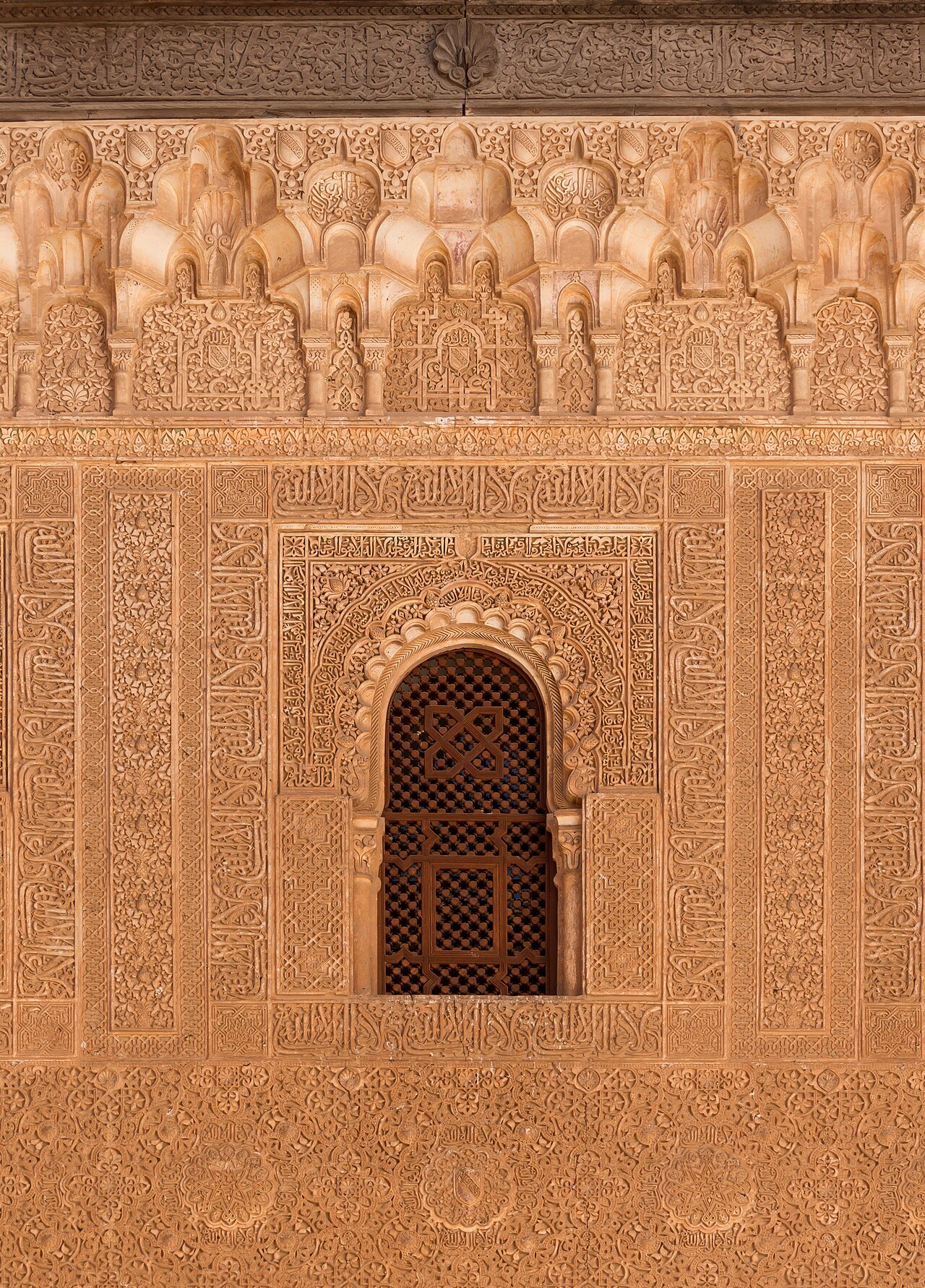
If the Alhambra shows you the last great flowering of Moorish Spain, the Mezquita of Córdoba shows you its beginning. Córdoba was the capital of the Umayyad caliphate in the tenth century, one of the largest and most cultured cities in Europe, and its Great Mosque was begun in the late eighth century and enlarged over two centuries. Its famous prayer hall is a forest of columns, hundreds of them, topped by double-tiered arches striped in red brick and white stone, in a repeating pattern that seems to continue forever. At the end of the hall the mihrab, the prayer niche, glows with gold mosaics of Byzantine craft. In the sixteenth century a Renaissance cathedral was built inside the mosque, an extraordinary architectural collision that gives the building its present name, the Mezquita-Catedral. Outside, the Patio de los Naranjos, the orange-tree courtyard, and the bell tower that began life as a minaret complete the monument. A day trip from Granada normally includes transport and a guided or free visit, and usually leaves time for a walk through the old Jewish quarter, the Judería, with its whitewashed lanes, flower-filled patios and the Roman bridge over the Guadalquivir.
How the day works
Córdoba lies roughly two hours by road to the north-west of Granada, so a day trip means an early start and a late return, with several hours in the city itself. The tour sold from Granada names the Mezquita visit as part of the day.
Because itineraries differ between operators, check carefully what is included, such as entry to the Mezquita, a guide, free time and lunch, and what time you will be back in Granada. A guided entrance to the Mezquita is helpful, since the building's layers of history are easy to miss without explanation.
What to look for in the Mezquita: stand in the older prayer hall and let your eyes follow the lines of arches in each direction. Then find the mihrab and the maqsura, the royal enclosure in front of it, with its elaborate ribbed domes. Then walk into the Renaissance nave and consider the contrast.
The story goes that when Emperor Charles V saw what had been done, he lamented that something unique had been destroyed. Whether or not he said it, the sentence captures the tension of the building, which is at once a masterpiece of Islamic architecture and a fully working cathedral.
Beyond the Mezquita
The Judería around the monument is a maze of narrow lanes lined with craft shops and cafés, and in spring the patios are filled with flowers. Look for the Calleja de las Flores, a tiny alley with a view of the Mezquita bell tower framed by geraniums, and the Roman bridge on the river, with the Calahorra Tower at its far end.
If time allows, the Alcázar of the Christian Monarchs and the old synagogue are short walks away. Lunch is a good moment to try local dishes such as salmorejo, a thick cold tomato soup, and rabo de toro, oxtail stew.
Practical tips
Wear comfortable shoes, as the day involves a lot of walking on stone. Carry water and sun protection in warmer months, because Córdoba is among the hottest cities in Spain in summer. Respect the dress code for the Mezquita, with covered shoulders and knees, since it functions as a cathedral.
Spring and autumn are the best seasons, and the famous patio festival in May is a highlight but also very busy. If you have four or more days, a Córdoba day makes a fine contrast to the Granada core, and it can be combined with a transfer on to Seville.
What to expect
The experience
A full-day coach or minibus trip from Granada to Córdoba, with a visit to the Mezquita-Catedral and time in the old Jewish quarter.
Best time
Spring and autumn for comfortable temperatures; avoid the peak of summer heat.
How long
About twelve hours door to door, including roughly four hours of travel.
Tips
Start early, wear comfortable shoes, cover shoulders and knees for the Mezquita and confirm what the tour includes.
Quick picks
- Best for
- History lovers who want to see Moorish Spain at its height and are happy with a long day.
- Families
- Best for older children, because of the long drive and walking.
- Couples
- Romantic lanes and patios in the Judería, and a Mezquita visit that stays with you.
- Pair with
- The Alhambra, to complete the story of Islamic Spain.
- Time needed
- A full day.
Good questions
How long is the journey from Granada to Córdoba?+
Roughly two hours each way by road, so plan for a full day with an early start.
Is Córdoba worth a day trip from Granada?+
Yes, if you are interested in Moorish history. The Mezquita is one of the greatest monuments of Islamic Spain and complements the Alhambra.
Is entry to the Mezquita included?+
The tour is sold with a Mezquita visit, but check what your chosen departure includes, such as entry, guide and free time.
What should I wear to the Mezquita?+
Cover your shoulders and knees, because it is also a working cathedral.
When is the best time to go?+
Spring and autumn. Summers are very hot, and the May patio festival is lovely but crowded.