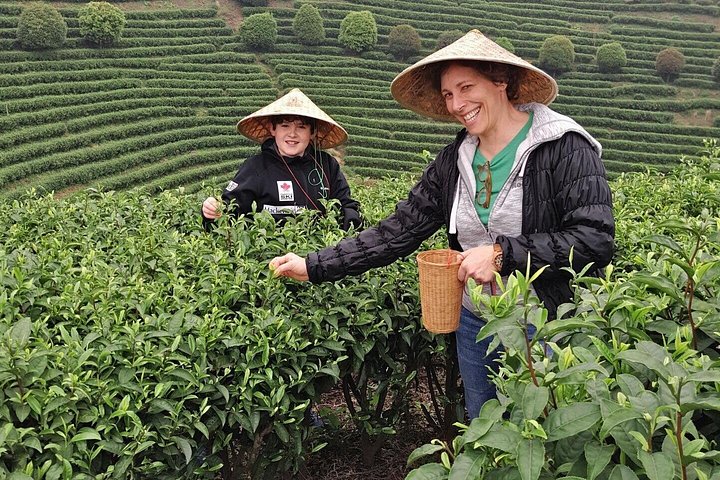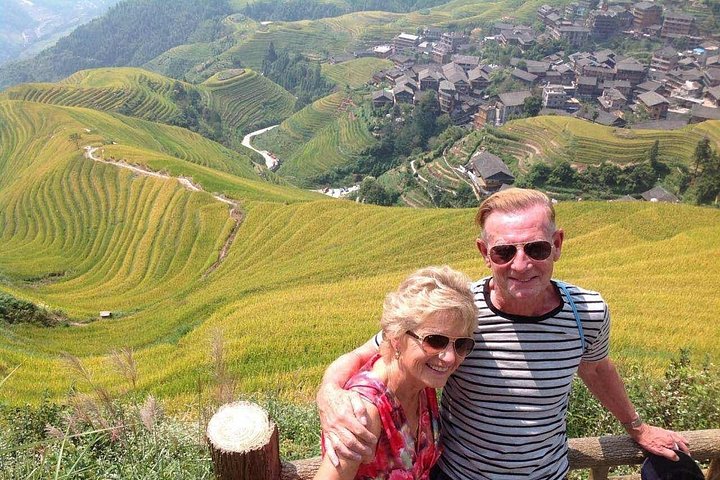
Longji, the Dragon's Backbone, is a vast web of terraced paddies that climb the mountains of Longsheng county in curving ribbons that follow the contours of the slope. The terraces were built over centuries by the Zhuang and Yao peoples and are still farmed, so the scenery changes with the season: mirror-like water in late spring, deep green in summer and gold at harvest. The best-known areas are Ping'an, with its easy, paved paths and wooden village houses, and Dazhai with Jinkeng, where the terraces are bigger and the trails more rugged. Most visitors do a long day trip from Guilin with a stop at a nearby Yao village, and this private tour, with a driver and guide, takes care of the logistics so you can concentrate on the views and the walking.
Choosing your terraces
Ping'an is the easiest and most popular for a day trip, with paved walkways, moderate walking and a village of wooden houses to explore. Dazhai and Jinkeng are further away, with the largest terraces and the most dramatic scenery, though the trails are rougher and a visit is better spread over two days. There is a cable car at Jinkeng for those who prefer not to climb. A day trip from Guilin involves roughly two hours each way by road, so an early start is important.
When to go
The terraces look their best in late May, when the paddies are flooded, and again in late September and early October, when the rice turns gold before harvest. In November the fields are usually brown and empty, and from December to February you may see frost or even snow, so if you travel in the colder months, set expectations for a bleaker, quieter landscape and look to the villages and the mist for atmosphere rather than colour.
What else to expect
Many tours include a stop at Huangluo, the Long Hair Yao village, where women are known for their very long hair, though the displays are staged for visitors and an hour is enough. Wear sturdy shoes with grip because paths can be slippery after rain, bring layers because the mountains are cooler than Guilin, and carry water and snacks. The villages have simple restaurants, but menus are limited, so be flexible about lunch. If you want to avoid crowds, aim for an early start and a weekday visit.
What to expect
The experience
A full-day private tour from Guilin by road to the terraces at Longsheng, with time to walk, a visit to a minority village and lunch.
Best time
Late May for flooded terraces and late September to early October for golden rice; the colder months are quieter but browner.
How long
A long day of about ten hours including roughly two hours of driving each way.
Tips
Start early, wear sturdy shoes with grip, bring layers and water, and confirm what the terraces look like on your dates before you go.
Quick picks
- Best for
- Travellers who want the iconic terraced landscape and a glimpse of village life, and who do not mind a long day.
- Families
- Fine for older children who enjoy walking, but the drive is long and the paths are steep in places.
- Couples
- Stunning scenery and mountain air, especially at the golden-rice season, with a night in a village for those who want more time.
- Pair with
- A Li River cruise on a different day, and a night in Ping'an if you want sunrise over the terraces.
- Time needed
- A full day, or two days if you want to hike between villages.
Good questions
How far are the Longji terraces from Guilin?+
Ping'an is about two hours by car and Dazhai and Jinkeng about two and a half. Public coaches take longer, so a private or small-group trip saves time.
When is the best time to see the terraces?+
Late May for water-filled terraces and late September to early October for golden rice are the favourite seasons. Late autumn and winter are browner and colder, with possible frost.
Which terrace area should I choose for a day trip?+
Ping'an is the easiest, with paved paths and a good village. Choose Dazhai and Jinkeng if you want bigger terraces and are happy with rougher trails, ideally over two days.
Is the Long Hair Yao village worth a stop?+
It is a short, quick stop, and the performances are staged for visitors. An hour is plenty if you want the photographs and the cultural context.
Is there a cable car?+
Yes, at Jinkeng, running up to a viewing platform. It is useful for older travellers or anyone who would rather not climb.