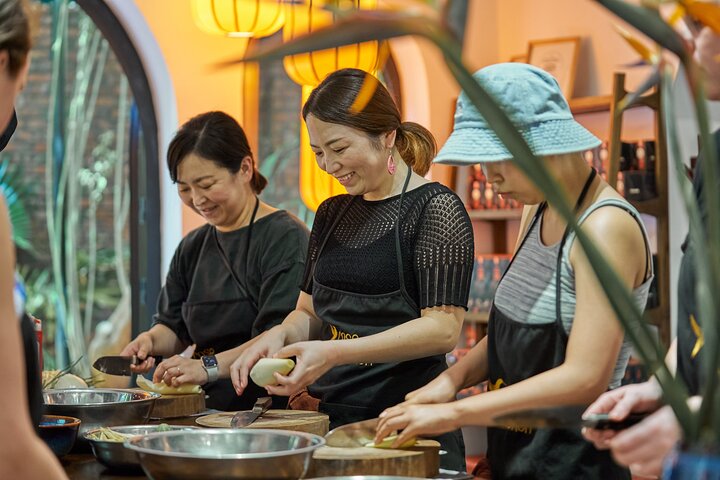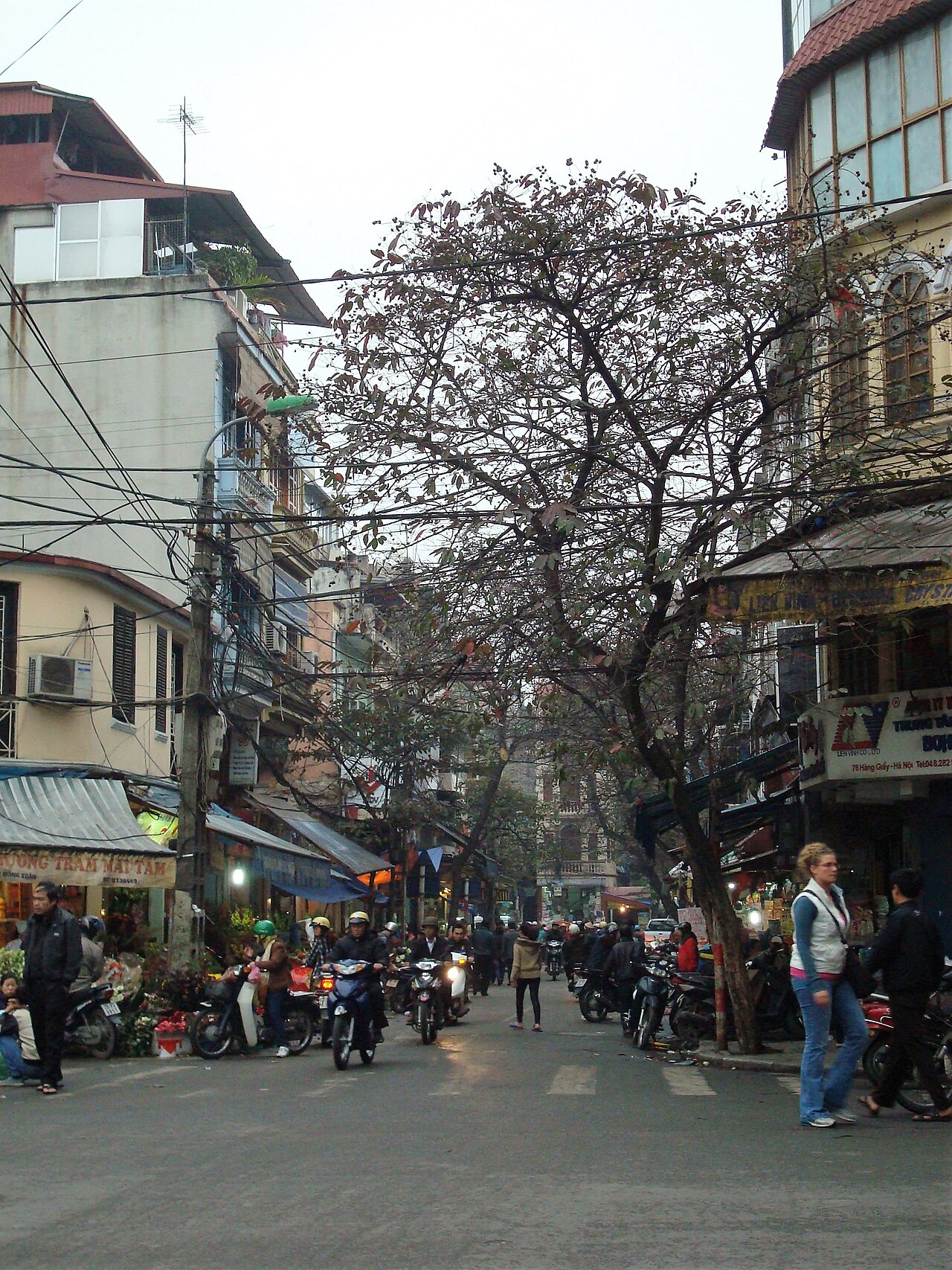
Hanoi eats outdoors, and the quickest way to understand why is to follow a local guide from stall to stall. This guided street food and Train Street tour is built around the Old Quarter and the streets beside it, where one family has served the same bowl of noodles or the same grilled pork for decades and the menu is a single dish done well. Instead of guessing which plastic stool to sit on, you move through the evening with someone who knows which stalls are busy for a reason, what to order and how each dish is meant to be eaten, from the herbs that go into a bowl of pho to the dipping sauce for fresh spring rolls. Between tastings the walk takes in the details of the neighbourhood that a first-time visitor tends to miss: the guild streets named after the goods once sold there, the tiny temples tucked between shopfronts and the market lanes that start to wind down as evening arrives. The second theme of the tour is Train Street, the stretch of the north-south railway line where narrow houses and cafes press up against the rails and the daily trains pass within arm’s reach of the doorways. Together the two make an easy, atmospheric introduction to the city for a first night, and a good way to learn what to order for the rest of your stay.
How it works
The tour is a guided walk with a local, run in English, and it covers street food tastings and the railway lane in one outing. Check the meeting point, start time and group size when you get tickets, as these are set by the operator and can vary by season.
The tastings are included in the tour, but drinks and any extra helpings are usually paid on the spot, so carry some small notes in Vietnamese dong. Tell the operator about allergies or dietary needs in advance, because most stalls cook a single dish and cannot change it.
What to expect
You will usually try several small dishes at a relaxed pace rather than a full meal at one place, so come with an appetite but not a full stomach. Typical stops include a noodle or grilled-meat stall, something fried or fresh from a spring roll vendor, and a sweet or a drink to finish. The guide explains how to season each bowl and how to use the herbs and chillies on the table.
Train Street is a living neighbourhood, not a stage: access to the railway lane has changed several times over the years, with cafes and local authorities adjusting the rules, so the route is set by what is allowed on the day. If you are at the rails when a train is due, you will be asked to step well back and follow the instructions of the guide and the locals.
Making the most of it
Wear closed shoes, since the pavements are uneven and busy, and keep your phone and bag away from the kerb, where scooters pass close. Bring a light layer in winter, when evenings are cool, and a small pack of tissues, which stalls often do not provide. Be respectful at the tracks: do not walk on the rails, do not block doorways and keep your voice down in the residential lanes.
If you want a deeper food evening on another night, the Vespa food tour covers more ground by scooter, and the cooking class turns what you have tasted into something you can make at home.
Planning notes
This tour works best on your first or second evening, because it gives you a list of dishes and habits to carry through the rest of the trip. Note the names of the stalls you like, and ask the guide for a few phrases to order with, such as how to ask for no chilli or extra herbs. If you are sensitive to spice or sharing utensils, say so early, and carry a small bottle of water to rinse your hands between stops.
What to expect
The experience
A guided walking tour of the Old Quarter with several street food tastings and a visit to the railway lane known as Train Street.
Best time
Late afternoon or evening, when the stalls are busiest and the Old Quarter is at its liveliest. Cooler months make the walk more comfortable.
How long
Around three hours at an easy walking pace, with frequent stops to eat.
Tips
Come hungry, wear closed shoes and tell the operator about dietary needs when you get tickets.
Quick picks
- Best for
- First-time visitors who want a guided introduction to Hanoi’s street food and a look at the railway lane.
- Families
- Children who like noodles and spring rolls enjoy it, but the pavements are crowded and the pace is steady, so keep small ones close.
- Couples
- An informal evening out with plenty to taste and photograph, and an easy walk back to the lake.
- Pair with
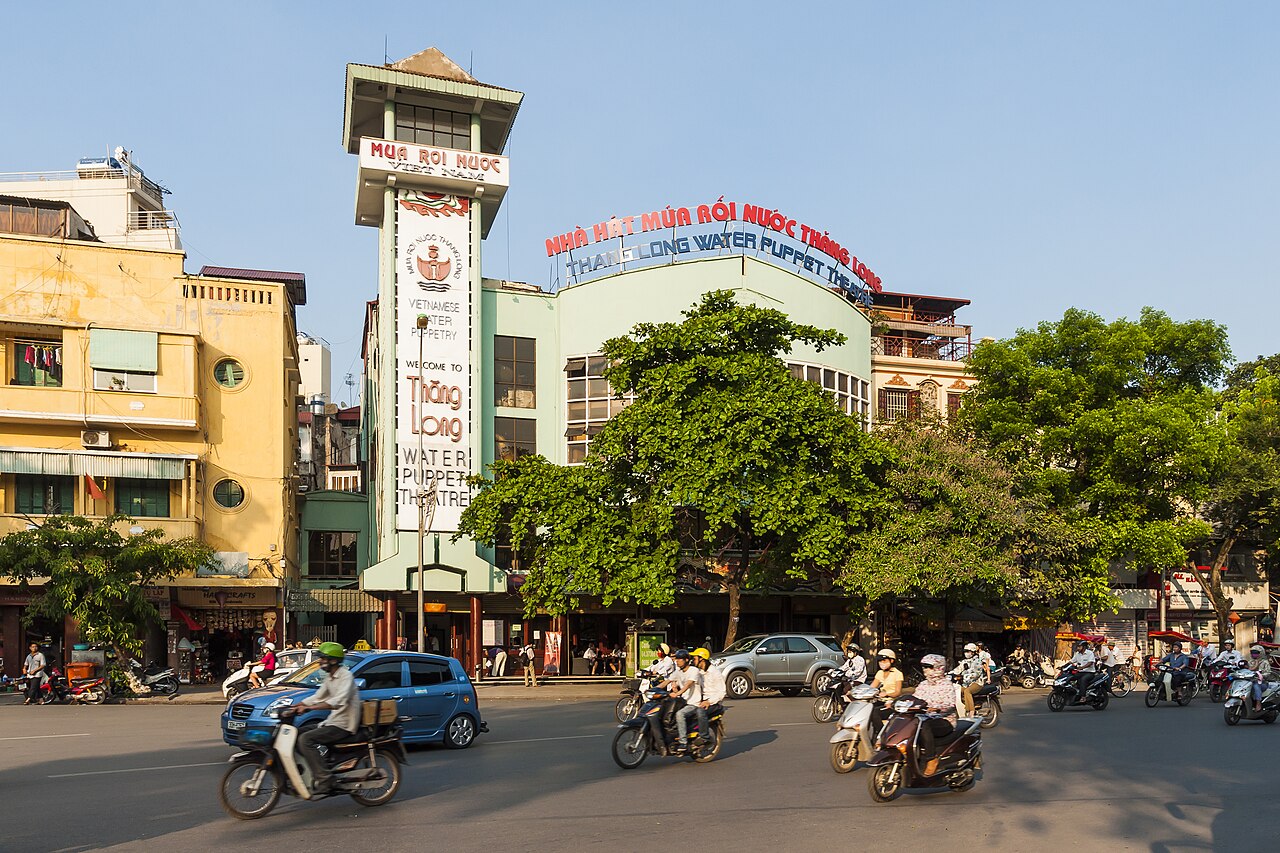
- A water puppet show before or after, or a drink at a bia hoi corner when the tour ends.
- Time needed
- An evening, about three hours.
Good questions
What is included in the street food and Train Street tour?+
A local guide and the food tastings on the route are included. Drinks and extras are usually paid at the stall, so carry small notes.
Can vegetarians join the Hanoi street food tour?+
Often yes, but many stalls cook a single dish, so tell the operator when you get tickets so the guide can plan the stops.
Is it safe to stand on Train Street?+
Follow the rules of the day and the instructions of your guide. Stay well back from the rails when a train is due and never walk on the tracks.
Is Train Street always open to visitors?+
No. Access to the railway lane has changed several times, so the route depends on what is allowed on the day. Ask the operator about the current arrangements.
How much food do you get on the tour?+
Several small tastings rather than a full meal at each stop. Most people finish pleasantly full, but you can add extras at your own cost.