The Jade Emperor Pagoda, also called Ngoc Hoang Temple and formally Phuoc Hai Tu, is one of the most atmospheric places in central Saigon and a good contrast with the French colonial landmarks a few streets away. The city tourism site says it was built around 1892 to 1900 by Luu Minh, a man from Guangdong, as a shrine to the Jade Emperor and a meeting house for his congregation. It was renamed Phuoc Hai Tu in 1984, though locals still call it the Jade Emperor Pagoda, and it was recognised as a National Architectural and Artistic Monument in 1994. Inside, incense hangs thick in the air in front of statues of door gods, the Earth God and the Tiger General. The central hall holds the main sanctuary to the Jade Emperor, with other deities and the Medicine Buddha, and the rear hall holds the Ten Kings of Hell with ten wooden reliefs of the gates of hell, along with shrines to the matchmaking deities and Guanyin. In total there are about 300 intricately carved wooden statues, under yin-yang tiled roofs with glazed ceramic figures.
How it works
The pagoda is at 73 Mai Thi Luu Street in Tan Dinh Ward, District 1, and is open daily from 7:00 to 17:30. On the first and fifteenth days of the lunar month it opens earlier, at 5:00, and closes at 19:00, when worshippers fill the halls. Visiting is generally free, and the tourism site does not mention an admission fee. Mai Thi Luu Street is narrow, so a ride-hailing car or taxi to the door is easiest, and buses 18, 93 and 150 stop on nearby streets.
What to expect
This is a working temple, not a museum, so people are praying, lighting incense and making offerings while you look around. Dress modestly and avoid short or revealing clothes, keep your voice low, do not push into queues and ask for permission before photographing or filming inside the shrines. The rear hall with the Ten Kings of Hell is the most unusual part, and the carved reliefs give a vivid picture of ideas about judgement and the afterlife.
Making the most of it
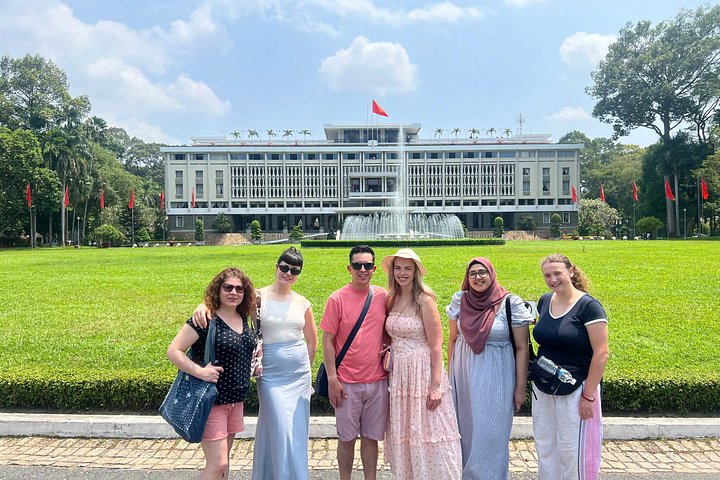
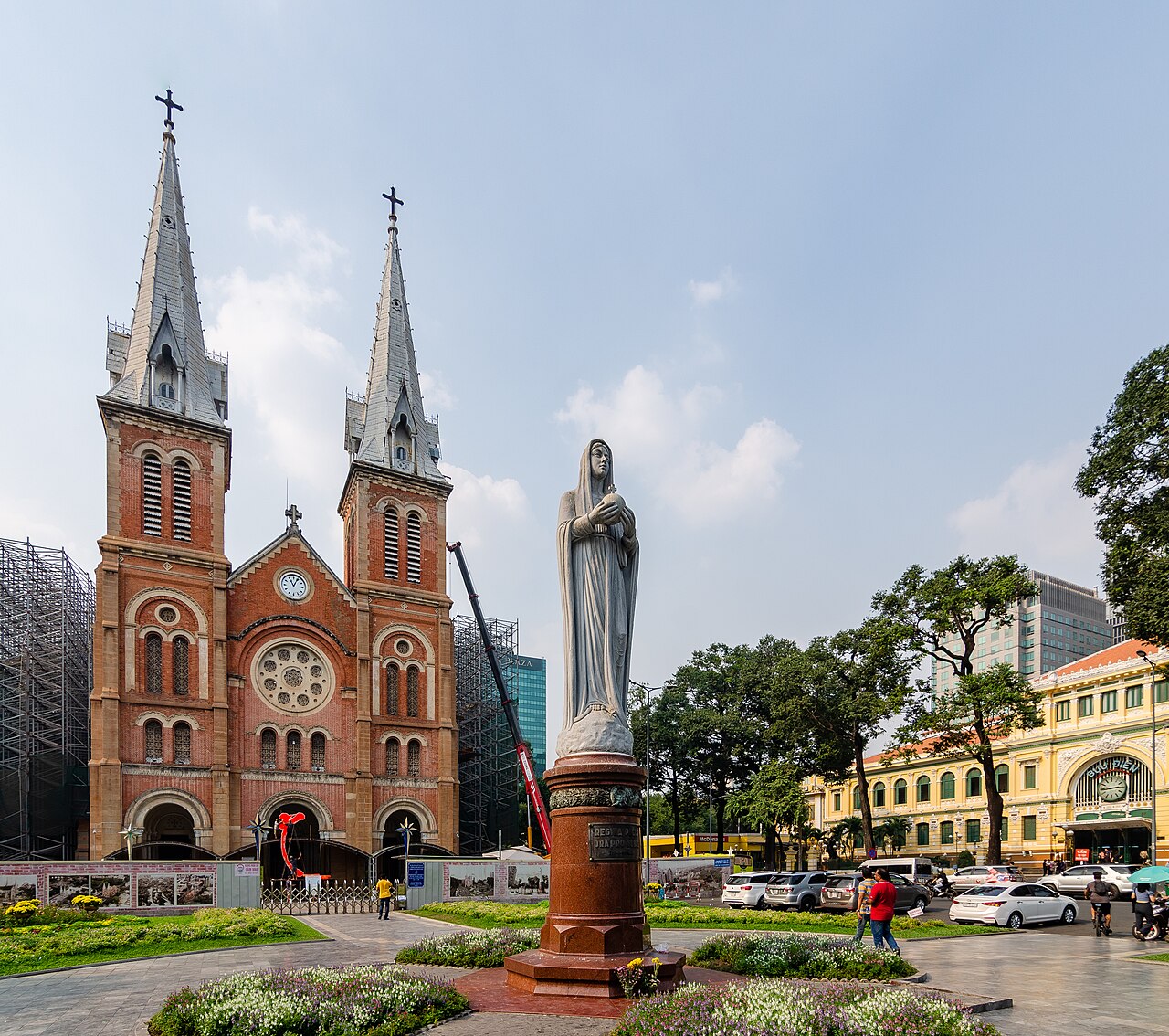
Weekdays and early mornings are quietest, and the first and fifteenth lunar days are the most atmospheric but also the most crowded. The Jade Emperor Festival is held most grandly on the ninth day of the first lunar month. The pagoda is close to the Opera House, the Central Post Office, Notre-Dame, the Independence Palace and the Museum of Fine Arts, so it fits comfortably into a walking day. Allow about forty-five minutes to an hour, and carry small notes in case you wish to make an offering.
It is also worth thinking about etiquette in practical terms. Follow what local worshippers do at the door, take care not to step on thresholds if you see others avoiding them and avoid pointing your feet at altars when you sit. Keep bags close, since incense and crowds make a quiet place for pickpockets on busy lunar days. If you want a calmer experience, come at opening time on a weekday and spend your last few minutes in the rear hall, where fewer visitors linger.
What to expect
The experience
A free walk through the halls of a working Chinese-style temple, with carved wooden statues, incense and the Ten Kings of Hell reliefs.
Best time
A weekday morning for quiet, or the first and fifteenth lunar days for the busiest and most atmospheric visit.
How long
About forty-five minutes to an hour.
Tips
Dress modestly, keep your voice low and ask before photographing inside the shrines.
Quick picks
- Best for
- Visitors who want an atmospheric, living temple close to the colonial sights.
- Families
- Fine for children who can stay quiet around worshippers, though the incense smoke can bother some.
- Couples
- A calm, photogenic stop in the middle of a walking day.
- Pair with
- The Central Post Office, Notre-Dame and the Independence Palace nearby.
- Time needed
- About an hour.
Good questions
How much does the Jade Emperor Pagoda cost?+
Visiting is generally free, and the tourism site does not mention an admission fee. Small donations and incense offerings are optional.
What are the opening hours?+
Daily from 7:00 to 17:30, and from 5:00 to 19:00 on the first and fifteenth days of the lunar month.
What should I wear?+
Dress modestly, with shoulders and knees covered, and avoid short or revealing clothes.
Can I take photographs?+
Ask the temple management for permission before photographing or filming inside the shrines.
How do I get there?+
The pagoda is at 73 Mai Thi Luu Street in District 1. A taxi or ride-hailing car is easiest because the street is narrow.