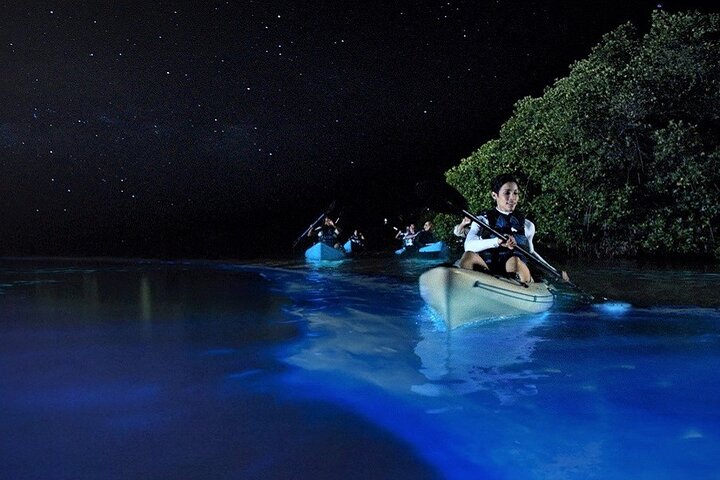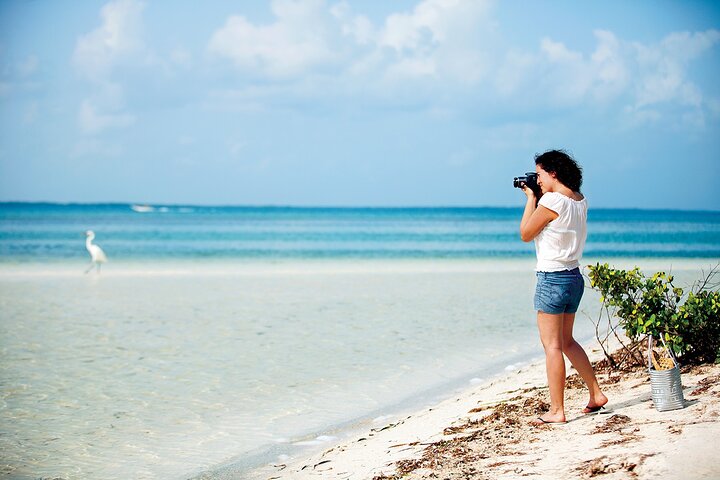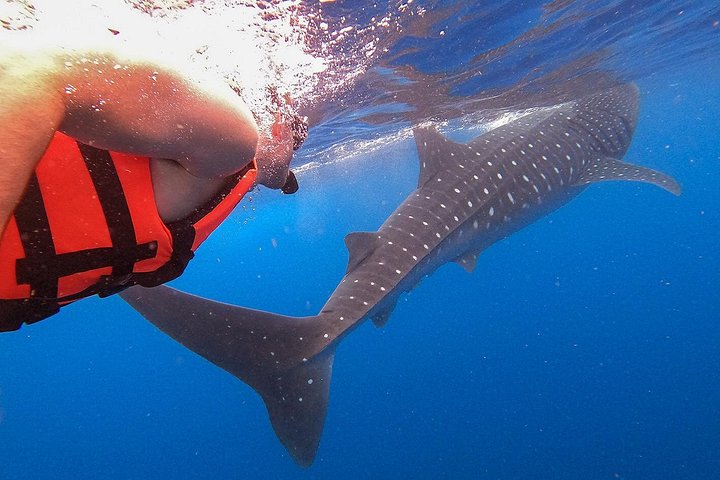
Holbox has no private cars, few street lights beyond the village and a wide open horizon over the lagoon, which gives it unusually dark skies for a Caribbean coastline. On a clear, moonless night the Milky Way can stretch from one side of the sky to the other, and the stars reflect on still water. The product in this guide is a stargazing evening that is combined with the island's famous glowing water. It is rated 4.8 from about 134 reviews on the booking site, which makes it one of the best-reviewed night activities on Holbox. The pairing works well: you spend time under the stars with a guide who can point out constellations and planets, then move to the water to watch the plankton spark. Both depend on the same conditions, which means a clear, dark night is the best time to book.
Why go
Dark skies are a rare luxury, and Holbox offers them without a long trip into the wilderness. The glow in the water adds a second reason to be out after dark, and the two experiences share the same ideal conditions, so it is efficient to combine them. For many visitors it is the quietest and most memorable evening of the trip.
How to do it
The evening typically starts after sunset with a short transfer or walk to a dark spot on the coast. A guide explains what you are looking at, may use a laser pointer to show constellations, and helps you find planets and bright stars. Later you spend time in or beside the water to see the plankton glow.
Because the format, group size and transport can differ between operators, confirm the details when you reserve, and ask how the evening changes if clouds roll in. The rating of 4.8 from a large number of reviews suggests that most guests are happy with the experience.
When to go
Choose a night close to the new moon, when the sky is darkest and the glow is strongest. A bright moon washes out the stars and weakens the glow, so avoid the days around the full moon. Clouds and rain are the other enemies, and the island's weather changes with the season, so plan the evening early in your stay with a spare night in case of cancellation. Ask your hotel to check the moon phase if you are unsure.
Practical points
Bring a light jacket or long sleeves, since breezes off the lagoon can feel cool when you are standing still. Insect repellent is important near the mangroves, especially at dusk. Wear clothes you do not mind getting wet if you plan to enter the water, and avoid sunscreen or lotion before you do. Keep torches and phone screens dim to preserve your night vision, and ask the guide before taking photos.
A phone camera will struggle with a night sky, but a tripod and a long exposure can capture surprising detail if you want to try. Bring water, a small towel and a waterproof bag for electronics. After the tour, take care on the unlit sand roads, ride slowly and carry a small light.
What to expect
The experience
A guided night out combining stargazing with a visit to the glowing water.
Best time
Clear nights close to the new moon, when the sky is darkest and the glow is strongest.
How long
Plan on about two hours, though operators vary, so check the details.
Tips
Bring a light layer and insect repellent, keep lights dim and keep a spare night in case of cloud.
Quick picks
- Best for
- Couples, photographers and anyone who loves a dark sky.
- Families
- Good for older children who can stay up late and stay calm near the water.
- Couples
- One of the most romantic evenings on the island.
- Pair with
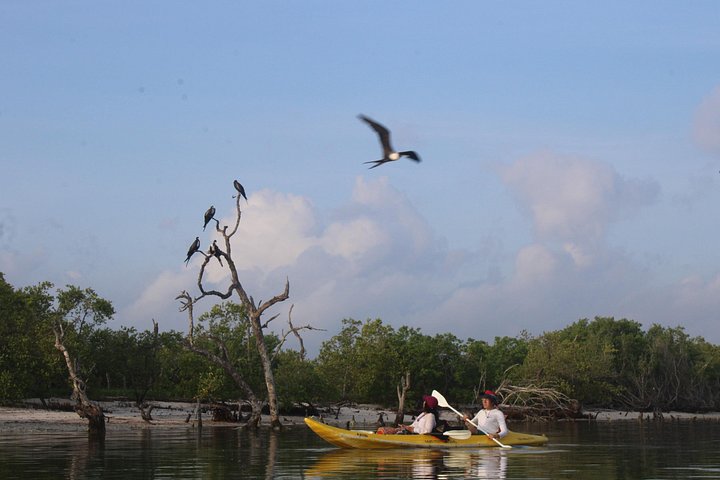
- A dawn mangrove kayak and a day at Punta Mosquito.
- Time needed
- One evening, about two hours.
Good questions
When is the best night for stargazing?+
Choose a clear night close to the new moon. A bright moon and clouds both reduce what you can see.
Is the glow guaranteed?+
No. Bioluminescence is a natural phenomenon that changes with the moon, the weather and the time of year, so treat it as a bonus.
Will I get wet?+
Possibly, if you enter the water to see the glow. Wear clothes that dry quickly and bring a towel.
Can I take photos?+
Yes, but a phone struggles in the dark. A tripod and long exposure help, and you should ask your guide before using lights.
What if the weather is bad?+
Tours can be rescheduled or cancelled for clouds or rain, so plan this early in your stay and read the cancellation terms.