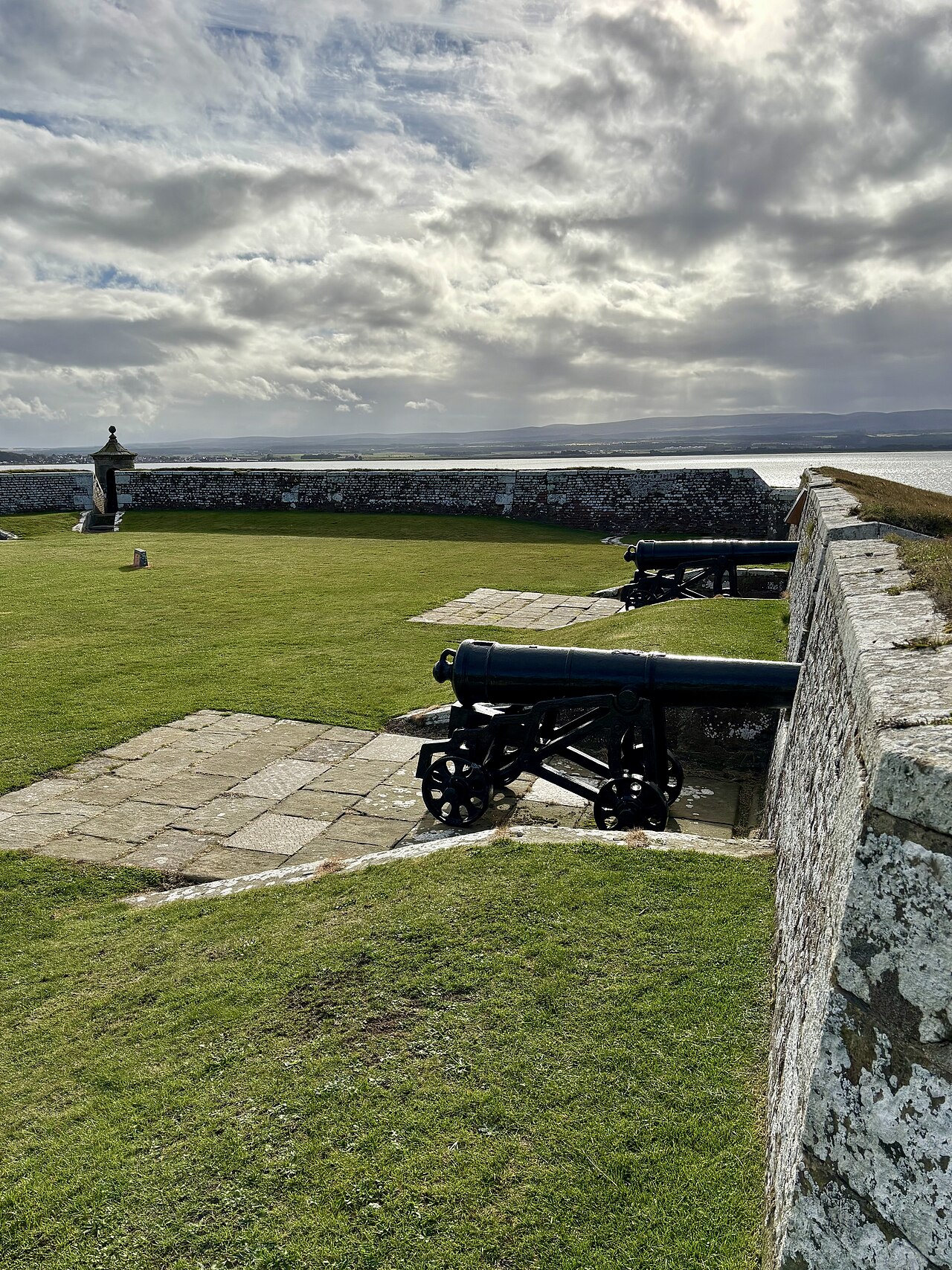
Fort George juts into the Moray Firth at Ardersier, about eleven miles north-east of Inverness. The British government began building it after the defeat of the Jacobites at Culloden in 1746, intended to hold down the Highlands, and it took more than twenty years to finish. It is widely regarded as one of the best-preserved artillery fortifications in Europe, with massive ramparts, gun batteries, a chapel, barrack rooms and powder magazines. It never saw a shot fired in anger, and it is still a working army base, so you walk the ramparts among serving soldiers. Inside, the Highlanders' Museum tells the story of Highland regiments, and displays show how soldiers lived in the eighteenth century. The ramparts circle the whole site, giving views across the Moray Firth, where bottlenose dolphins are often seen.
Allow at least two hours. A complete circuit of the ramparts is a mile or so, with exposed sections where the wind off the firth can be fierce, so layers are important. Look into the reconstructed barrack rooms, the Grand Magazine and the chapel, then finish at the museum, which is excellent for anyone interested in military history, uniforms and the Scottish regiments.
Historic Environment Scotland lists winter opening from 1 October to 31 March, daily from 10am to 4pm, with last entry an hour before closing. The fort is closed on 25 and 26 December and on 1 and 2 January, with shorter hours on Christmas Eve. Booking online gives a better price than paying at the gate. Because it is a working military base, visitors should expect occasional loud noises, bangs and low-flying helicopters.
Fort George is a natural partner for Culloden, because it shows what happened next. It is also close to Chanonry Point, one of the best places in Britain to see dolphins from the shore, and to Cawdor Castle, though Cawdor is closed in winter.
What to expect
The experience
A self-guided visit to a working Georgian fortress, with ramparts, barrack rooms, a chapel and the Highlanders' Museum.
Best time
Dry, calm days for the rampart walk, with morning light for the firth.
How long
Two to three hours including a full circuit of the walls.
Tips
Book online, wear windproof clothing, and expect noise because the fort is still an army base.
Quick picks
- Best for
- Military history fans and those who want a big, atmospheric site close to Inverness.
- Families
- Children like the cannons, the open ramparts and the chance to spot dolphins.
- Couples
- A bracing walk on the walls, then a drink by the coast.
- Pair with
- Culloden Battlefield, Clava Cairns and Chanonry Point.
- Time needed
- Half a day with travel.
Good questions
What are Fort George's winter hours?+
From October to March it opens daily from 10am to 4pm, with last entry one hour before closing. It closes on 25 and 26 December and 1 and 2 January.
Is Fort George still used by the army?+
Yes, it is a working military base, and visitors should expect occasional loud noises and low-flying helicopters. Public areas remain open to visitors.
Can you see dolphins from the fort?+
Bottlenose dolphins live in the Moray Firth and are sometimes seen from the ramparts, though sightings are never guaranteed. Chanonry Point nearby is more reliable.
How far is it from Inverness?+
About eleven miles, a twenty-five minute drive. Buses serve nearby Ardersier, but a car or taxi is easier.
Should I book in advance?+
Booking online gives a better price than paying on the day. It also guarantees entry at busy times.