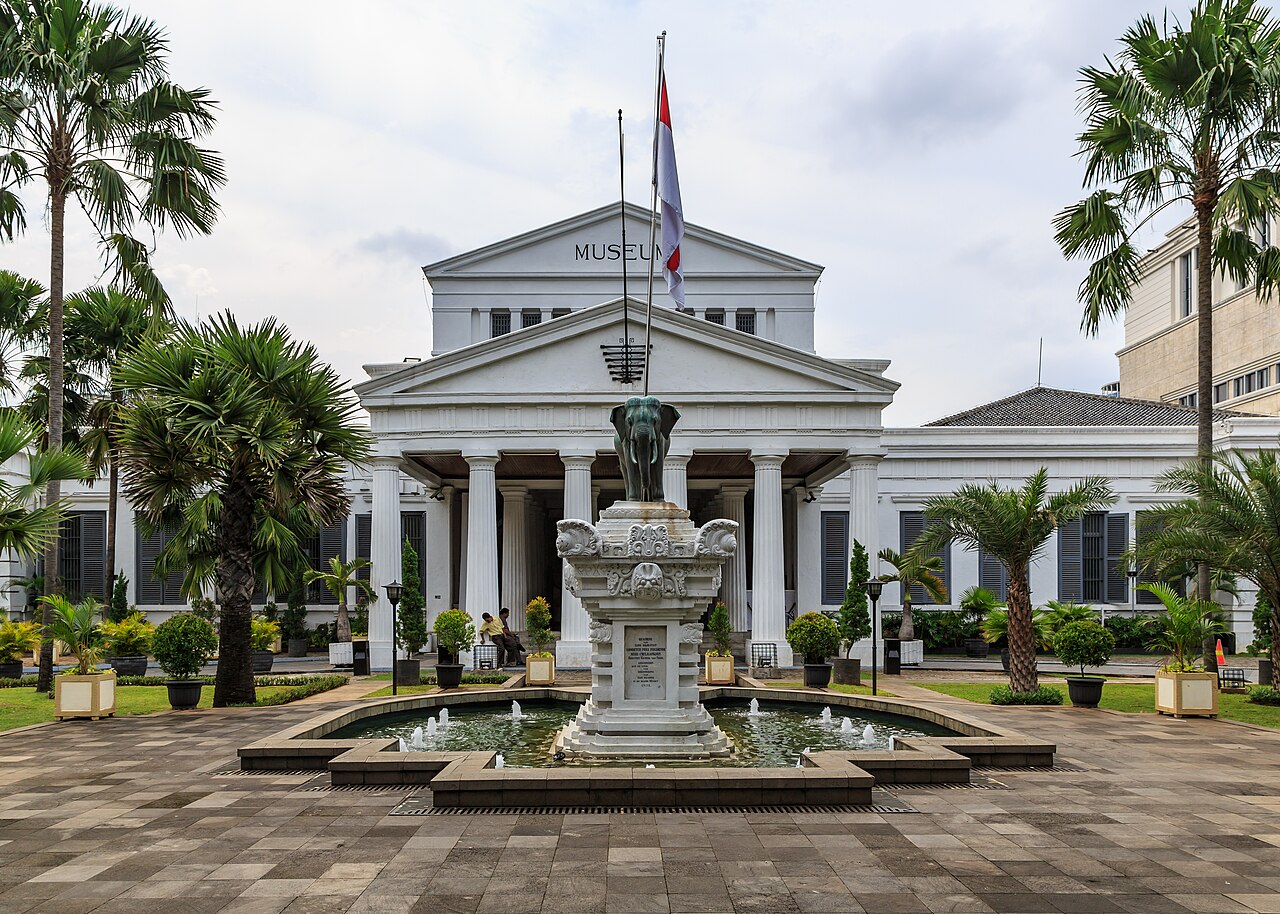
The National Museum, known as Museum Nasional, is the best single place in Jakarta to understand the breadth of the archipelago. Indonesia Travel dates the institution to 1778 and describes a collection of around 140,000 items spanning history, archaeology, ethnography and geography. The nickname Elephant Museum comes from the bronze elephant statue standing in the courtyard. Highlights include Hindu-Buddhist stone sculpture such as the Bhairawa statue, traditional textiles, weapons and ceremonial objects from across the islands, ceramics from China, Europe and the Middle East, historical coins, and the Trowulan gold jewellery of the Majapahit kingdom. Beyond the classic galleries there are modern exhibition halls, a library, a cafe and a shop, and the museum runs temporary exhibitions and evening events. It is a reliable rainy-day choice and a good first lesson before you visit sites such as Borobudur or Bali.
Hours and tickets
The museum's schedule, effective 1 April 2026, is Tuesday to Thursday from 08:00 to 18:00 and Friday to Sunday from 08:00 to 20:00, with an evening session on the second Wednesday of each month. It is closed on Mondays and on national public holidays. Foreign visitors pay a higher rate than Indonesian citizens, and the 2026 schedule shows 150,000 rupiah for foreign adults, with a cheaper rate for foreign residents holding a long-stay permit.
An optional immersive add-on, called imersifA, costs extra and requires a museum ticket. Prices and hours can change, so confirm them on the museum's tickets page before you go.
How to visit
The collection is large, so choose a theme rather than trying to see everything. If you have ninety minutes, go straight for the gold and archaeology galleries and a walk through the ethnography halls. With half a day, add ceramics and the history rooms. Galleries are air-conditioned, which makes this a welcome break from the midday heat, and the cafe is handy for a pause. Photography rules vary by gallery, so look for signs.
Getting there and combining
The museum stands on Jalan Medan Merdeka Barat, facing Merdeka Square in Central Jakarta, within walking distance of Istiqlal Mosque and the cathedral. Many visitors pair it with those two in a single central morning, or with the old town in the afternoon. Avoid Monday because of the closure, and weekend afternoons are the most crowded, with school groups on weekdays.
What to expect
The experience
A self-guided walk through air-conditioned galleries of archaeology, ethnography, ceramics, gold and history, with a courtyard, cafe and shop.
Best time
Tuesday to Thursday for quieter galleries, or a Friday to Sunday evening when the museum stays open until eight.
How long
Ninety minutes for the highlights, up to three hours for a fuller visit.
Tips
Closed on Mondays and public holidays. Check the tickets page for current hours and prices, and pick a theme rather than trying to see everything.
Quick picks
- Best for
- History and culture lovers, rainy days and anyone who wants context before visiting temples elsewhere in Indonesia.
- Families
- Children enjoy the elephant in the courtyard, the gold and the costumes; keep visits to two hours.
- Couples
- An evening visit on a Friday to Sunday, when the museum stays open later, is calm and cool.
- Pair with
- Istiqlal Mosque and the cathedral, Merdeka Square, or the old town in the afternoon.
- Time needed
- Ninety minutes to three hours.
Good questions
What are the National Museum's opening hours?+
Under the schedule effective 1 April 2026 it opens Tuesday to Thursday from 08:00 to 18:00 and Friday to Sunday from 08:00 to 20:00. It is closed on Mondays and national public holidays.
How much is entry for foreigners?+
The 2026 schedule shows 150,000 rupiah for foreign adults, higher than the Indonesian citizen rate. Check the tickets page for the current price before you visit.
Why is it called the Elephant Museum?+
The nickname comes from the bronze elephant statue in the museum's courtyard. The collection itself runs to about 140,000 objects.
What should I not miss?+
The Hindu-Buddhist sculpture, the textile and ceremonial objects, the ceramics and the Majapahit gold jewellery from Trowulan. Add the history rooms if you have time.
Is it a good rainy-day activity?+
Yes, the galleries are indoors and air-conditioned, which makes it one of the best wet-weather and midday-heat options in the city.