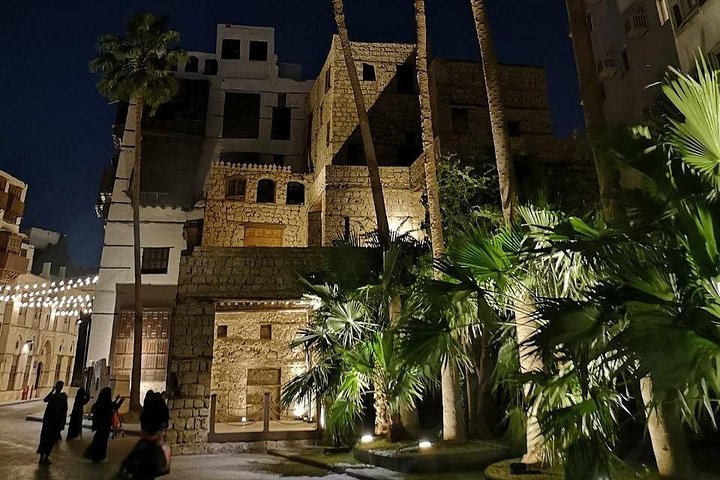
Souq Al-Alawi is the market most people mean when they talk about shopping in old Jeddah, and it is the easiest way to see the historic quarter working as a living neighbourhood rather than a museum. It is a narrow commercial street in Al-Balad lined with small shops that spill their goods into the lane: spices and dried fruit, incense and oud, perfume oils, fabrics, prayer beads, coffee, sweets and household items. The setting matters as much as the shopping, because the souq runs between old coral-stone buildings with carved wooden balconies overhead, and the rhythm of the street, with shopkeepers calling out, scooters edging through and tea being poured, has changed less than most of the city around it. Visitors are welcome, many traders are used to travellers, and browsing without buying is entirely normal. Entry is free, there is nothing to book, and it fits easily into a walk through the rest of the quarter.
Why it matters
Before Jeddah became a city of towers and highways, it was a port where pilgrims, merchants and sailors arrived and needed everything from food to cloth to souvenirs. The souqs of Al-Balad were the engine of that trade, and Souq Al-Alawi is the one that has best kept its character. Walking it gives a sense of the old economy of the Red Sea coast, with goods that reflect the Hijaz’s long links to Yemen, India, East Africa and the wider Arab world.
It is also one of the best places in the city for photographs, because the balconies, the doorways and the hand-written signs all frame the scene.
What to look for
The stalls vary from block to block, so wander rather than rush. Spice and dried-fruit sellers set out sacks of cardamom, cloves, dates and nuts, and the smell of incense and oud drifts from the perfume shops. Fabric and clothing stores sell traditional garments alongside everyday wear, and some shops carry prayer beads, copper and brass items and small gifts.
Ask before photographing shopkeepers, and be ready to hear a friendly sales pitch. Prices are often negotiable in the smaller shops, but bargain politely and without pressure. Cafés and tea stalls on the edges of the souq are good places to rest, and the old quarter has plenty of places for a light meal.
How to visit
Go late in the afternoon or early evening, when the heat has eased, the shops are busy and the stone catches the low light. Mornings are quieter but some shops open later, and opening hours differ between traders and over prayer times, when many shops close briefly, so be flexible. Wear comfortable shoes for the uneven lanes, dress modestly and carry some small change and a bottle of water.
Cards are accepted in some shops but cash is useful for small purchases. The souq pairs naturally with Nasseef House and a wander through the rest of Al-Balad, and a guided walk can explain the history behind the shops and houses you pass. Visit Saudi has a destination page for the souq with current information.
Good to know
The quarter is a working neighbourhood, so lanes can be crowded with shoppers, deliveries and scooters, particularly in the evening and at weekends. Keep bags closed in busy spots, step aside for traffic and take your time. Many shops sell similar goods, so it is worth walking the length of the souq once before buying, then returning to the shop that felt best.
If you want to buy spices or oud as gifts, ask the seller to pack them well for travel, and check your airline and destination rules for liquids and food items. Visitors who enjoy sweets can try the local dates and confectionery sold by weight, and tea or coffee stalls nearby make a welcome break after the crowds.
What to expect
The experience
A self-guided browse along a busy market street in the old quarter, with spice, incense, perfume, fabric and sweet shops under old balconies.
Best time
Late afternoon into the evening, when the heat eases and the shops and lanes are at their liveliest.
How long
One to two hours, longer if you stop for tea or a meal.
Tips
Carry small change, bargain politely, ask before photographing people and expect some shops to close briefly at prayer times.
Quick picks
- Best for
- Travellers who want the atmosphere of old Jeddah and a chance to pick up spices, incense or small gifts.
- Families
- Children usually enjoy the colours, smells and sweet shops, but the lanes are crowded and hot, so keep stops short and go in the cooler hours.
- Couples
- An easy evening wander with tea and a browse for oud or spices before dinner in the old quarter.
- Pair with
- Nasseef House and a walk through the rest of Al-Balad, or the guided walking tour for context.
- Time needed
- Allow an hour or two inside a wider half-day in Al-Balad.
Good questions
Is there an entry fee for Souq Al-Alawi?+
No. It is an open market street, and you only pay for what you buy.
What can I buy at Souq Al-Alawi?+
Typical buys include spices, dried fruit and nuts, incense and oud, perfume oils, fabrics, prayer beads, coffee and sweets. Quality and prices vary, so compare a few shops first.
Can I bargain in the souq?+
In many small shops a little polite negotiation is normal, especially for non-food items. Prices in food shops are usually more fixed, and a friendly manner goes a long way.
When is the best time to visit?+
Late afternoon and early evening are the most comfortable and the liveliest. Some shops close briefly for prayers, so allow flexibility in your timing.
Is the souq suitable for photography?+
Yes, the balconies and shopfronts are very photogenic. Ask permission before photographing shopkeepers or other people, and respect anyone who declines.