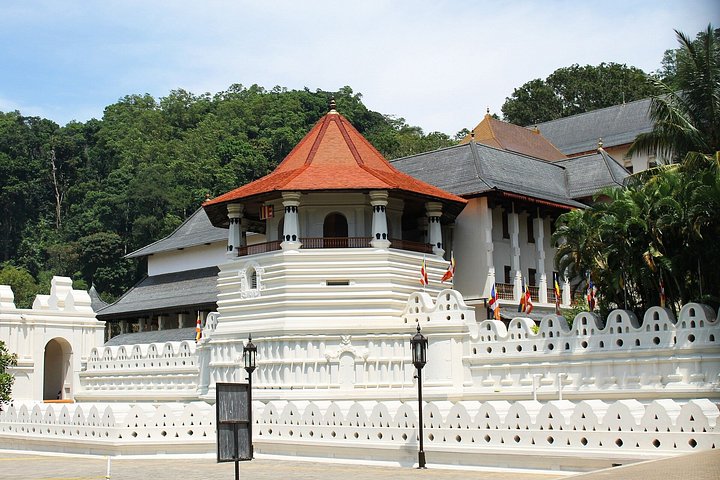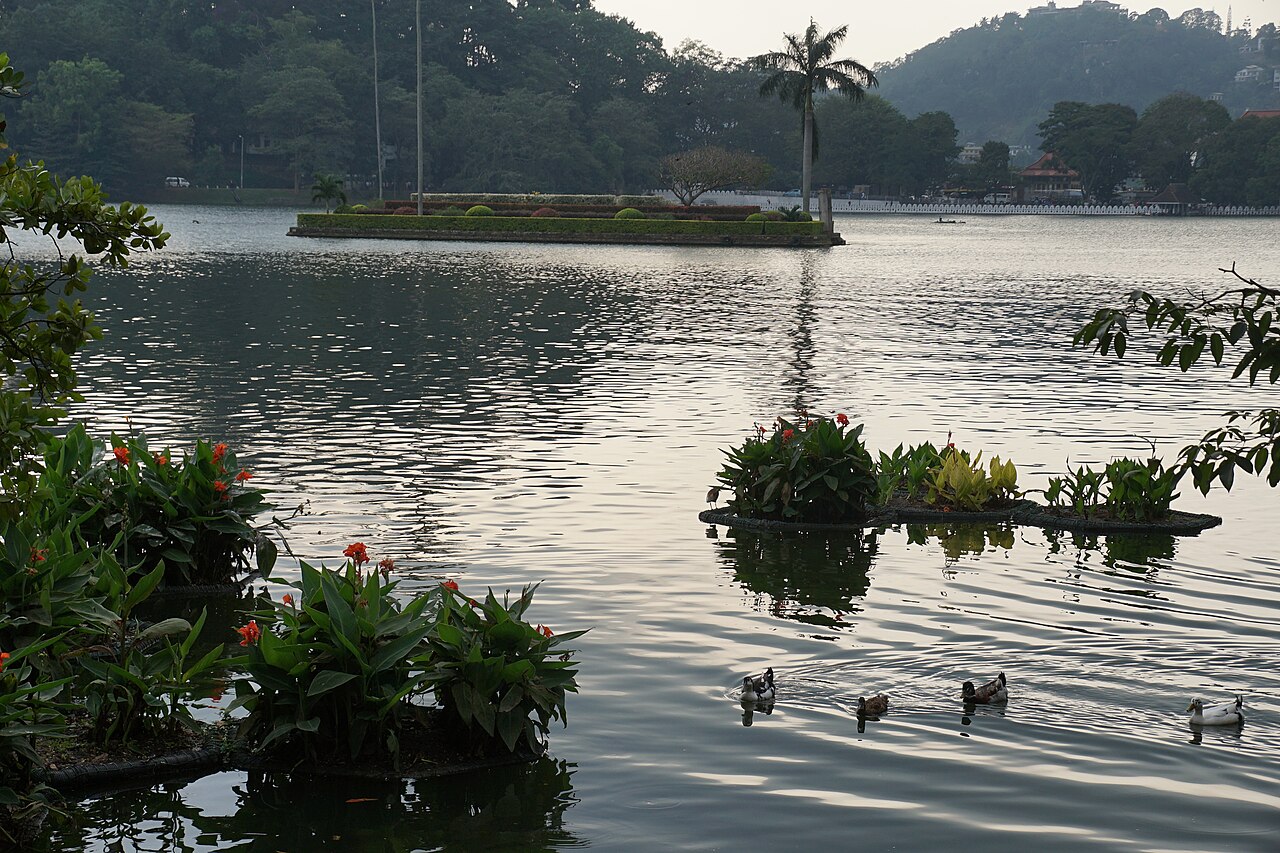
Kandy Lake sits in the center of the city like a mirror set in the hills, and the loop path around it is the easiest, most pleasant way to get your bearings. The lake was created in the early nineteenth century by the last Kandyan king, Sri Vikrama Rajasinha, who dammed a paddy field next to the royal palace. Locals call it Kiri Muhuda, the Sea of Milk, and a white wall with a cloud-like crenellated pattern runs along part of the shore. A small island in the middle was reportedly used as the king's pleasure house, and the Temple of the Tooth and the old Queen's Bath lie beside it. The promenade is free, open all day and busy in the evening, when families, joggers and monks all walk the circuit.
A full lap is around three kilometers and takes under an hour at an easy pace, with benches, ice-cream sellers and views across the water to the hills. Look for the egrets and cormorants that roost in the trees and, with luck, a monitor lizard sunning itself on a rock or sliding into the water.
Turtles and fish are visible in the shallows, and the water's edge is lined with shady trees. The best time is late afternoon into evening, when the temple lights come on and the hills turn blue, and early morning, when mist drifts over the surface and the path is quiet.
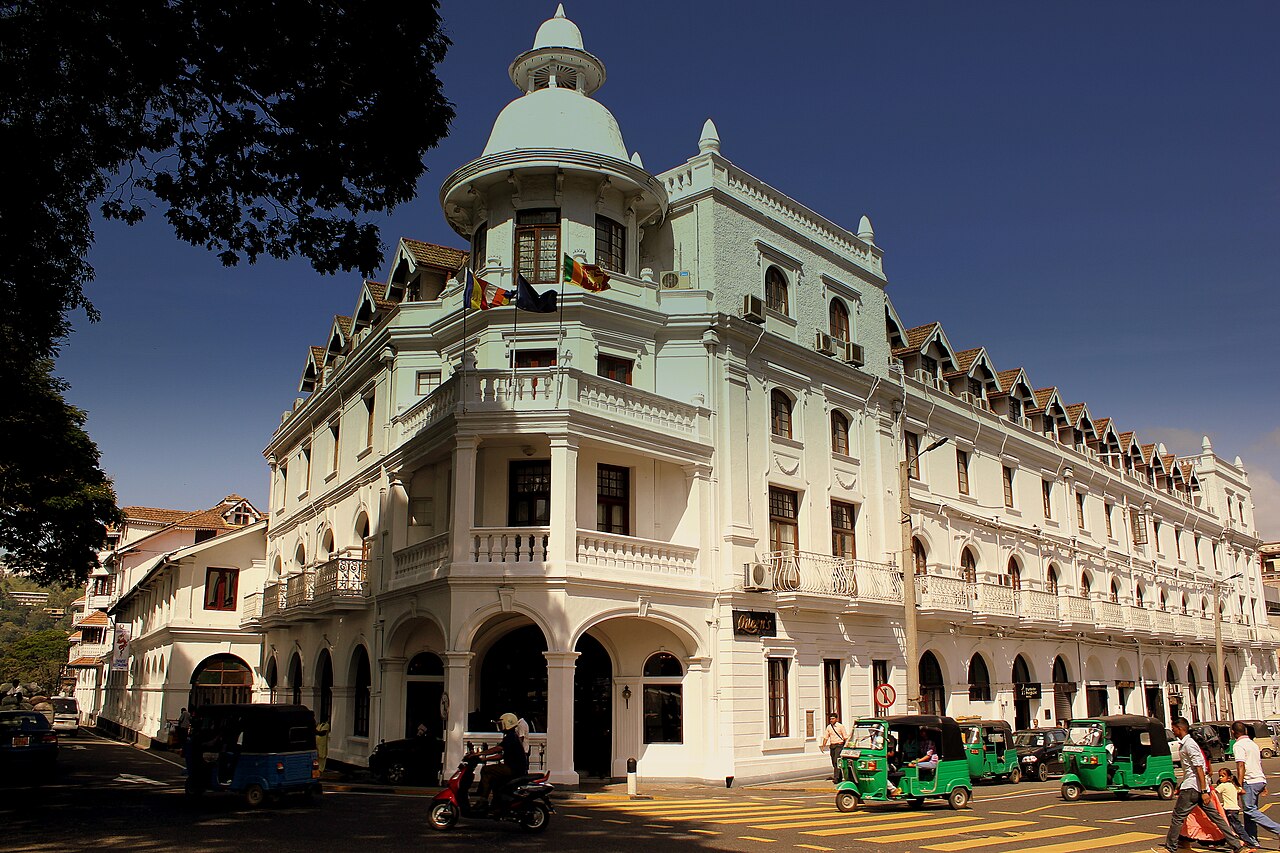
Keep your eyes open for the details. The Pattirippuwa tower beside the temple gives the shoreline its character, the Queen's Bath is a small pavilion on the water's edge, and the walls carry the old royal pattern. Several small cafes and bakeries sit within a short walk of the loop, and you can finish with tea or a cold king coconut. Traffic around the lake can be heavy, so cross with care, and avoid the busiest hours when buses jam the road.
As a free sight the lake is the ideal anchor for an unplanned afternoon. It connects the Tooth temple, the museums and the market streets, so you can combine a stroll with sightseeing and a meal. For photographers it offers reflections of the temple and the hills, and for families it offers room to wander and plenty of people-watching. Remember to dress modestly near the temple, avoid feeding the wildlife and keep valuables out of sight in the crowds.
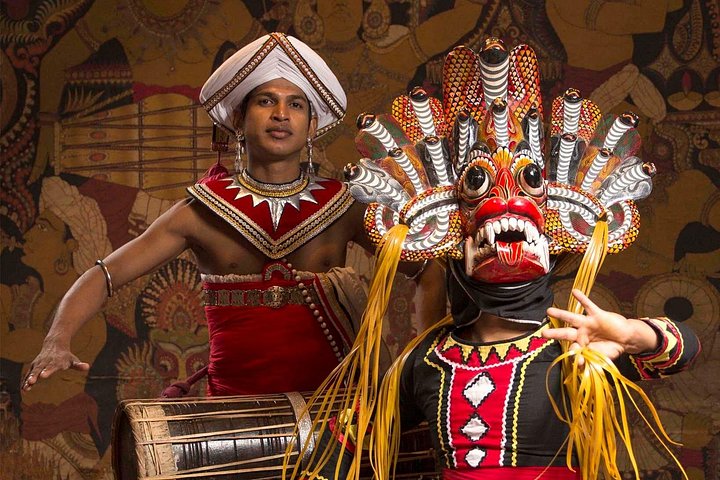
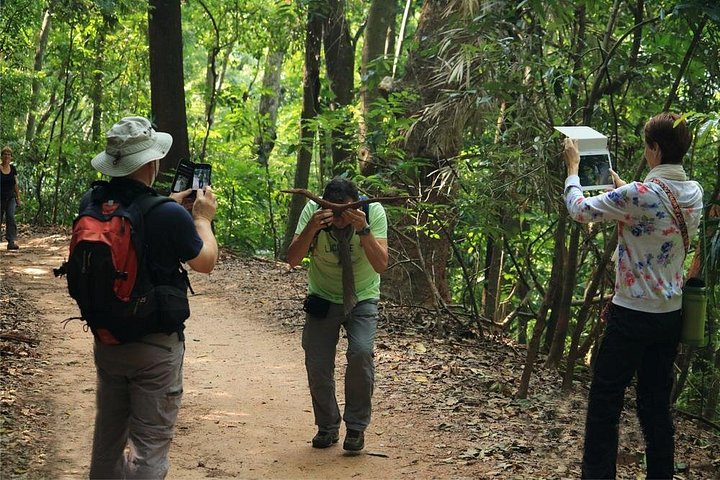
If you visit during the annual procession season, the lake edge becomes a vantage point for the elephants and dancers passing nearby, and the whole city takes on a festival mood. Pair it with a visit to the Udawatta Kele forest above the lake for a green contrast to the water, and finish the day with a dance show or a cooking class.
Allow time to sit on a bench and watch the evening routine: school groups in white, monks in saffron, couples on the wall and children racing along the path.
Photographers should aim for the blue hour just after sunset, when the temple glows on the water, and use a small tripod if one is allowed. Street food sellers set up near the path in the evening, offering corn, peanuts and sweets, and a short walk uphill brings you to viewpoints over the roofs and the lake.
What to expect
The experience
A self-guided walk around the lake, with the Temple of the Tooth, the Pattirippuwa tower and the Queen's Bath along the shore.
Best time
Late afternoon to evening, or early morning for mist and quiet.
How long
An easy lap takes under an hour; allow more for photos and refreshments.
Tips
Watch the traffic when crossing. Do not feed wildlife. Dress modestly near the temple end.
Quick picks
- Best for
- Everyone. It is free, central and a good way to settle into Kandy.
- Families
- Excellent. Flat, shaded and full of things to look at.
- Couples
- A sunset stroll with the temple lights coming on.
- Pair with
- The Temple of the Tooth, the dance show and Udawatta Kele.
- Time needed
- One to two hours.
Good questions
Is there an entry fee?+
No. The lake walk is free and open all day.
How long is the walk around the lake?+
About three kilometers, taking under an hour at an easy pace.
Can you swim in the lake?+
No. It is a decorative and heritage lake, not a swimming spot.
Will I see wildlife?+
Often. Look for egrets, cormorants, turtles and monitor lizards.
Who built it?+
The last Kandyan king, Sri Vikrama Rajasinha, had it created in the early nineteenth century.