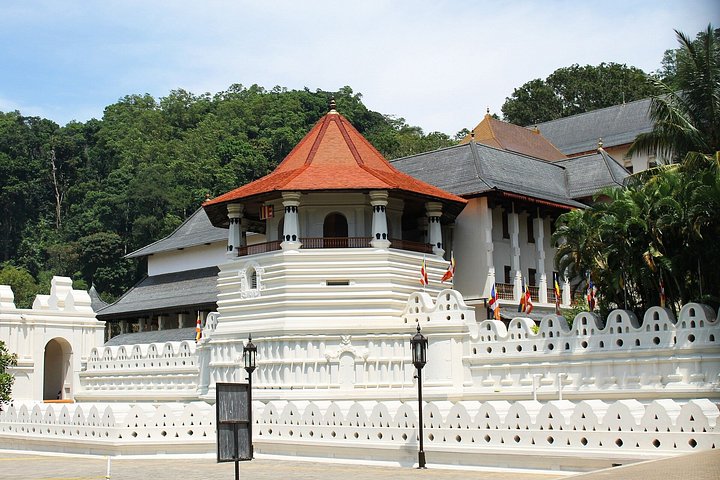
The Sri Dalada Maligawa is the beating heart of Kandy and, for most Sri Lankan Buddhists, of the island itself. It shelters a tooth that tradition says was taken from the Buddha's funeral pyre and smuggled into Sri Lanka in the fourth century hidden in a princess's hair. Whoever held the relic was held to have the right to rule, which is why kings kept moving it from capital to capital until it settled here in Kandy, and why the temple sits right beside the royal palace compound. The complex is part of the Sacred City of Kandy, inscribed as a World Heritage site in 1988. You approach across a moat and a low white wall carved in a cloud pattern, pass beneath a drummers' hall, and climb into a courtyard of gilded roofs, carved timber pillars and lotus-shaped lamps. Pilgrims arrive in white carrying lotus buds and jasmine, and the air smells of incense and crushed petals.
The relic itself is never on view. It rests inside a series of nested golden caskets in an upper chamber, and visitors file past the closed door while drummers and horn players perform at the daily puja, an offering ceremony held several times a day, normally around dawn, late morning and early evening. The queue builds quickly for the evening session and on full-moon days, so arrive early if you want a place near the doorway.
Beyond the main shrine, look for the octagonal Pattirippuwa tower beside the lake, built as a royal audience hall and later used as a library, the museum rooms that explain the history of the relic, and the small temples to Natha, Vishnu and Pattini within the grounds. The Kandyan architecture is worth slowing down for, with its low tiled roofs, carved wooden eaves and painted ceilings.
Dress and conduct matter here. Cover your shoulders and knees, remove your shoes and hat before entering the grounds, and never pose with your back to a Buddha image. Photography is welcome outside but restricted around the shrine room, and staff will tell you where to stop. A guided entry helps because the story of the relic, the kings who fought over it and the layout of the upper floor are hard to read without someone explaining them.
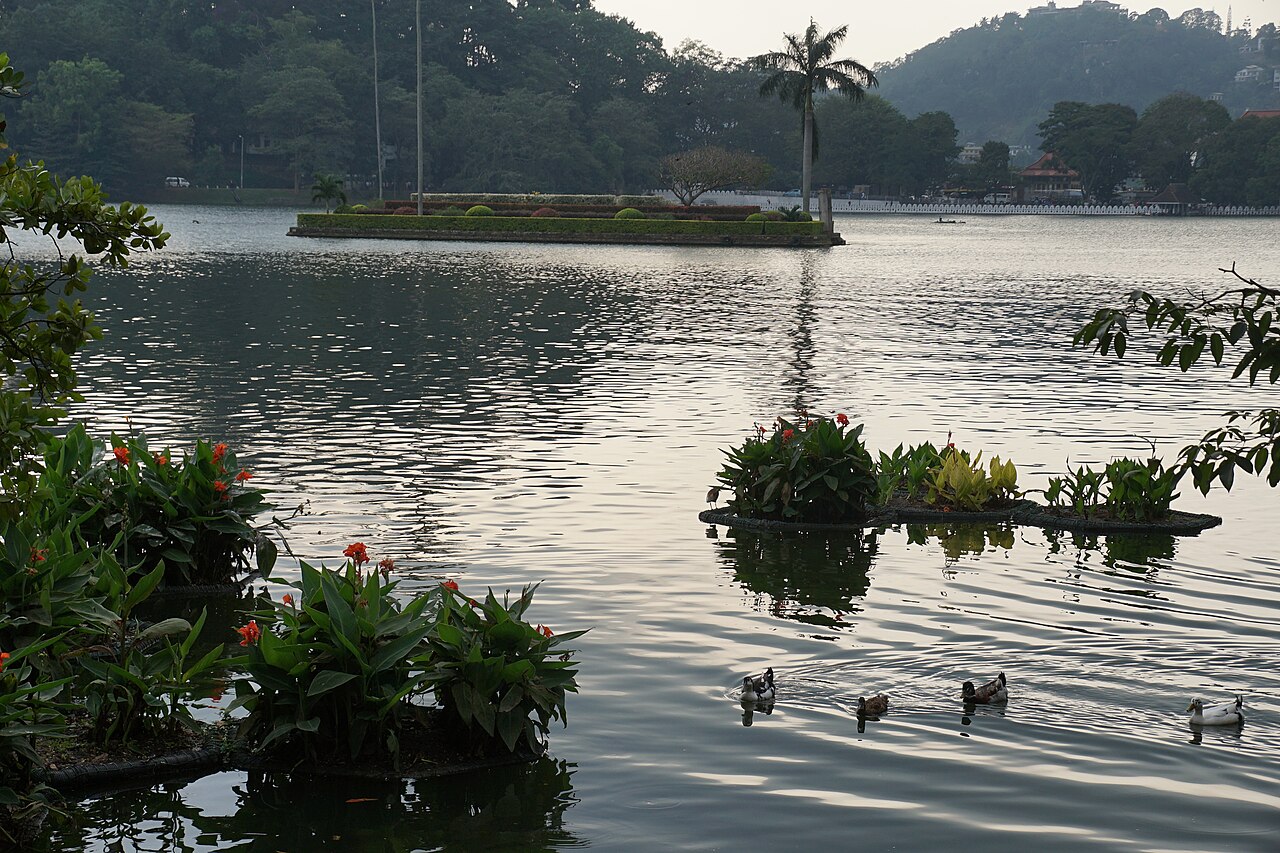
Allow at least ninety minutes, and combine the visit with a walk around Kandy Lake, which stretches out immediately in front of the temple. Come in the cooler early hours or the late afternoon, because the flagstones heat up and the midday crowds can be heavy. Kandy's grand annual procession, the Esala Perahera, parades the relic casket on an elephant each summer, and the temple becomes the center of the whole city for those nights.
A little context makes the stop richer. The relic's story runs through the long contest between kingdoms of the island, and its safe keeping was the sign of a legitimate ruler. That is why the shrine stands inside the old palace precinct, among the royal audience hall, the queen's quarters and the lake the last king dug. If time allows, add the quiet courtyards behind the main shrine, where monks and pilgrims sit, and the small museum rooms that display gifts from Buddhist countries around Asia.
What to expect
The experience
A walk through the temple complex beside Kandy Lake: moat, drummers' hall, the shrine courtyard and upper chamber, plus the museum rooms. Entry covers the grounds; the relic itself is not shown.
Best time
Early morning or late afternoon, ideally timed to a puja session when the drums and horns play. Full-moon days are packed and deeply moving.
How long
Ninety minutes to two hours including the museum rooms and the lakeside walk.
Tips
Shoulders and knees covered, shoes and hats off. Bring small change for flower offerings. Queue early for puja. Keep your voice low in the shrine room.
Quick picks
- Best for
- Anyone visiting Kandy. It is the reason the city exists and the single sight that frames everything else.
- Families
- Fine for children who can stay quiet in a crowd. Choose the morning session and keep the visit short.
- Couples
- The evening puja with the temple lit up and the lake dark behind it makes a memorable first night in town.
- Pair with
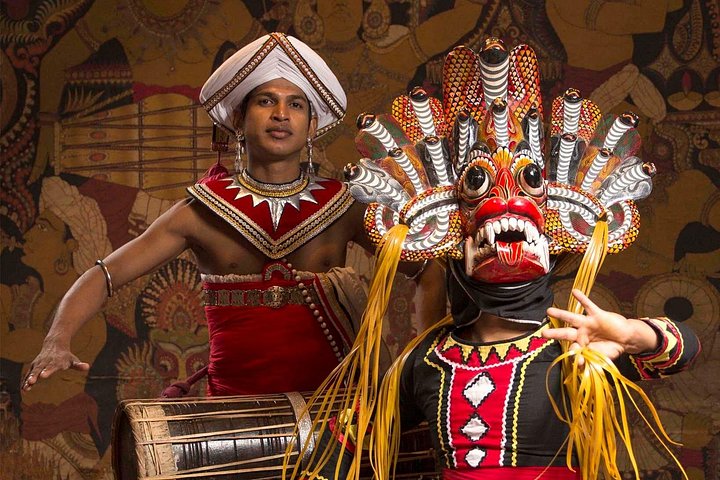
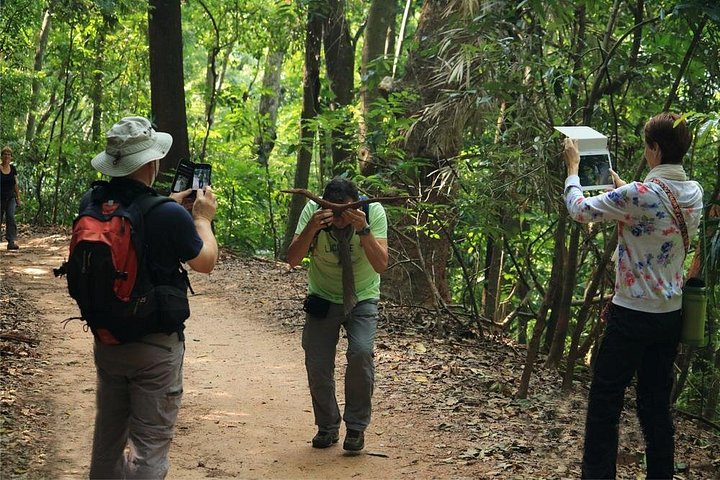
- Kandy Lake, the Kandy Lake Club dance show and a stroll up to Udawatta Kele for the green view back over the roofs.
- Time needed
- Two hours, plus a lakeside stroll afterwards.
Good questions
Can you see the tooth relic?+
No. The relic stays inside nested golden caskets in a sealed chamber. Visitors see the casket room door during puja, and the museum rooms explain the history.
What should I wear?+
Cover your shoulders and knees, and remove shoes and hats before you enter. Light long trousers or a long skirt and a T-shirt are fine. Sarongs are sometimes available to borrow near the entrance.
When is puja held?+
Offering ceremonies run several times a day, usually around dawn, late morning and early evening. Check the current times at the gate because they can shift, and expect extra crowds on full-moon days.
Is a guide worth it?+
Yes if you want the story. A guide explains the relic's journey, the architecture and what you are seeing at puja, which are hard to piece together from signs alone.
Can I take photos?+
Photos are fine in the courtyards and outside areas. Photography near the shrine room is restricted and you must never turn your back on a Buddha image for a selfie.