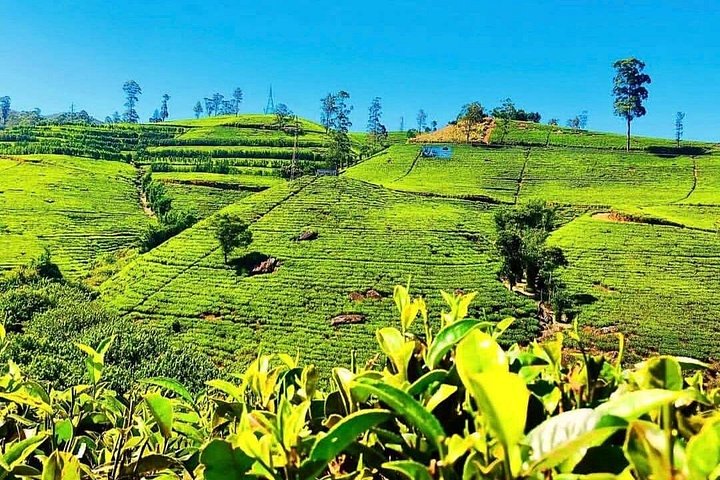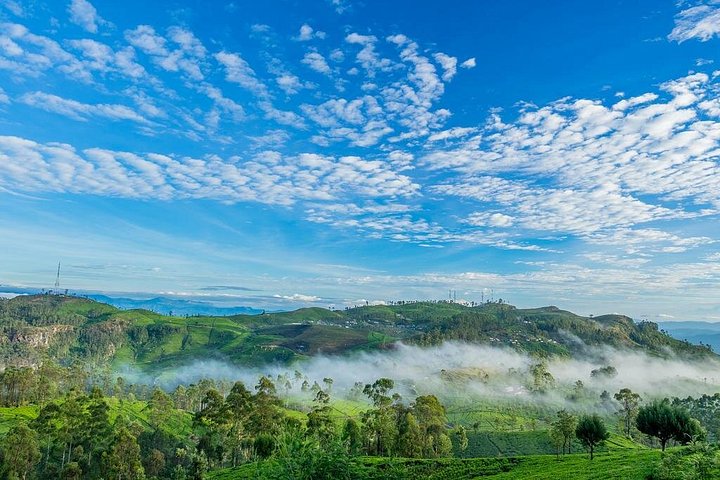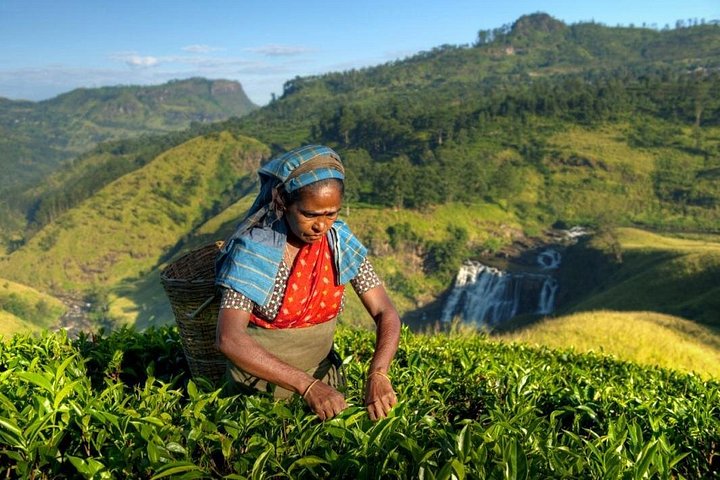
Commercial tea growing in Sri Lanka began in the hills around Kandy in the 1860s, when a Scottish planter named James Taylor proved that tea could thrive on the island after coffee crops had failed. The lesson is still visible from the road: slope after slope of neat green bushes, trimmed flat and dotted with pluckers wearing bright cloths and carrying baskets or sacks. A tea plantation tour from Kandy takes you off the highway and into that world, typically combining a walk through the bushes with a guided visit to a factory where the leaf is withered, rolled, oxidized, dried and sorted. The sensory side is strong: the smell of warm leaf in the withering lofts, the rumble of machines and the dusty sweetness of the tasting room.
Most visits begin outdoors, with a guide explaining how the pluck of two leaves and a bud is chosen, why higher elevations produce lighter teas and how the work changes with the season. Pluckers, who are mostly women from estate communities with generations of tea history, may demonstrate their technique and you can often try plucking yourself, which is harder than it looks.
Inside the factory, each step is shown: leaf spread on troughs to wither, rolled to break the cells, oxidized to deepen flavor, fired in hot air dryers and then sorted into grades from fine leaf to dust. The tasting that follows is usually generous, with a few varieties served with sugar or milk if you wish, and a shop sells packets at fair prices.
Choose your visit with some care. Estates differ widely, from small family operations to large historic factories, so ask what the tour covers and whether the factory is working on the day you visit; some stand quiet on Sundays and public holidays. Dress for rain and mud, with closed shoes, and bring a hat and sunscreen. Be respectful when taking photographs of workers, and ask first. Buying a few packets of tea directly from the estate is a good way to give something back, and loose-leaf tea makes lighter luggage than you might expect.
The tour also fits easily into a bigger day. It can be combined with the Peradeniya gardens, a Kandy city tour or the road toward Nuwara Eliya, where the larger estates sit higher and the leaf is finer. If you only have time for one tea experience, pick an estate with both a walk and a factory visit, so you understand the whole story from bush to cup.
Pair it with a picnic or a lunch at a nearby viewpoint, and then, if you can, continue on the scenic train through the heart of the tea country to see the same landscape from above. The difference between the lowland and highland plantations is easiest to taste side by side, and a tasting flight is the best classroom for it.
Ask your guide about the history of the estate community, the daily wage system and how the harvest is weighed at midday, because the human side of tea adds depth to the tasting. Many estates also run small tea-making demonstrations where you can taste the leaf at different stages, from green and fresh to fully oxidized, which makes the process memorable.
What to expect
The experience
A guided half-day visit to an estate near Kandy with a walk through the tea bushes, a factory tour and a tasting.
Best time
Morning, when the factory is busiest and the light is soft. Check that the factory is running on the day.
How long
About three to four hours including travel.
Tips
Wear closed shoes and a hat, ask before photographing workers and buy tea at the estate shop to support the community.
Quick picks
- Best for
- Anyone curious about how tea is made, and a gentle way to see the countryside.
- Families
- Good for curious children; the factory is loud and warm, so keep little ones close.
- Couples
- A tasting and a terrace view make a calm morning.
- Pair with
- The Peradeniya gardens, the scenic train and a Nuwara Eliya day trip.
- Time needed
- A morning.
Good questions
Who started tea growing in Sri Lanka?+
James Taylor, a Scottish planter, established the first commercial tea plantation near Kandy in the 1860s after coffee crops failed.
Can I pluck tea myself?+
Often yes. Pluckers may demonstrate and let you try, though it is harder than it looks.
Is the factory always working?+
Not always. Many estates pause on Sundays and public holidays, so check ahead.
Will I taste different teas?+
Most tours finish with a tasting of a few grades, served plain or with milk and sugar.
Is it better to visit lowland or highland estates?+
Highland estates around Nuwara Eliya produce lighter, more delicate teas; Kandy-area estates give a convenient first lesson.