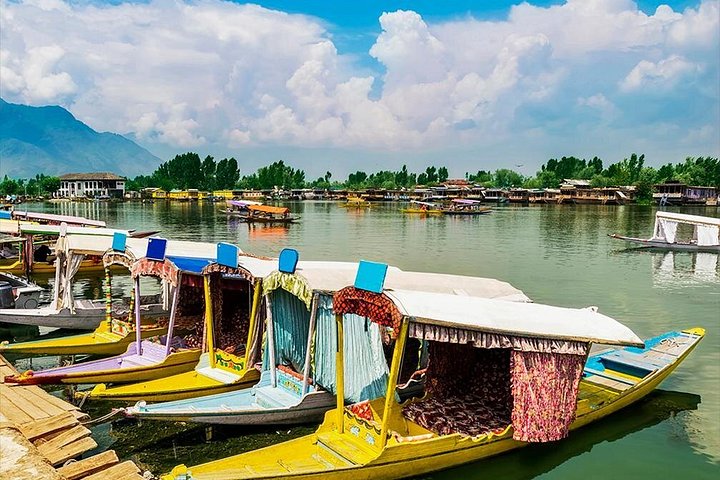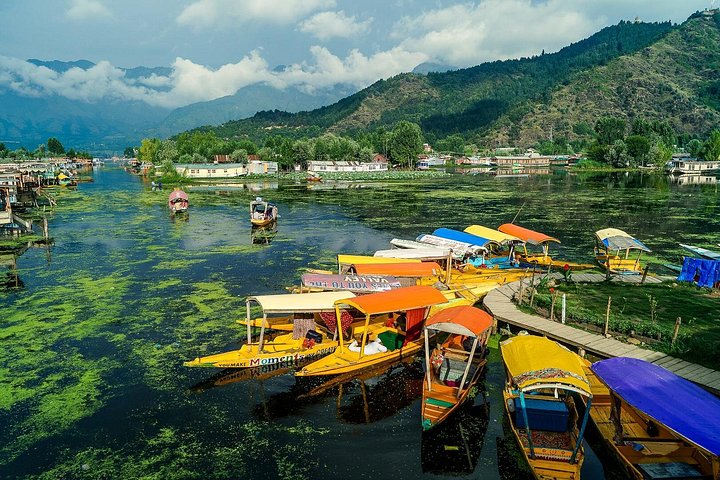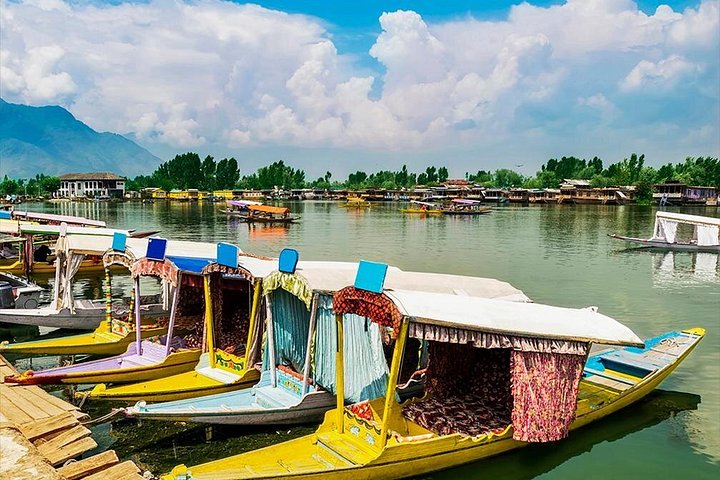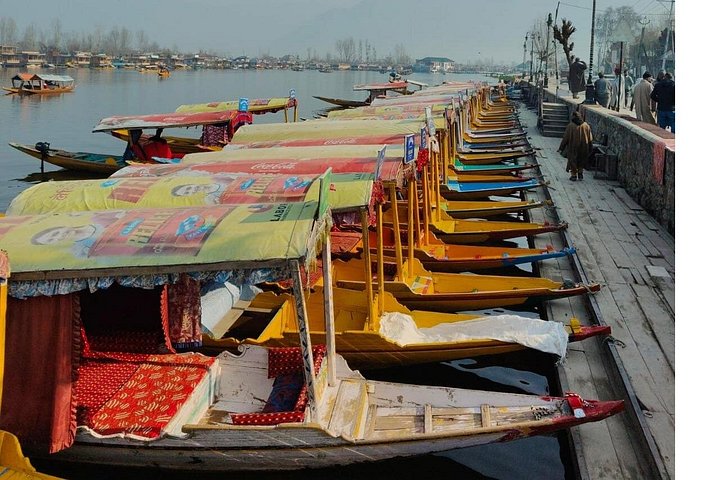
The houseboats of Srinagar are floating guesthouses, built of deodar cedar and ornamented with walnut-wood carving, painted ceilings and lattice screens, moored in rows on Dal and Nigeen lakes. They grew out of the colonial period, when outsiders were not allowed to own land in the valley and so built homes on the water instead, and today they are as much a part of Kashmiri identity as the shikara. A typical houseboat has a long, narrow plan: a veranda facing the lake, a sitting room with carpets and a samovar, a dining room, and several bedrooms with attached bathrooms. Rooms are often panelled in carved wood and furnished with Kashmiri rugs, embroidered textiles and papier-mache ornaments. Staying on one slows the day down. You wake to the sound of boatmen and birds, have breakfast on the veranda, watch shikaras pass, and in the evening sit with a pot of kahwa, the saffron and almond tea, while the hills turn pink. Meals are usually taken on board and are prepared by the family or staff, and this is the easiest place in the valley to taste home-style Kashmiri cooking.
Houseboats range from simple, family-run boats to grand heritage vessels with antique furnishings and attentive service, so it pays to look carefully before you choose. The multi-day houseboat tour linked here bundles a stay on the lake with sightseeing, which suits visitors who prefer a package. The main decision is the location: Dal Lake has the famous views and is close to the gardens and shikara ghats, but is busier with boat traffic, while Nigeen Lake is calmer, quieter and more residential.
On either lake, boats are reached by a short shikara hop from a ghat on the shore, so travel light and confirm how your luggage will be carried.
Things to check when you book include heating in the colder months, since nights from October to March are chilly and rooms on the water can be cold; hot water; the size of the group sharing the boat; and what is included in the meal plan. Ask about the mooring spot, since boats in the front row have unobstructed views while those behind may look onto neighbours. Houseboats are best enjoyed with a modest expectation of rustic comfort rather than a modern hotel; the character of old wood, creaking floors and lake sounds is the point.
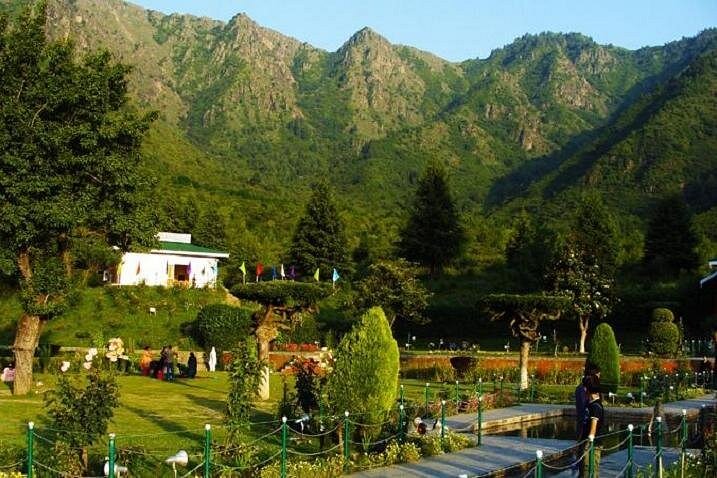
Respect the family nature of the business by agreeing prices and extras clearly, and avoid pressure to buy from visiting boat-borne shops if you are not interested. A single night is enough to feel the atmosphere, and two nights lets you combine it with shikara rides, the Mughal gardens and a day trip to Gulmarg or Pahalgam. It also pairs well with time at one of the heritage hotels in town for a change of pace.
If you only have a short stay, ask your host to arrange a sunrise shikara ride, a walk along the shore to the Boulevard and a home-cooked dinner on board. Many families have hosted guests for generations, and an evening spent talking with them over tea, hearing how the lake has changed and what the seasons mean to them, is often what visitors remember longest.
Winter stays are quiet, with woodsmoke, bukhari stoves and snow on the hills, and suit travellers who like solitude. Summer stays are livelier, and booking early is wise for the peak months.
What to expect
The experience
An overnight or multi-day stay on a carved cedar houseboat moored on Dal or Nigeen Lake, with meals on board and shikara transfers.
Best time
April to October for comfortable weather; autumn for colour and clear light, and winter for a quiet, cold, atmospheric stay with heating.
How long
One to three nights, with two nights allowing time for sightseeing as well.
Tips
Confirm heating, hot water, meal plan and mooring spot, travel light for the shikara transfer, and agree extras in advance.
Quick picks
- Best for
- Couples, culture seekers and anyone wanting the classic Kashmir stay.
- Families
- Children enjoy the boats and the novelty, but check railings and water safety on the veranda.
- Couples
- A veranda dinner and a sunset shikara make houseboats the most romantic base in the valley.
- Pair with
- A shikara ride, the Mughal gardens and a Gulmarg day trip.
- Time needed
- One night minimum, two nights for a full experience.
Good questions
Why are there houseboats in Srinagar?+
Outsiders could not own land in the valley during the colonial period, so houseboats were built on the lakes instead and became a lasting part of the local tourism tradition.
Dal Lake or Nigeen Lake?+
Dal Lake offers the classic views and is close to the gardens and ghats, while Nigeen Lake is calmer and quieter with less boat traffic.
Are houseboats comfortable in winter?+
Many have heating, but you should confirm it when you book because rooms on the water can be cold from October to March.
Are meals included?+
Most houseboats offer meal plans with Kashmiri and Indian dishes prepared on board, so check what is covered before you arrive.
How do I reach the boat?+
You usually cross from a ghat on the shore by shikara, so pack light and confirm how luggage will be carried.