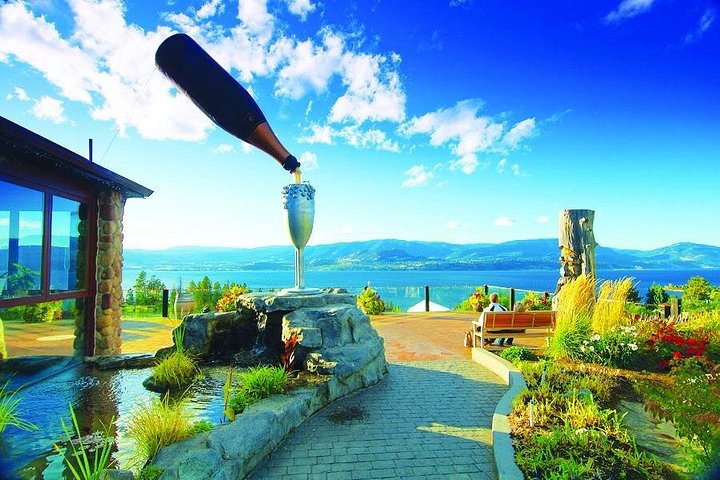
Knox Mountain Park is the green hill that rises behind the north end of downtown Kelowna, and it is the easiest place in the city to understand the geography of the valley. From the lower trailheads near Sutherland Bay you can walk or ride up through dry grassland and Ponderosa pine, and from the upper lookouts you see Okanagan Lake stretching away to the south, the floating bridge across the water, the grid of downtown streets and the orchard-covered hills beyond. The park is large enough to hold a network of trails of different lengths and difficulty, from gentle paths suited to a family stroll to steeper climbs that locals use for their daily training. Because it is a city park, access is free and there is no booking, which makes it a good first stop on a trip, a sunrise or sunset outing, or an easy way to fill a free afternoon between a morning of wine tasting and an evening on the waterfront.
What to do
Choose your effort level at the trailhead. The shortest outings go to the nearest lookouts and take under an hour, while a climb from the lower parking areas to the summit viewpoints is a solid hike that most reasonably fit visitors can finish in a couple of hours. Cyclists share some of the wider routes, and the park is popular with runners, dog walkers and photographers who come for the light over the lake.
Interpretive signs along the way explain the dry-interior ecosystem, and the open slopes in spring are dotted with wildflowers. Take a map from the city parks pages or photograph the trailhead board, because junctions are numerous and it is easy to wander onto a longer loop than you planned.
Practical planning
The park is open in daylight hours and there is no entry charge. Vehicle access to the upper road and car parks has varied by season and time of week, so check the current arrangements before you drive, and be ready to walk the last stretch if the gate is closed. Bring water and a hat in summer, because the slopes are exposed and hot, and wear shoes with grip, since the trails are dusty and loose in places.
Western rattlesnakes live in the dry interior, so stay on the trail, keep dogs on a leash and do not put your hands where you cannot see. In winter and after rain some paths become muddy or icy, and the upper sections can be slippery.
Fitting it in
Knox Mountain is minutes from downtown hotels, so it suits the start or the end of a day. A sunrise walk gives you the lake in soft light and cooler air before the heat builds, and a late-afternoon visit pairs naturally with dinner by the water. Combine it with a stroll through City Park and along the waterfront, or use it as a gentle warm-up before a bigger outing such as Myra Canyon.
In autumn the grass turns gold and the valley light is at its best, and on clear winter days the view is sharp and quiet. If you have only a short time in Kelowna and want a single place to get your bearings, this is the one to choose.
What to expect
The experience
A free hillside park with a network of walking and cycling trails and several lookouts over Okanagan Lake and downtown.
Best time
Early morning or late afternoon, when the light is soft and the slopes are cooler; autumn and spring are the most comfortable seasons.
How long
An hour covers the nearest lookouts, and two to three hours reaches the summit viewpoints and back.
Tips
Bring water, a hat and shoes with grip, stay on the trails because of rattlesnakes, keep dogs on a leash and check vehicle access before driving up.
Quick picks
- Best for
- First-time visitors who want one view that explains the whole city and lake.
- Families
- Pick the shorter, gentler trails and turn around at the first lookouts; keep children close to steep edges.
- Couples
- Go for sunset, take a small picnic and walk down to a waterfront dinner afterwards.
- Pair with
- City Park and the waterfront, then an evening food tour or a winery visit the next day.
- Time needed
- One to three hours depending on how far you climb.
Good questions
Is Knox Mountain Park free?+
Yes, it is a city park with no entry charge and no booking. It is open in daylight hours, so plan to be back before dark.
How long does it take to reach the summit viewpoints?+
Most reasonably fit visitors need around two hours for a return climb from the lower trailheads. Shorter walks to nearer lookouts take about an hour.
Can I drive up?+
Vehicle access to the upper road and car parks has varied by season and day of the week. Check the current arrangements before you go, and be prepared to walk if the gate is closed.
Are there rattlesnakes?+
Western rattlesnakes live in the dry interior, so stay on marked trails, keep dogs leashed and watch where you step and place your hands, especially in warm weather.
When is the best time to visit?+
Sunrise and the hour before sunset give the best light and the most comfortable temperatures. Autumn and spring are pleasant, while summer afternoons are hot on the exposed slopes.