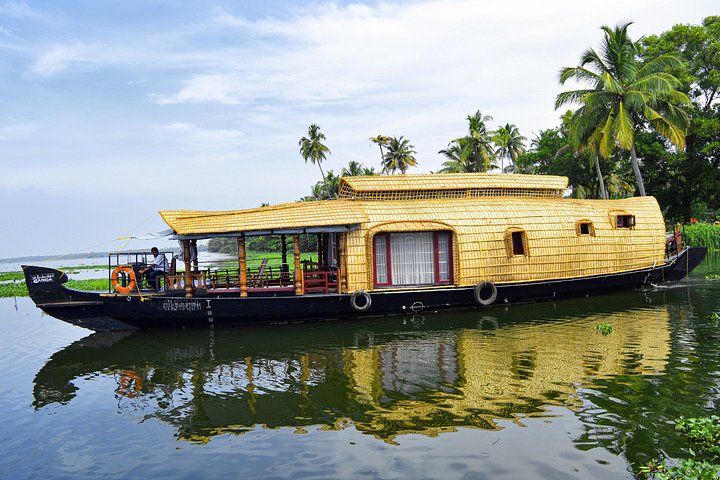
The wide lakes around Alleppey are what the houseboats cruise, but the real texture of the backwaters is in the narrow canals that thread between villages, and the best way to explore them is by canoe or small boat. A village canoe tour takes you off the main water highway into lanes of water only a few metres across, shaded by coconut palms and lined with homes, shops, small temples, churches and mosques. Rice paddies stretch beyond the banks, many of them reclaimed from the lake and farmed below sea level, a feature of this region known as Kuttanad. From the boat you see washing being done on the steps, children on their way to school, coir being spun, ducks herded along the canal, toddy tappers at work and the daily rhythm of a landscape built around water. The pace is slow and quiet, driven by a punt pole or a small engine, and the lack of engine noise lets you hear the birds and the village. A local guide or boatman explains the farming, the coir trade and the history of the polders. It is a calm and photogenic experience that is easy to fit into a half day and a good alternative for people who do not want to spend a night on a houseboat.
How to visit
The tour is a guided boat journey from Alleppey, with a meeting point and departure time confirmed when you reserve. Ask about the length of the trip, whether lunch or snacks are included, how many people share the canoe and whether a roof gives shade. Wear a hat, sunscreen and light cotton clothing, bring water and insect repellent, and protect your camera from splashes. The best departure times are early morning and late afternoon, when the light is soft and the air is cooler.
What to expect
A gentle cruise of a few hours, mostly at walking pace, with stops to look at village scenes or to step ashore. Canals can be shallow and weedy, so the boatman may change the route to suit the water level. The experience is quieter than a houseboat trip, with less food and less comfort, but much more intimacy.
Heat and humidity are strong by midday, and heavy rain from June to September can disrupt schedules. Mosquitoes can be annoying at dusk, so repellent helps. Respect the privacy of the people who live along the canals and ask before photographing them.
Making the most of it
Go early for the best light, and bring small change for tips and snacks. If you are also taking a houseboat, consider doing the canoe trip on a separate day so you see both the big lake and the narrow canals. The tour pairs well with an Alleppey food walk and a visit to a beach in the late afternoon. Ask the boatman about the Kuttanad farming system, the role of the coir industry and the flooding seasons, which tell you a great deal about how people live here.
November to February is the most comfortable and busiest period. Practical notes: canoes are low to the water and the seats can be hard, so a small cushion or folded scarf helps on longer rides. Keep valuables in a dry bag, wear a hat with a strap and carry a rain cover in case a shower rolls in. Tip the boatman if you enjoyed the trip, and ask permission before stepping ashore on private land. The canals are quietest on weekday mornings.
What to expect
The experience
A guided small-boat journey along narrow village canals in the Alappuzha backwaters.
Best time
Early morning or late afternoon, with November to February the most comfortable season.
How long
A few hours.
Tips
Wear a hat and sunscreen, carry insect repellent, protect your camera, and ask before photographing people.
Quick picks
- Best for
- Visitors who want the narrow canals and villages instead of the big lake.
- Families
- Calm and easy for families, though young children should wear life jackets.
- Couples
- A peaceful, photogenic outing with no crowds.
- Pair with
- An Alleppey food walk or a sunset at the beach.
- Time needed
- A half day.
Good questions
How is a canoe tour different from a houseboat cruise?+
A canoe fits into narrow village canals that houseboats cannot enter, so you see more daily life but without the onboard comfort or overnight stay.
What will I see?+
Rice paddies, coconut groves, coir workshops, village homes, places of worship and plenty of birds.
When is the best time to go?+
Early morning or late afternoon for soft light and cooler air, in the months from November to February.
Is it safe for children?+
Generally yes, with life jackets and supervision. Ask the operator about the boat and age limits.
What should I bring?+
A hat, sunscreen, water, insect repellent and a rain cover for your camera.