Muckross Abbey is the most atmospheric ruin in Killarney National Park, and one of the best-preserved medieval friaries in Ireland. It stands on the edge of Muckross Lake, a little way from Muckross House, hidden among old trees and surrounded by a graveyard that is still in use. The friary was founded in the middle of the fifteenth century for the Franciscans, in the days when the local McCarthy chieftains held the land, and over the following two centuries it grew into a working community with a church, a cloister and living quarters. What survives today is the roofless shell of the church with its slim tower, the vaulted cloister arcade and the rooms off it, and you can walk through almost all of it. The centrepiece is the cloister courtyard, where a single enormous yew tree has grown up through the middle of the space until its branches fill the open square like a roof. Locals say the tree is as old as the friary itself, and whether or not that is exact, standing beneath it in the green half light is the moment most visitors remember. There is no ticket office and no entry charge, so it makes a natural free stop on any day in the park.
The story of the friary is one of survival and decline. It was suppressed during the sixteenth century, when monastic houses across the country were closed, and the friars returned more than once before the community was finally driven out in the seventeenth century, after the abbey was damaged during the Cromwellian campaigns. After that it became a ruin, but never an abandoned one: local families went on burying their dead here, and several of the old Gaelic families of Kerry, as well as the Kerry poet Eoghan Rua O Suilleabhain, are associated with the graveyard.
That continued use is part of why the place feels lived in and respected rather than staged for visitors.
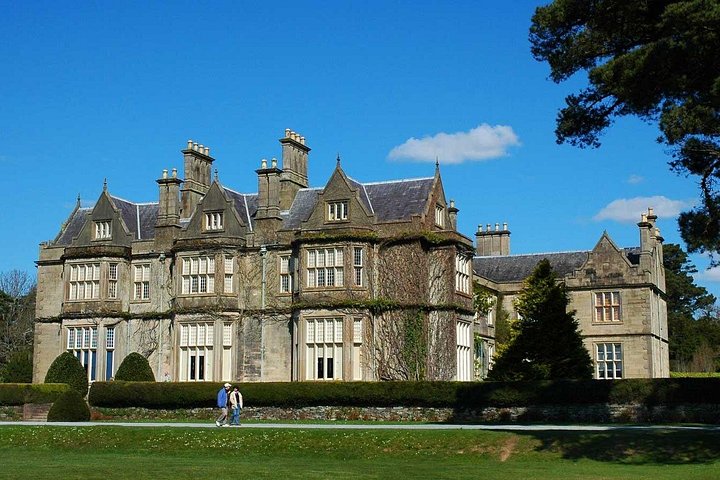
Getting there is half the pleasure. From Muckross House it is a gentle walk of around twenty minutes through the woods on a signed path, or you can drive or cycle to the small car park nearby. Many people combine it with the Muckross Lake loop, a flat route that is excellent by bike, and with a visit to the house and gardens, so it fits easily into the middle of a Muckross day.
A jaunting car from town will also set you down within a short walk. Allow thirty to forty five minutes at the abbey itself if you like to look closely at the carved stonework, the stairs up to the dormitory level and the views across the lake from the upper windows.
A few practical points. The ground inside is uneven and the stone steps can be slippery after rain, so wear shoes with grip, and keep a close eye on small children around the open walls. It is a graveyard as well as a ruin, so keep voices low and stay on the paths. The woods are damp and the ruin can be gloomy on a grey day, but that mood is exactly why it photographs so well, and in autumn the fallen leaves and low light add to it.
Early morning is quietest, before the coaches and jaunting cars arrive, and late afternoon light through the yew is lovely if the sun is out. There are no facilities at the abbey, so use the cafe at Muckross House before you walk over.
What to expect
The experience
A self-guided wander through the roofless church, the cloister and the surrounding graveyard, with signs explaining the main parts of the building.
Best time
Early morning or late afternoon, when the woods are quiet and the light falls through the yew.
How long
Thirty to forty five minutes at the ruin, or about an hour including the walk from Muckross House.
Tips
Wear shoes with grip for wet stone, keep voices low in the graveyard and use the facilities at Muckross House before you set off.
Quick picks
- Best for
- History lovers and photographers who want an atmospheric, free stop in the park.
- Families
- Children enjoy exploring the arches and the yew tree, but watch them closely on the steps and uneven ground.
- Couples
- A quiet woodland walk from Muckross House to a ruin that feels a world away from the crowds.
- Pair with
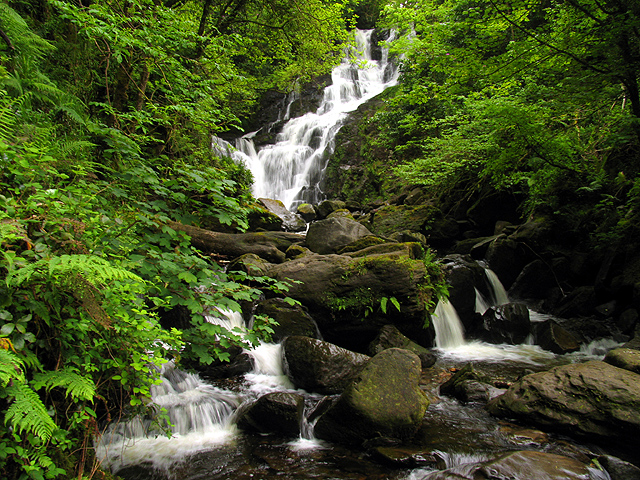
- Muckross House and Gardens, the Muckross Lake loop and Torc Waterfall.
- Time needed
- About an hour including the walk from the house.
Good questions
Is Muckross Abbey free to visit?+
Yes, there is no entry charge and no ticket office. You can walk into the ruin and the cloister at any time during daylight.
How do I get to Muckross Abbey?+
The easiest route is on foot from Muckross House, around twenty minutes through the woods on a signed path. You can also cycle, drive to a nearby car park or ride out in a jaunting car from town.
What is the big tree in the cloister?+
It is a yew, and it has grown up through the middle of the cloister courtyard so that its branches cover the open space. It is said to be as old as the friary itself.
Is it still a graveyard?+
Yes. Burials have continued here for centuries, so treat the site with respect, keep to the paths and avoid walking over graves.
How long do I need?+
Thirty to forty five minutes is enough for the ruin itself. Allow an hour if you walk from Muckross House and back.