Lanta Old Town is the cultural heart of the island, and this half-day tour is an easy way to see it without planning the logistics yourself. The old town sits on the sheltered east coast, a long road of wooden shophouses and stilt homes built over the water more than a century ago by Chinese traders, Muslim fishing families and the sea nomads known as the Chao Leh. A morning here combines a gentle mangrove trip with a visit to the old town on foot, so you get both the nature and the human history of the island in a few hours. The tour is run by a local operator with a small team of guides, and it works as a calmer alternative to the busy boat days.
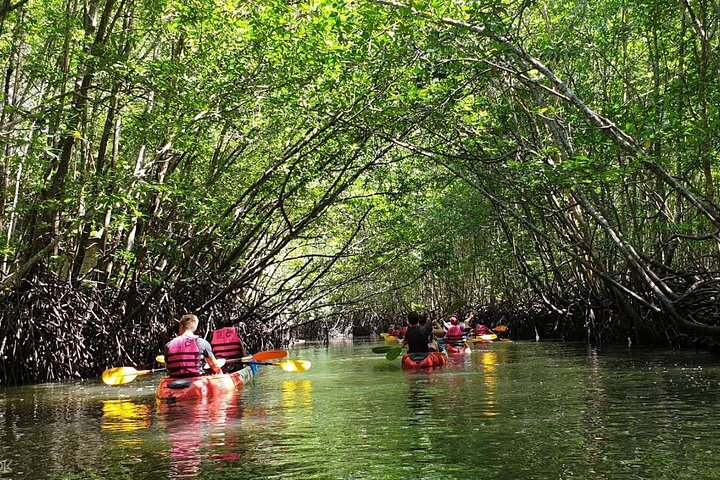
The first part of the tour is usually on the water. Depending on the departure you may paddle a kayak or ride a longtail through the mangroves, with a guide pointing out birds, crabs and root systems. The second part is the old town itself, where you walk along the main street, step into small shops and look at the wooden buildings, many of which are still homes or family businesses.
Expect a mix of old Chinese shophouses with carved doors, Muslim prayer halls and the stilt houses at the water's edge. There are cafes, small galleries and local food stalls in between, so it is worth bringing a little cash for coffee or a snack.
The history is the reason to go with a guide. Lanta was a port for traders crossing the Andaman Sea long before tourism, and the old town grew up as a place to buy and sell fish, salt, rubber and other goods. Chinese families settled in the shophouses, Thai Muslim communities built their own mosques and the Chao Leh, who lived on boats and on the shore, formed their own villages nearby.
The mix of cultures shows in the architecture, the food and the festivals. Ask your guide about the traditions of the sea nomads and how they have changed, because it is a part of Lanta's story that most beach visitors never hear.
Practical details are simple. The pace is slow, the walking is flat and the old town is compact, so the day suits all ages. Wear shoes you can walk in, a hat and light clothing, and bring sunscreen. If you are visiting a mosque or a temple, dress modestly with covered shoulders and knees and ask before taking photographs of people.
On Fridays some local businesses close for midday prayers, which can affect shopping and meals, so ask your guide about timing. The old town is quieter in the morning and gets busier in the evening when a small night market and restaurants open on some days.
If you want to spend more time in the old town, add an evening visit after the tour. Many of the best seafood restaurants are on the water, and the sunset over the mangroves is lovely. It is also a good place to buy local crafts, batik and dried fruit.
This tour pairs well with a cooking class or a slower beach day, and it is a good choice for a day when the sea is too rough for island boats. Keep expectations realistic: it is an atmospheric and authentic place rather than a museum, and its charm comes from the pace and the people.
What to expect
The experience
A guided half-day tour that combines a mangrove trip with a walk through Lanta Old Town, with hotel pickup.
Best time
Mornings are cooler and quieter. The tour suits windy days when boats to the islands are rough.
How long
Plan on about four hours.
Tips
Wear walking shoes, a hat and modest clothing for religious sites, and carry a little cash for snacks and coffee.
Quick picks
- Best for
- Travelers who want culture and nature in a single easy morning.
- Families
- Flat and gentle, with plenty of stops for snacks and drinks.
- Couples
- Return to the old town in the evening for a seafood dinner on the water.
- Pair with
- A cooking class or a quiet beach afternoon.
- Time needed
- A morning.
Good questions
Is the old town worth visiting?+
Yes, for its wooden shophouses, stilt houses and mix of Chinese, Muslim and sea nomad culture. It is atmospheric rather than a set of major sights.
Do I paddle or ride a boat?+
It depends on the departure. Check the description when you book for the type of mangrove trip.
What should I wear?+
Light clothing, walking shoes and sun protection. Cover shoulders and knees if you plan to enter religious buildings.
When is the old town busiest?+
Evenings and weekends, when restaurants and some stalls open. Mornings are quieter.
Is it suitable for older travelers?+
Yes. The walking is flat and the pace is slow.