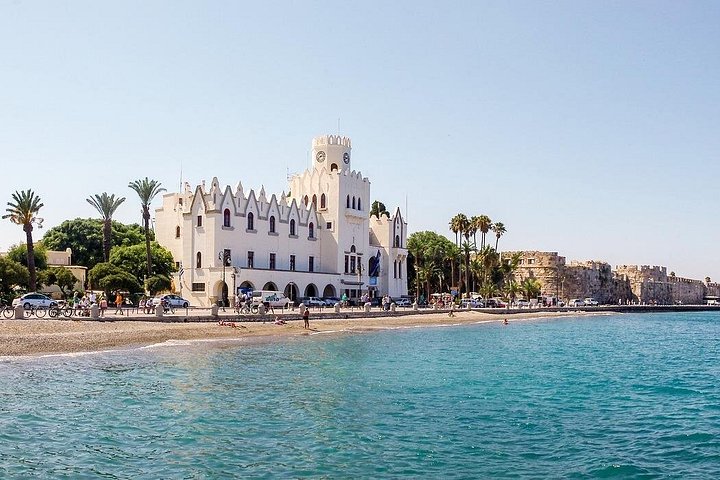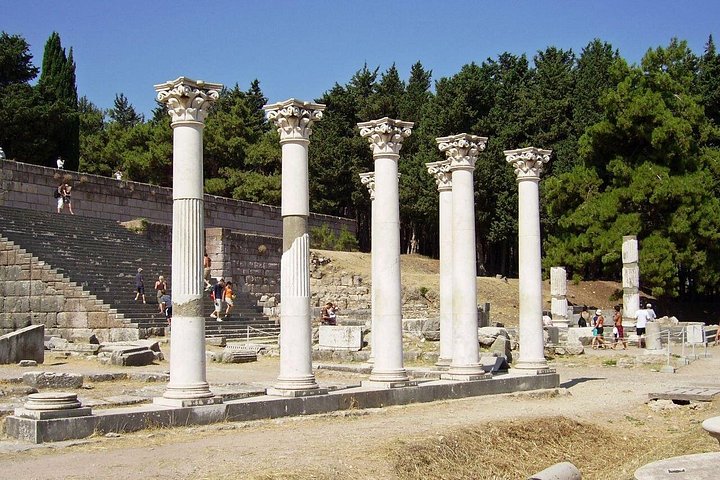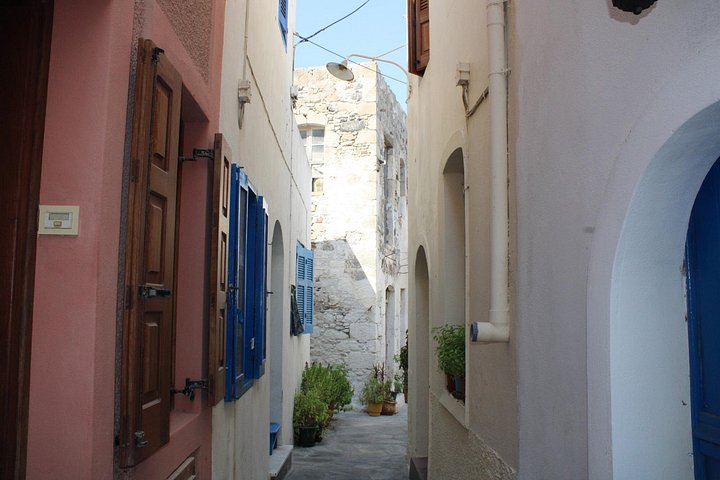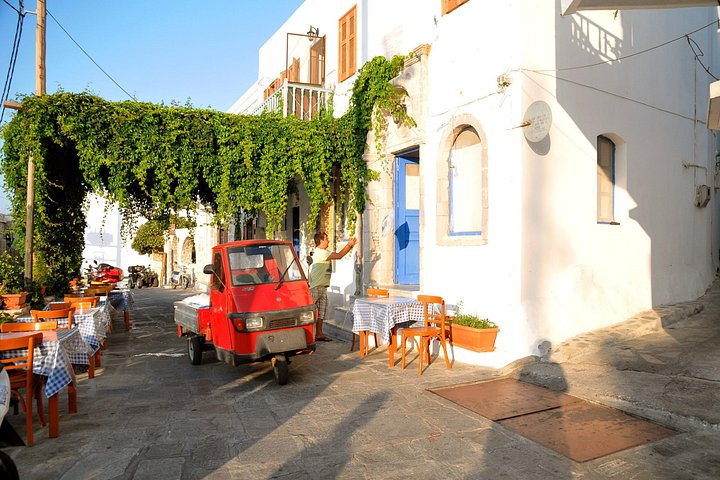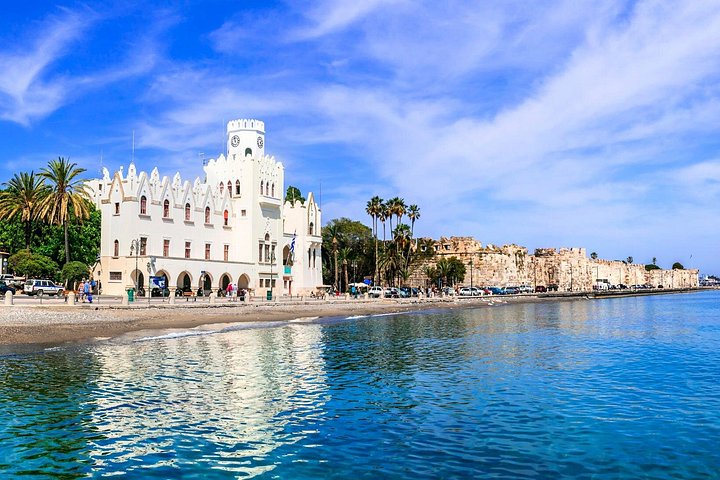
Kos Town is small, flat and layered with history, which makes it ideal for a guided walk. Within a few hundred metres you pass a medieval castle, the ruins of a Hellenistic marketplace, Ottoman fountains and mosques, Italian-era public buildings and a busy modern harbour, all of it threaded with palm-lined streets and bicycle lanes. The town was rebuilt after a severe earthquake in the early twentieth century, and the excavations that followed uncovered Roman and Hellenistic remains right in the middle of the streets, so the ruins sit among the cafes rather than behind fences. A walking tour with a local guide stitches these layers together and tells you which stones belong to which age, something that is hard to work out alone. Typical stops on a town walk include the harbour front, where excursion boats and ferries leave for the neighbouring islands, and the castle of the Knights of St John, whose double walls and moat dominate the waterfront. Nearby is the Ancient Agora, a large field of low walls, columns and foundations that once held the commercial and civic heart of the ancient city. The tradition around the plane tree of Hippocrates also belongs on the route: local stories say the physician taught beneath the tree, and although the present tree is far younger, the spot is a cheerful place to hear the legend. Add the Defterdar mosque square, the old covered market quarter and the shady lanes behind the harbour and you have a good first orientation to the town.
The product linked here is a walking tour with a local guide in Kos Old Town. The title does not list the stops, so treat the sights above as the usual highlights of a town walk rather than a guaranteed itinerary, and ask the operator about the route, the length and whether entry fees for the castle or other sites are included.
A guided walk is a good first-day activity, because it helps you decide which places deserve a longer visit afterwards. You can then return alone to the castle, sit in a cafe on the harbour or hire a bicycle for the seafront path.
Plan the walk for the cooler parts of the day. Midday in July and August is hot, and the Agora has almost no shade. Morning or early evening works well, and an evening walk finishes naturally at dinner time among the tavernas. Wear comfortable shoes, because the pavements near the ruins are uneven, and bring water and sun protection. The distances are short, so the walk suits most ages and fitness levels, and families with children often enjoy the open spaces around the ruins, where children can run along the low walls.
Kos is famously a bicycle island, and the old town is the easiest place to start if you are not used to riding abroad, as the streets are level and the bike paths separate you from most traffic. A tour first and a bike afterwards is a good combination.
If you are visiting in the shoulder seasons, check ahead because some tours run only on certain days. Many visitors also pair the walk with the Asklepieion in the afternoon, which completes the story of ancient Kos: the town where people lived and traded, and the sanctuary where they went to be healed.
What to expect
The experience
A guided walking tour of the compact old town; confirm the route and whether castle entry is included.
Best time
Morning or early evening, when it is cooler and the light is soft.
How long
Two to three hours.
Tips
Wear comfortable shoes, carry water and sun protection, and ask about the castle and Agora opening days.
Quick picks
- Best for
- First-time visitors who want orientation and the town story.
- Families
- Easy, flat and open, with space for children to move around the ruins.
- Couples
- A pleasant early evening stroll ending at a harbour taverna.
- Pair with
- A bike ride along the seafront or the Asklepieion in the afternoon.
- Time needed
- Two to three hours.
Good questions
Is the old town walkable?+
Yes. Kos Town is compact and flat, and most of the sights are within a few hundred metres of the harbour.
Does the tour include entry to the castle?+
The product title does not say, so ask the operator when you book. Entry fees are often separate.
Is the plane tree of Hippocrates the original?+
Local tradition links it to Hippocrates, but the tree standing today is much younger than the legend. It remains a popular stop.
What is the Ancient Agora?+
The ruins of the ancient marketplace and civic centre, a wide field of foundations and columns beside the harbour area.
When is the best time to walk?+
Morning or early evening. Midday in summer is hot and the ruins have little shade.