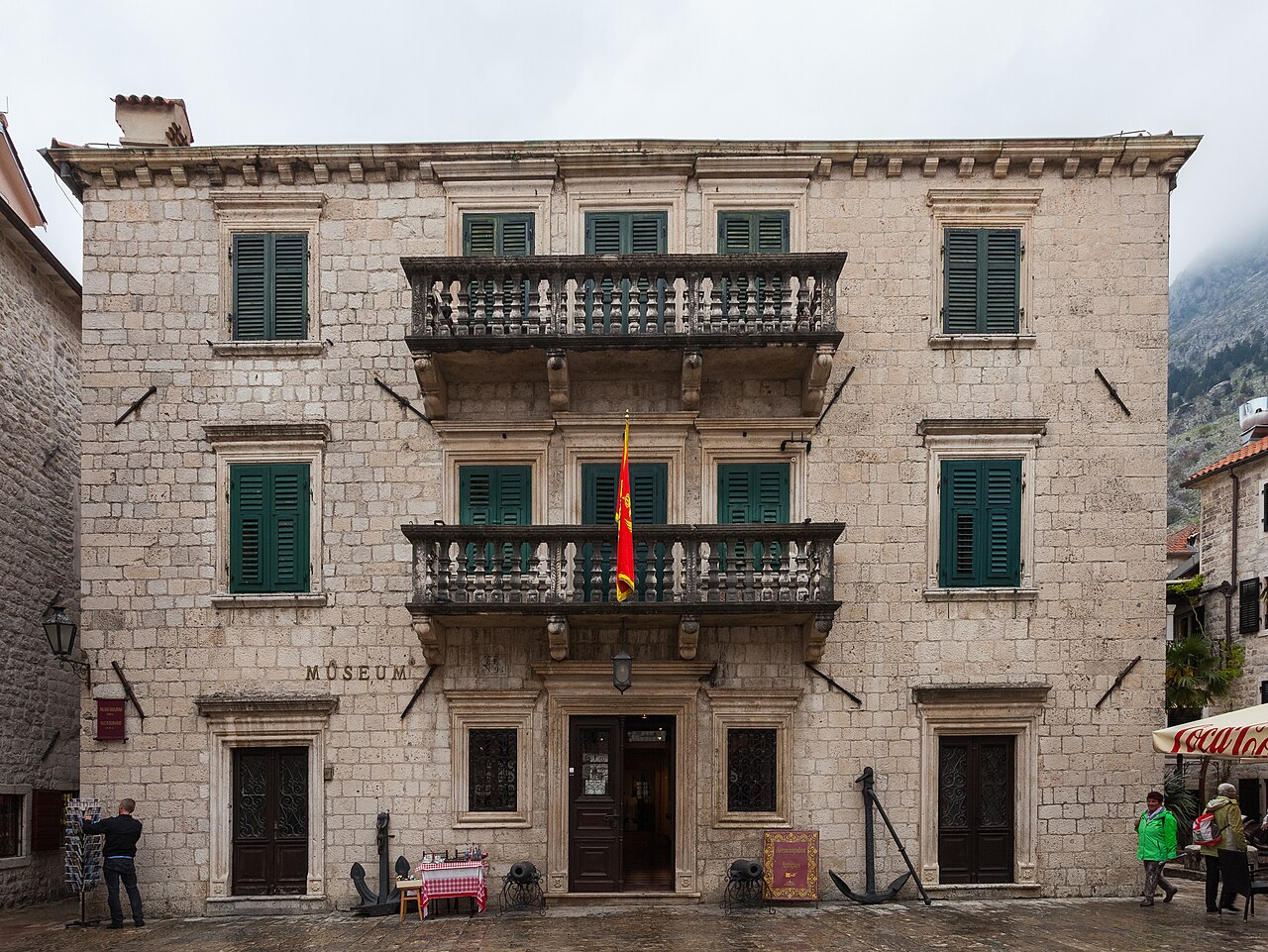
Cetinje is the spiritual and historic heart of Montenegro, tucked into a high valley beneath Lovćen. It was the seat of the Montenegrin rulers for centuries, and its calm, low-rise streets still hold the palaces, embassies and museums of that era. The Cetinje Monastery, founded in the late fifteenth century, is the religious centre of the country and keeps important relics. Near it stand the Biljarda, the residence of the poet-prince Njegoš, now a museum, and the former royal palace of King Nikola, which has become part of the national museum complex. Between them run leafy avenues, villas that once housed foreign legations and cafés where locals linger. It is a gentler, more local place than the coast, and a good counterpoint to Kotor’s crowds.
How to get there
Cetinje lies roughly 30 kilometres from Kotor as the crow flies, but the journey by road is slower, because the classic route climbs the Kotor serpentine, with its dozens of hairpin bends, and crosses the Lovćen plateau through Njeguši. Allow about an hour each way by car, and more if you stop for the views. Many visitors join a guided day trip that links Cetinje with Lovćen and Njeguši, which saves driving on the steep, narrow road and fits several sights into a day.
What to see
Start at the monastery and then stroll through the central streets to the museums, which tell the story of the Montenegrin state, its rulers and its arts. The old embassy buildings along the main avenues are worth a slow walk, and the pedestrian streets around the centre have cafés and small galleries. Museums keep seasonal hours and often close on one day a week, so check before you plan around a particular visit. The monastery asks for modest dress, with covered shoulders and knees.
Making the most of it
Combine Cetinje with the Njegoš Mausoleum on Lovćen, since the two sit on the same route and complement one another, or add a pause at Njeguši for smoked ham and cheese. A half day is enough for a first visit; a full day lets you take the museums at a relaxed pace.
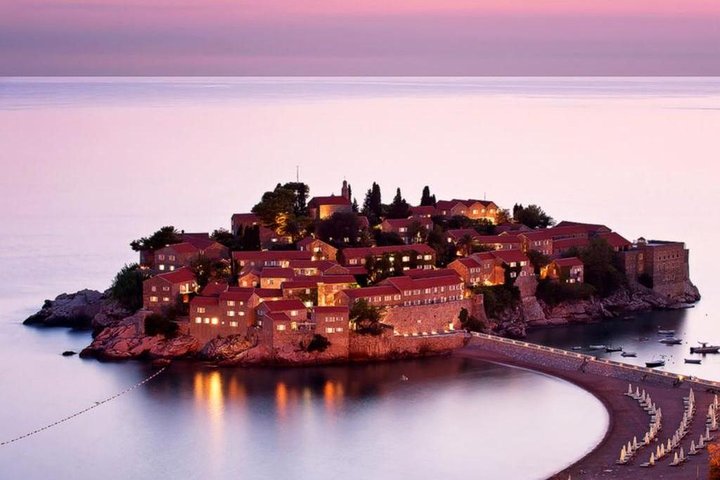
Out of season the town is very quiet, with fewer tour groups, and the mountain air is cool, so bring a layer. If you prefer the coast, head back via Budva to see Sveti Stefan. Cetinje’s relaxed pace is part of its charm, so treat it as a place to wander rather than to rush through.
Practical notes
The town is easy to explore on foot, with most museums within a ten-minute walk of one another, and cafés on the main street make good resting stops between visits. Bring some cash for small museum tickets and for the monastery’s candles and donation box, and keep an eye on the weather, since mountain showers can arrive quickly and the valley can be several degrees cooler than the coast.
If you are driving, park near the centre and walk, because many of the streets are narrow and one-way. Visitors with limited time should prioritise the monastery and one museum rather than trying to see them all.
What to expect
The experience
A town visit combining the monastery, museums and old embassy streets, usually as part of a Lovćen day trip.
Best time
Spring and autumn for walking, with mornings best for museums.
How long
A half day on its own, a full day with Lovćen.
Tips
Dress modestly for the monastery and check museum opening days before you go.
Quick picks
- Best for
- History lovers and anyone who wants a quieter, more local Montenegro.
- Families
- Open streets and a few interactive museum spaces; the long drive is the main challenge.
- Couples
- A relaxed day of museums and cafés, paired with the Lovćen views.
- Pair with
- The Njegoš Mausoleum and Njeguši village.
- Time needed
- Half to full day.
Good questions
How far is Cetinje from Kotor?+
Roughly an hour’s drive each way over the Lovćen road, depending on traffic and stops.
Why is Cetinje called the old royal capital?+
It was the seat of Montenegro’s rulers for centuries and still has the palaces, museums and former embassies of that period.
Can I visit as a day trip?+
Yes, many guided day trips link Cetinje with Lovćen and Njeguši from Kotor.
Is Cetinje worth the trip?+
Yes for history, museums and a quieter atmosphere, especially if you combine it with Lovćen.
What should I wear to the monastery?+
Modest clothing that covers shoulders and knees.