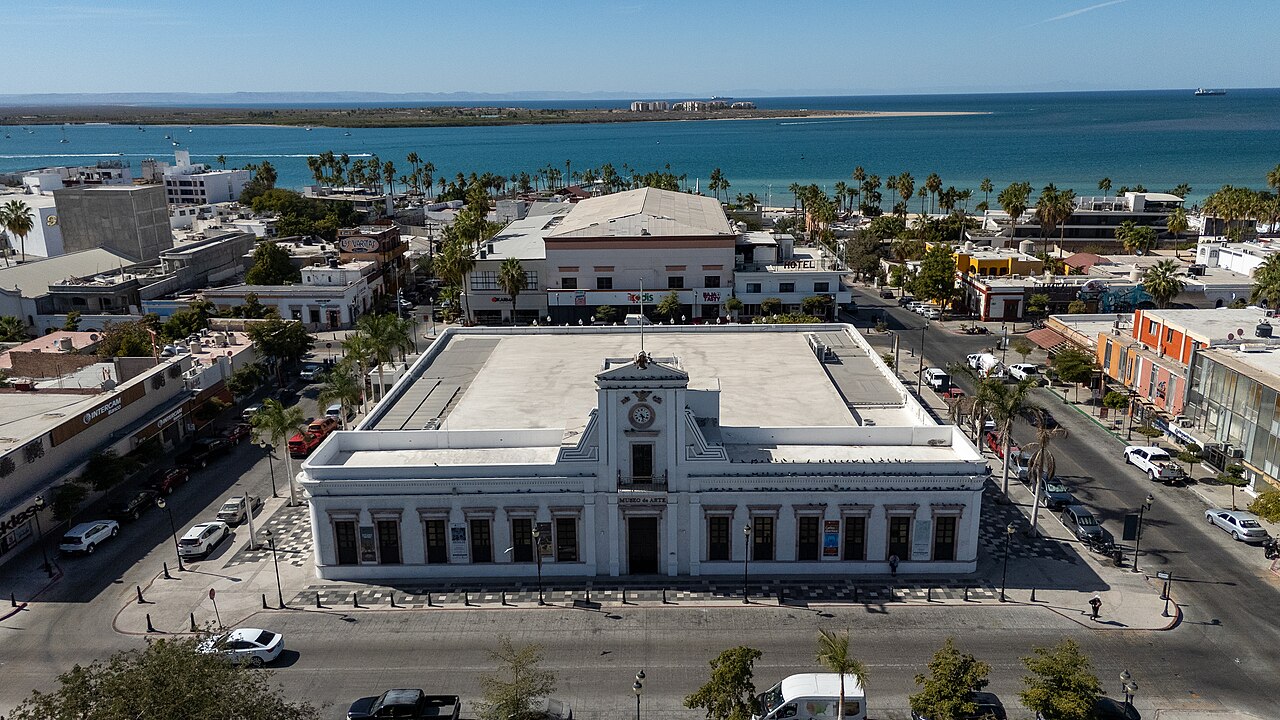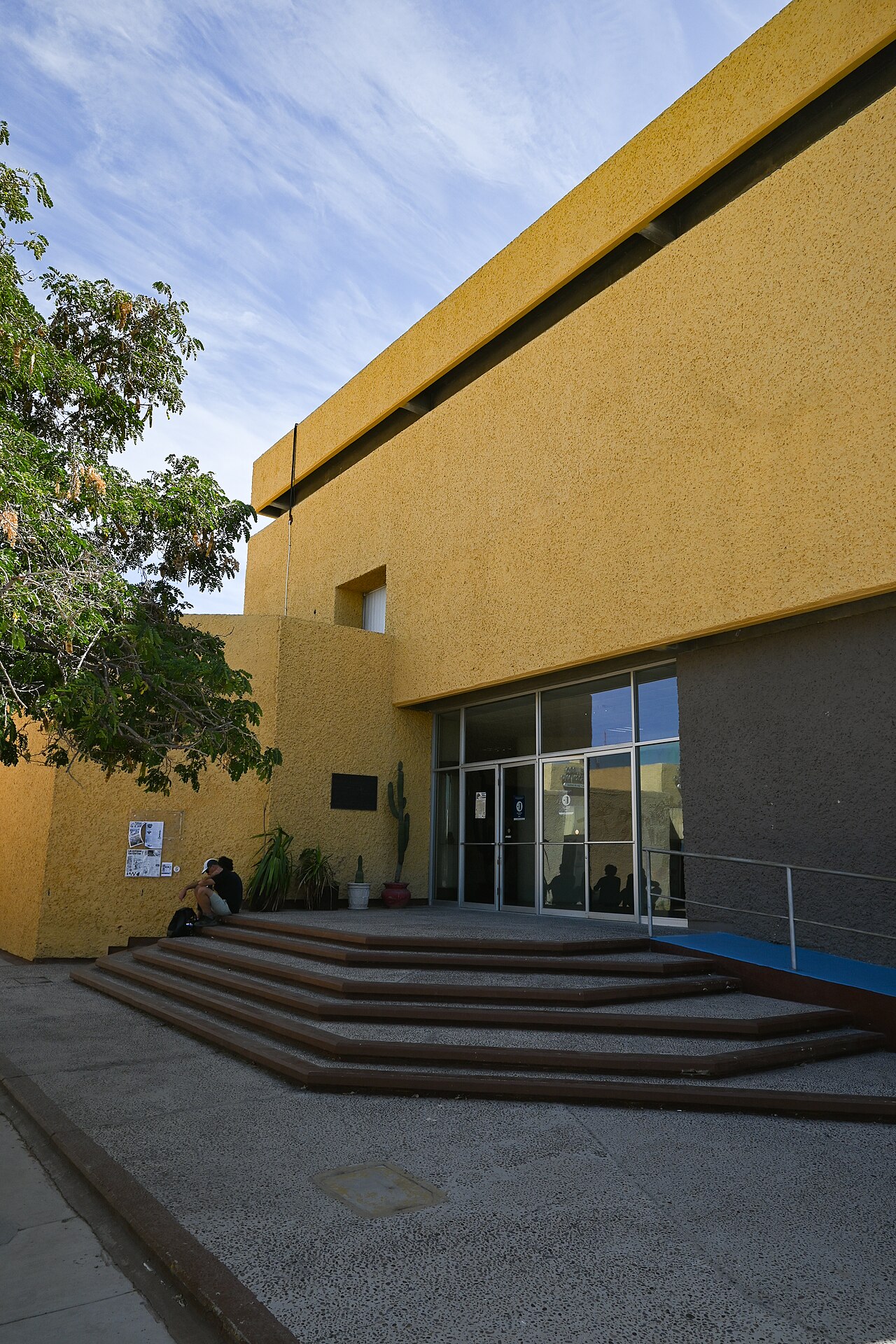
The Museo Regional de Antropología e Historia is the best single place in La Paz to understand how the peninsula came to be what it is. It stands in the historic center at the corner of Avenida Ignacio Manuel Altamirano and Calzada 5 de Mayo, a short walk from the cathedral and the Malecón, and it is part of the national network of INAH museums. The permanent route begins with an introductory hall of murals and collections and moves through archaeology, with recreations and interactive displays on the early peoples of the peninsula, then rock painting sites across Baja California including the San Borjita cave, the colonial period of discovery, missions and first civilian settlements, and finally independence, revolution and the twentieth century. Temporary exhibitions rotate through the year. It is a calm, air-conditioned stop that pairs naturally with the art museum next door.
What to see
The archaeology and rock art halls are the highlight, because they explain the cave paintings that the peninsula is famous for and are hard to appreciate without context. The colonial hall covers the arrival of Europeans, the mission era and the first settlements, which helps explain the layout and names of La Paz itself.
The last galleries bring the story to the modern state. Labels are mostly in Spanish, so a translation app or a little pre-reading helps, and it is worth asking at the desk whether guided visits are available in English.
Practical details
The museum is open on most days, with Monday the likely closing day, and the usual visiting hours run through the daytime, but hours change around holidays, so check before you go. Admission is modest, with a higher rate for foreign visitors, and entry is free on Sundays for Mexican citizens and for certain groups such as students, teachers and seniors. The museum asks visitors not to smoke, eat, bring pets or use flash, and professional cameras carry an extra fee. There is a lift for visitors with reduced mobility.
Make it a half day
Combine the museum with the cathedral and Jardín Velasco and the art museum, then finish with a late lunch on the Malecón. It is an excellent choice for the hottest part of the day or for a day when wind or swell keeps boats in port. Allow an hour to ninety minutes, and longer if a special exhibition is on. Pair it with a whale-themed evening, since the peninsula's marine heritage runs through the story.
What to expect
The experience
A self-guided walk through permanent halls on archaeology, rock art, the mission period and modern Baja California Sur.
Best time
Midday, when the heat is strongest, or any day when the weather keeps you off the water.
How long
About an hour to ninety minutes.
Tips
Check holiday hours, expect mostly Spanish labels, skip flash photography and ask about free days or discounts if they apply to you.
Quick picks
- Best for
- History-minded visitors who want context for the rock art, missions and pearl-diving past of the peninsula.
- Families
- Interactive displays and recreations keep older children engaged, and the building is air-conditioned.
- Couples
- A quiet cultural hour before a long lunch.
- Pair with
- The art museum, the cathedral and Jardín Velasco.
- Time needed
- Ninety minutes.
Good questions
How much does the museum cost?+
Admission is modest, with a higher price for foreign visitors than for Mexican nationals. Sundays are free for Mexican citizens, and some groups such as students and seniors enter free.
When is it open?+
It is generally open Tuesday to Sunday during the day and closed on Mondays. Hours change around public holidays, so confirm before you travel.
Are there English labels?+
Most information is in Spanish, so bring a translation app or ask at the desk about English support. The visual displays and recreations are easy to follow without much text.
Can I take photos?+
Photography without flash is generally allowed, and professional cameras carry an extra fee. Follow the signs in each gallery.
Is it accessible?+
The museum has a lift for visitors with reduced mobility. Ask staff about the best route through the galleries.