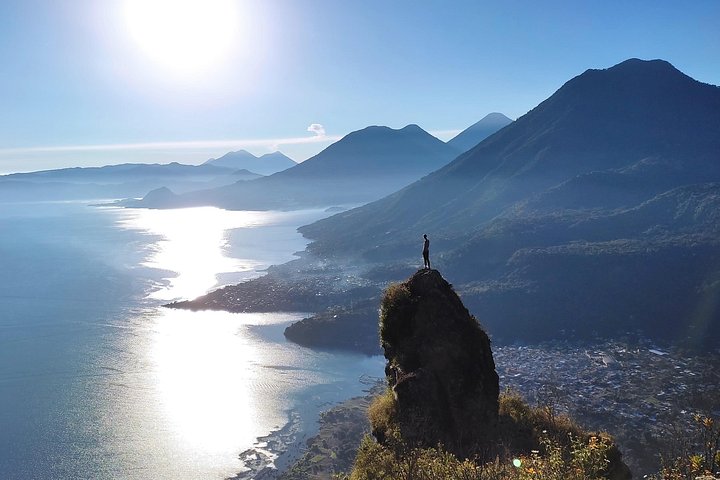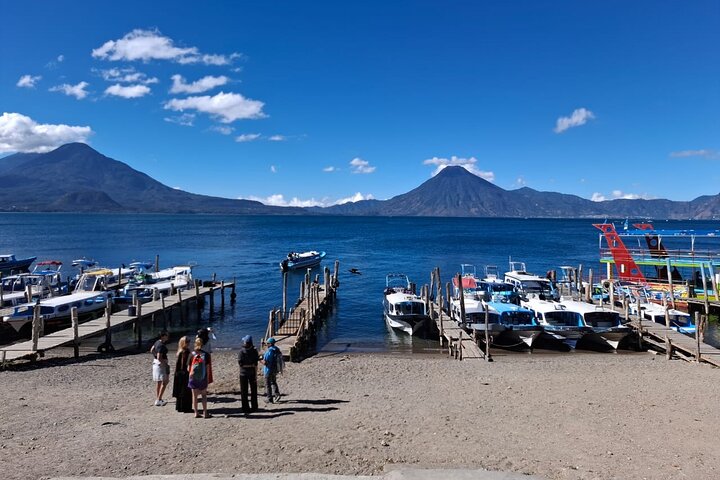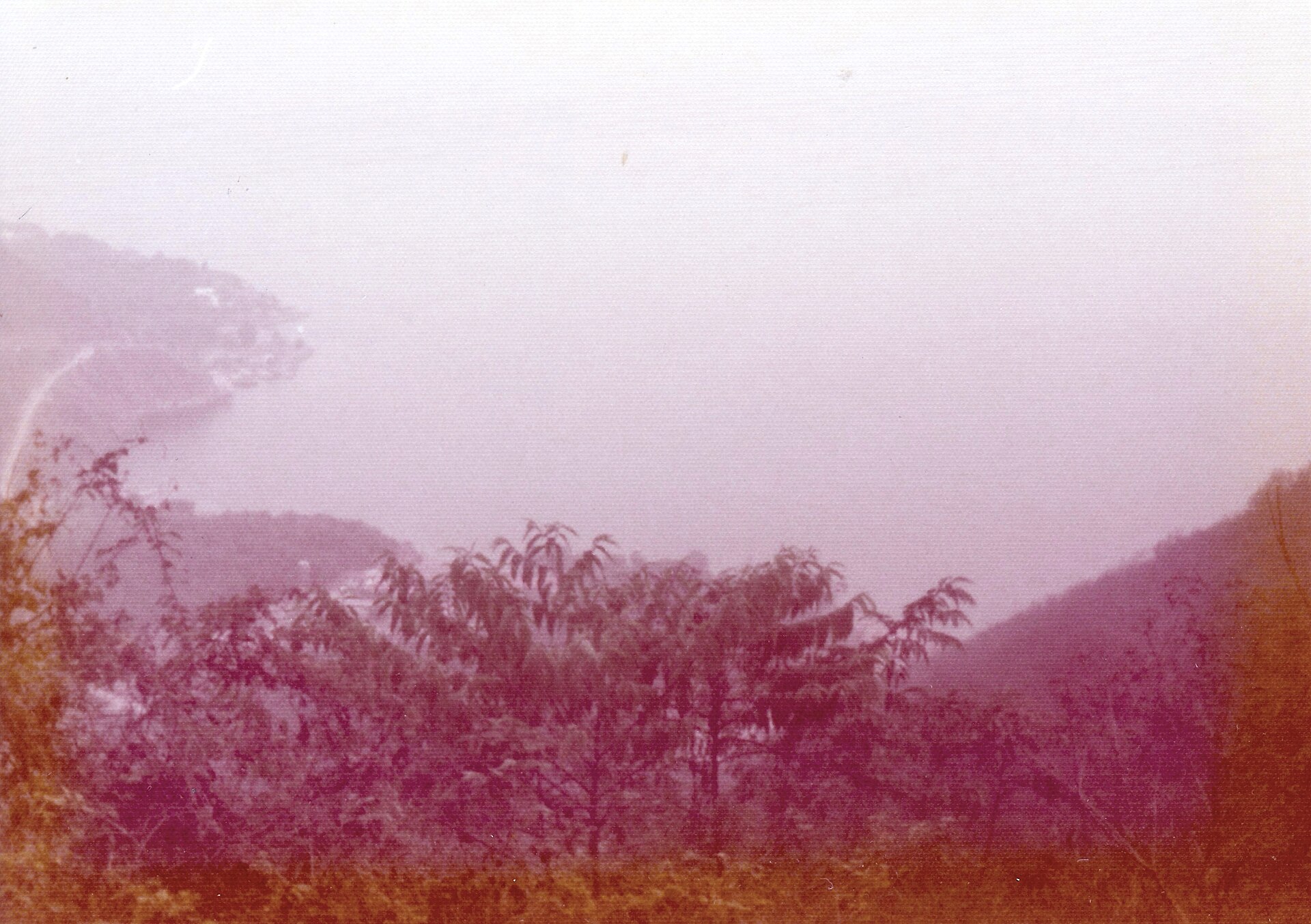
Volcán San Pedro rises straight behind the lake town of the same name, and climbing it is the classic full-day hike for travelers who want more than a sunrise viewpoint. The summit sits at roughly 3,000 meters, nearly 1,500 meters above the water, and the route climbs through coffee farms and cornfields at the base, then into shaded cloud forest, before opening onto the upper slopes where the lake spreads out far below. This guided hike starts from San Pedro La Laguna, so there is no transfer to arrange, and a guide keeps you on the right path through junctions that are easy to miss. Expect a long, steady climb rather than technical terrain. Most groups set out early in the morning to stay ahead of the afternoon cloud and heat, and a typical outing takes most of a day including time at the top. The reward is a broad view across Atitlán toward its two sister volcanoes, with the villages along the shore reduced to small clusters of roofs. It is a harder day than the Indian Nose, and a better fit for people who enjoy sustained uphill walking and want to earn their view.
Why it is worth the effort
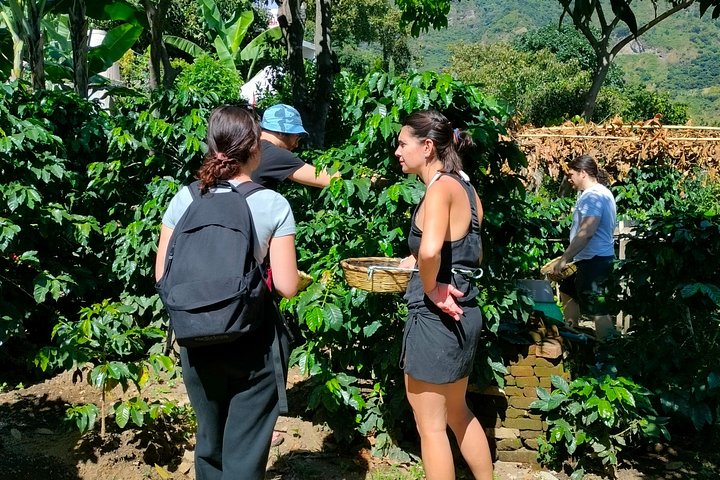
The Indian Nose gives you a sunrise, but San Pedro Volcano gives you the lake from above and a real sense of the landscape you have been boating across. The first stretch passes working farms, so you see how coffee and corn are grown on slopes that look too steep to plant.
Higher up, the trail enters cloud forest where the air cools, moss hangs from branches and birdsong replaces village noise. On a clear day the view from the top takes in the whole western lake and the other two volcanoes. Cloud can roll in at any time of day, so treat the panorama as likely rather than guaranteed.
What to know before you go
This is a demanding hike, with a long continuous ascent and a knee-testing descent, so it suits people with a good level of fitness who are comfortable walking uphill for several hours. Start early, carry plenty of water and snacks, and wear sturdy shoes with grip, because the trail can be slick after rain.
Bring a warm layer and a rain shell, since conditions near the top are cooler and windier than in town. Sun protection matters on the exposed sections. Ask the operator what the reservation covers, including any entry fee for the community land the path crosses, and carry a little cash in case something is paid on the way.
Making it work
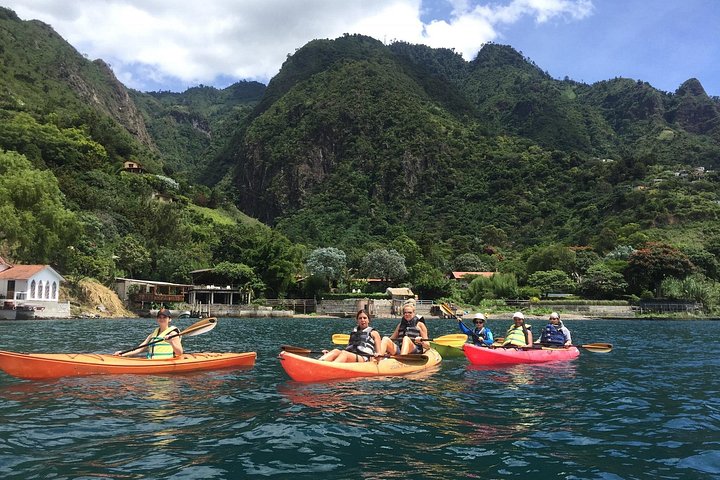
Do this on a day when you have nothing else planned, and avoid stacking it the morning after the Indian Nose sunrise. San Pedro is the natural base, so sleeping in town the night before means a short walk to the meeting point at dawn. Dry-season mornings, roughly November through April, give the best odds of clear views, while the wetter months bring afternoon storms that make an early finish important.
Plan a long lunch and an early night afterward, and keep the next day light, perhaps a boat ride to San Juan or a slow day in the hammocks.
What to expect
The experience
A guided full-day climb from San Pedro La Laguna through coffee farms and cloud forest to the volcano's upper slopes and a view over the lake.
Best time
An early start on a dry-season morning, roughly November through April, for the best chance of clear views.
How long
Most of a day, including the ascent, time at the top and the descent.
Tips
Bring plenty of water, snacks, a warm layer, a rain shell and sturdy shoes with grip, and go with a guide who knows the junctions.
Quick picks
- Best for
- Fit hikers who want a challenge and a bigger view than the Indian Nose offers.
- Families
- Best for teenagers and adults who are used to long hikes. It is too long and steep for young children.
- Couples
- A shared challenge with a big reward, best for active couples who like to start early.
- Pair with
- A slow evening in San Pedro, or a lighter boat day to San Juan La Laguna the next morning.
- Time needed
- A full day, plus a quiet evening to recover.
Good questions
How long does the San Pedro Volcano hike take?+
Plan on most of a day. The climb is long and steady, and groups usually allow time at the top before the descent. Ask your operator for the expected start time and total length when you reserve.
How hard is it?+
It is a demanding hike with a continuous ascent of nearly 1,500 meters and a tiring descent. You should be comfortable walking uphill for several hours. It is harder than the Indian Nose.
Where does the hike start?+
Tours start from San Pedro La Laguna, at the foot of the volcano, so staying in town makes the early meeting point easy. Confirm the place and time the night before.
Will I see the lake from the top?+
On a clear morning the view takes in the lake, the villages and the neighboring volcanoes. Cloud can build quickly, especially in the wetter months, so go early and keep expectations flexible.
What should I wear and bring?+
Wear layers, sturdy shoes with grip and sun protection. Carry plenty of water, snacks, a rain shell and a little cash. It is noticeably cooler near the top.