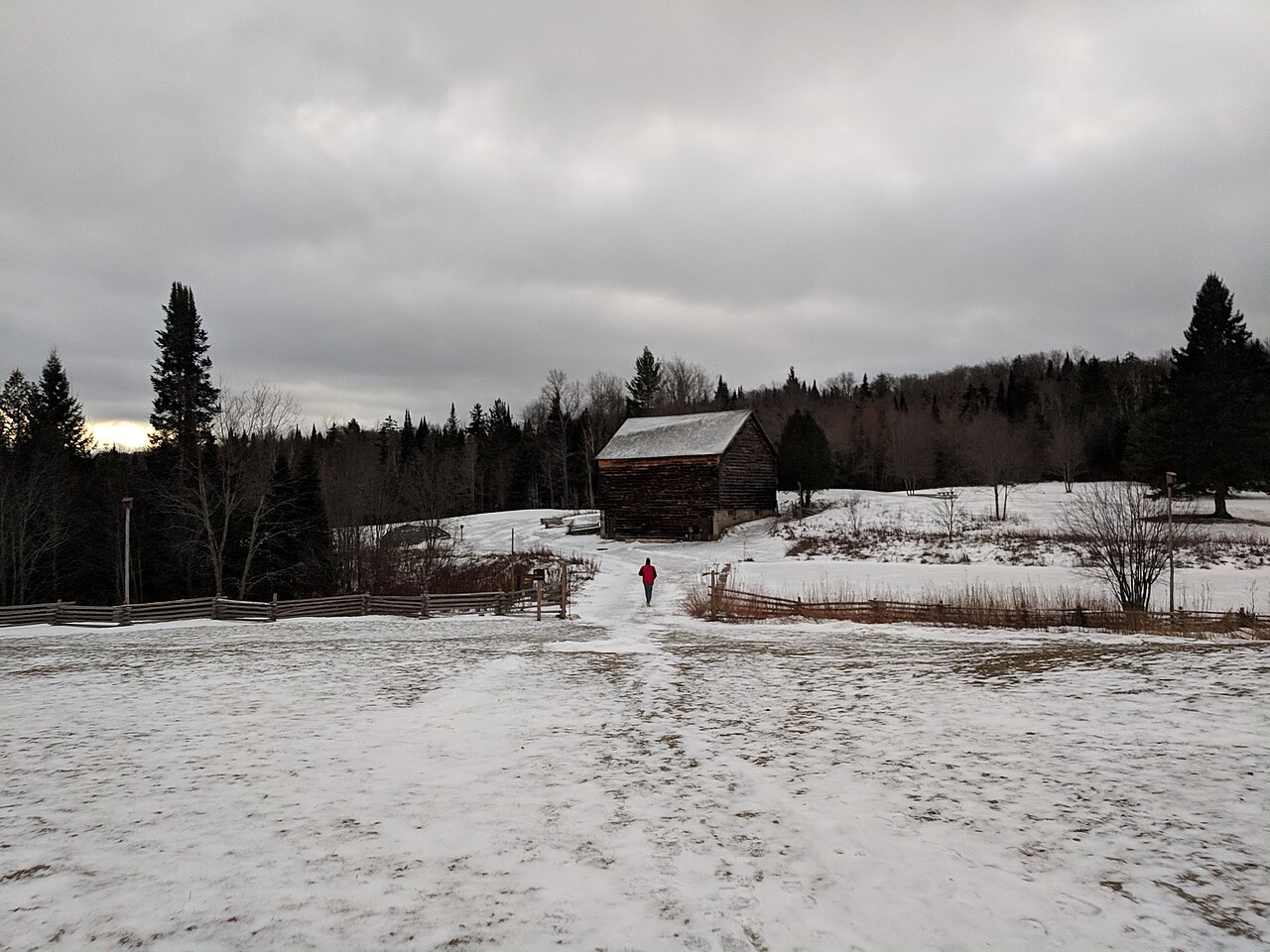
John Brown Farm State Historic Site is a small, moving stop just outside Lake Placid, where the abolitionist John Brown lived with his family for a time in the 1850s and where he is buried. Brown is best remembered for the 1859 raid on the federal armory at Harpers Ferry, Virginia, and his execution the same year, but the story that connects him to the Adirondacks is less known. He moved his family to North Elba, where he was drawn by a settlement project for free Black families on land offered by the philanthropist Gerrit Smith. After his execution, his body was brought to the farm for burial, and the site has been a place of pilgrimage ever since. The grounds include the farmhouse, a barn, a statue and the grave marked by a large boulder, set in an open meadow with views toward the High Peaks.
Visiting is a quiet, reflective experience. The grounds are open for walking, and the farmhouse and exhibits tell the story of Brown's family, the North Elba community, and the debate over slavery in the years before the Civil War. The site is operated by New York State's historic sites program, and interpretation varies by season, with guided tours and special programs offered at times.
The path from the parking area to the grave is short, and the surroundings feel remote even though the village is only a few minutes away. A wooden marker, the boulder and the surrounding stones make the place feel simple and powerful.
The context adds depth. The North Elba settlement, known as Timbuctoo, was one of several efforts to create farms for Black families in the Adirondacks, and the story intersects with the broader history of the region. Local museums and historic societies offer further material on this chapter, and the Lake Placid area has a history that goes beyond Olympics and skiing.
For visitors interested in American history, the farm offers a counterpoint to the winter sports story and a chance to think about the long road to emancipation. The farm hosts a commemorative event around Brown's birthday, which draws visitors from across the country.
Practicalities are easy. The site is a short drive from Lake Placid on the road toward the Olympic Sports Complex, parking is free, and the grounds are small enough for a visit of half an hour to an hour. Interior opening hours can be limited and seasonal, so check ahead if you want to see the house.
Wear comfortable shoes for the grass and dirt paths, and consider combining the visit with the Olympic Sports Complex or a lunch in the village. It is a good stop for older children and adults who value a quiet, thought-provoking place, and it deserves more visitors than it gets.
Visitors with a longer interest in the subject can combine the farm with museum exhibits in the region and with the commemorative events held around Brown's birthday, which include talks and walks. Bring a bottle of water and wear shoes suitable for grass. The meadow is open and exposed, so on a cold day a warm jacket matters, and on a sunny day a hat helps.
Photographs of the grave with the mountains behind are among the most evocative images of the village, and the quiet of the place is part of the reason people stay longer than they planned.
What to expect
The experience
A small state historic site with a farmhouse, barn, statue and John Brown's grave in a meadow facing the High Peaks.
Best time
Late morning in good weather. Building hours are seasonal and limited; the grounds are the main draw.
How long
Thirty minutes to an hour.
Tips
Check house hours in advance, bring a camera for the mountain view and pair with the Olympic Sports Complex.
Quick picks
- Best for
- History lovers and anyone interested in the abolitionist story.
- Families
- Better for older children who can appreciate the history.
- Couples
- A quiet, reflective stop between more active outings.
- Pair with
- Mt. Van Hoevenberg and the village are minutes away.
- Time needed
- Under an hour.
Good questions
Who was John Brown?+
An abolitionist who led the 1859 raid on Harpers Ferry. He was executed that year and is buried at his North Elba farm.
Why is he buried in Lake Placid?+
His family lived on this farm in North Elba, and his body was brought here for burial after his execution.
Is there an admission charge?+
The grounds are generally free to visit, though interior tours and hours may vary by season.
How long does it take?+
Most visitors spend thirty minutes to an hour.
Is it accessible?+
The grounds have grass and dirt paths. Contact the site for details on access to the house.