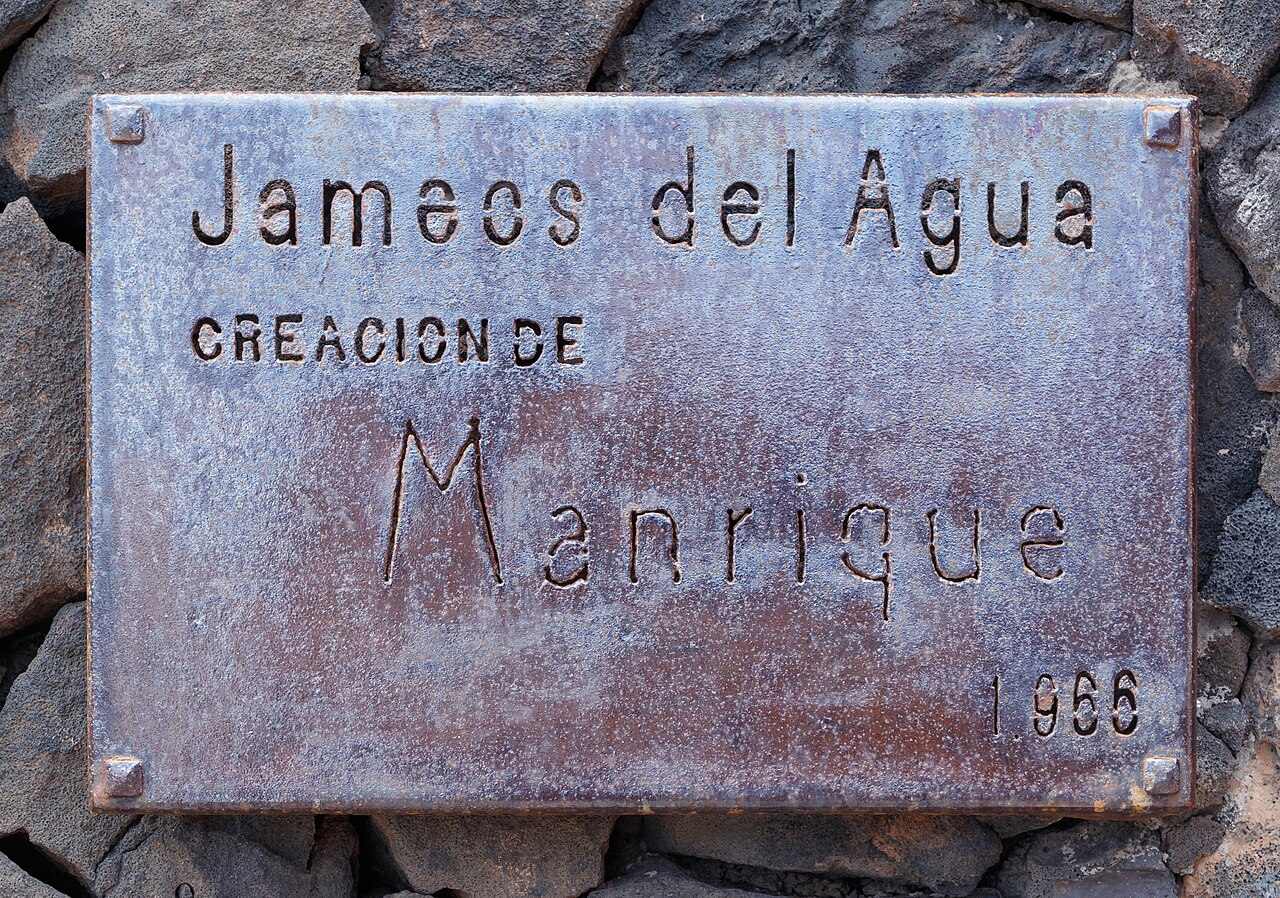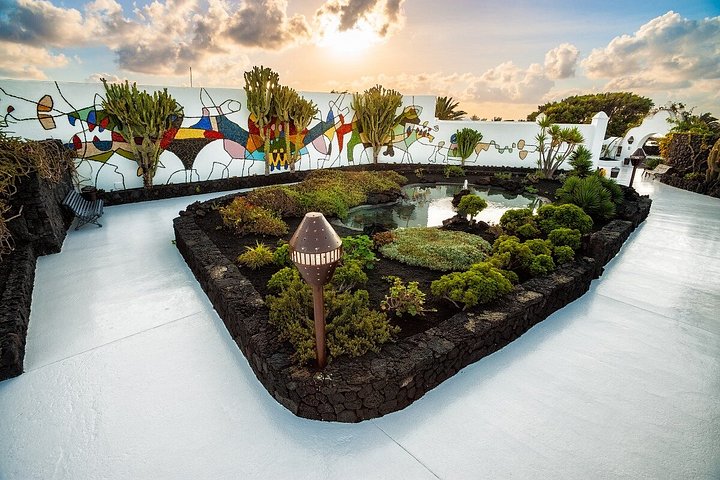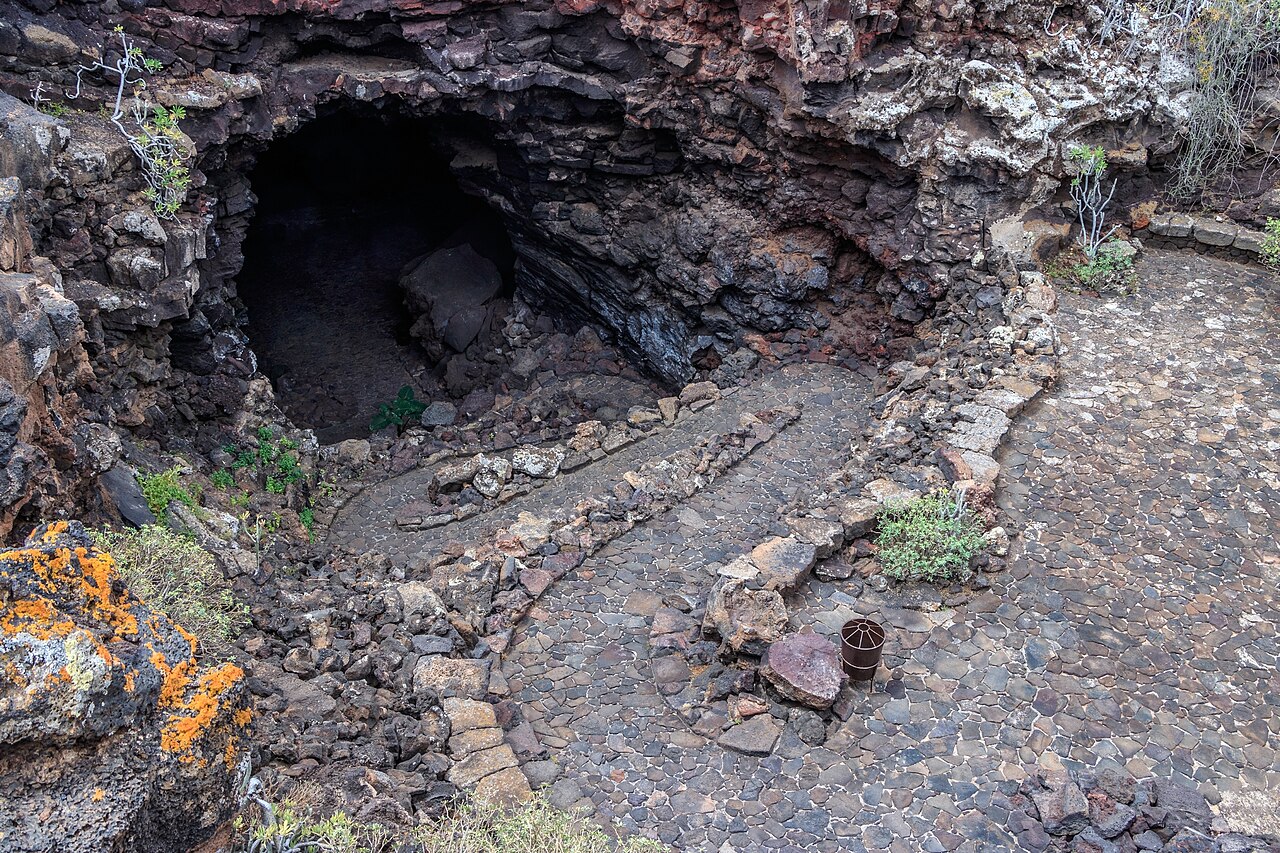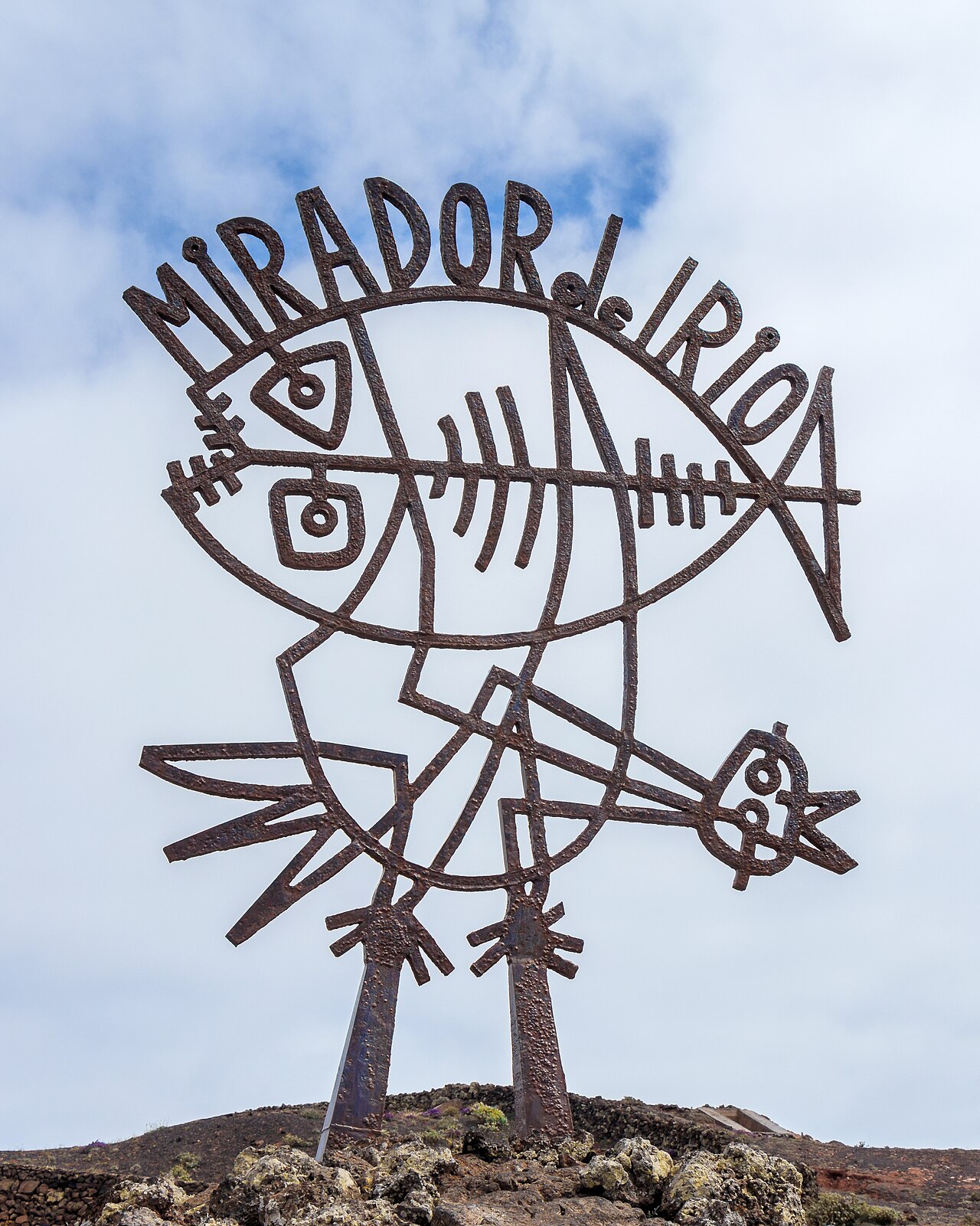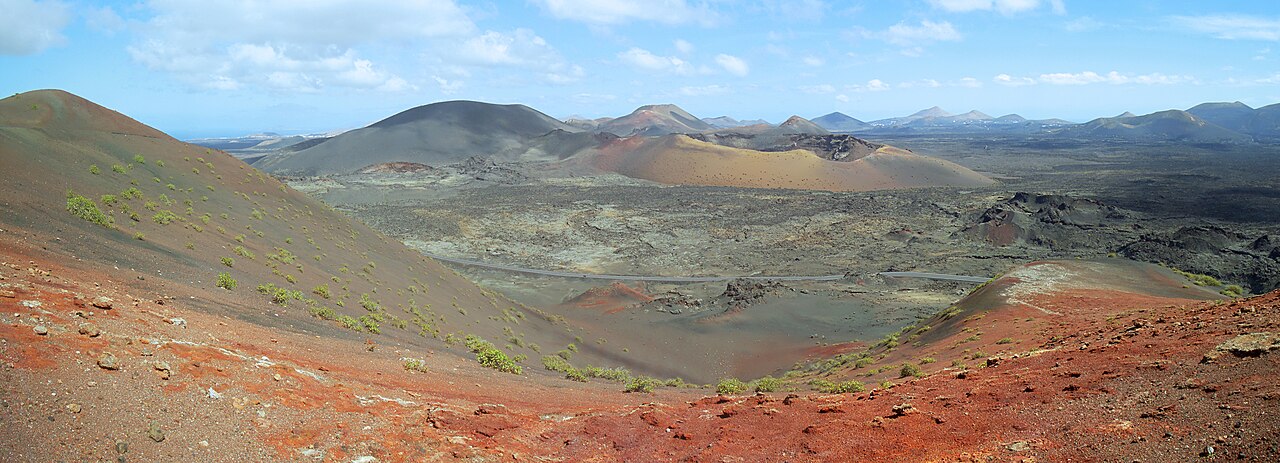
Most of Lanzarote is black and dry, which makes the Valle de las Mil Palmeras in the north a shock: a long valley of palm trees, prickly pears and small fields around the white village of Haría. The valley is visible from the Mirador de los Helechos, and another viewpoint, the Mirador de Haría or Mirador de Malpaso, looks over the village and the palm grove together. The village itself is calm and tidy, with a main square, cafés and a pleasant pace that contrasts with the resort coast. César Manrique chose Haría for his last home, and the house opened as a museum in 2013 with the minimum of changes, so visitors see how he lived at the end of his life. On Saturday mornings a craft market, set up in 2001, fills the main square with crafts and organic products. Further along the road north are the Cueva de los Verdes, Jameos del Agua and Mirador del Río, and the Volcán de la Corona, at 609 metres the highest point in the north, rises behind.
How it works
Visiting the village, the viewpoints and the valley is free and needs no booking, which makes Haría an easy, flexible stop on a day in the north. The Manrique house museum sells its own tickets, and a joint ticket with the Fundación César Manrique at Tahíche is available at both houses.
The Saturday craft market in the main square is held in the morning, so schedule your visit accordingly if you want it. Allow about two hours for the viewpoints, a walk through the village and a coffee, plus extra for the house museum or a walk up towards the volcano.
What to expect
A calm, green landscape and a village that feels like a different island from the south. The roads in the valley are narrow and winding, so drive slowly and watch for cyclists. Light is best in the morning and late afternoon, when the palms glow against the hillsides, and photographers should walk to the viewpoints rather than shoot only from the car. The hills around Haría are cooler and windier than the coast, so a light jacket is useful even on a warm day, and cloud can drift over the heights.
Making the most of it
Place Haría between two bigger sights, for example Jameos del Agua and the Cueva de los Verdes in the morning, then lunch in the village and an afternoon at the Manrique house or the viewpoints. In the same area, the town of Arrieta has a small house with a pagoda roof, built in 1916 by an emigrant who returned from abroad, and there are natural pools and small beaches along the north coast, although the sea can be rough, so check conditions before swimming.
If you enjoy walking, the crater of the Volcán de la Corona can be reached on foot, and a guide or a good map helps. Take water, sunscreen and a hat.
What to expect
The experience
A free stop in a green northern valley: viewpoints over the palms, a quiet village, a craft market on Saturdays and Manrique’s last house.
Best time
Morning or late afternoon for soft light on the palms, and a Saturday morning if you want the craft market.
How long
Allow about two hours, longer with the house museum or a walk towards the volcano.
Tips
Drive slowly on the narrow valley roads, bring a light jacket for the cooler heights and walk to the viewpoints for the best views.
Quick picks
- Best for
- Travellers who want a green, quiet contrast to the black lava and the beach resorts.
- Families
- Easy and free, with room to wander, though the winding roads suit older children better than long car rides.
- Couples
- A slow lunch in the village and a stop at both viewpoints make a relaxed northern afternoon.
- Pair with
- Jameos del Agua, the Cueva de los Verdes and Mirador del Río.
- Time needed
- Two hours, or half a day with the house museum and a walk.
Good questions
Is Haría free to visit?+
Yes, the village, the viewpoints and the palm valley are free. The César Manrique house museum has its own ticket.
When is the Haría craft market?+
It runs on Saturday mornings in the main square and sells crafts and organic products. Check local information for the latest details.
Which viewpoints show the palm valley?+
The Mirador de los Helechos looks over the valley of palms, and the Mirador de Haría, also called Malpaso, looks over the village and grove.
Is it the same as the Fundación César Manrique?+
No. Haría holds Manrique’s last home, now a museum, while the Fundación at Tahíche is the house he lived in earlier. A joint ticket covers both.
How do I get there?+
Haría is in the north of the island, a drive along the road past the Cueva de los Verdes and Jameos del Agua. A hire car is the easiest way, since buses are limited.