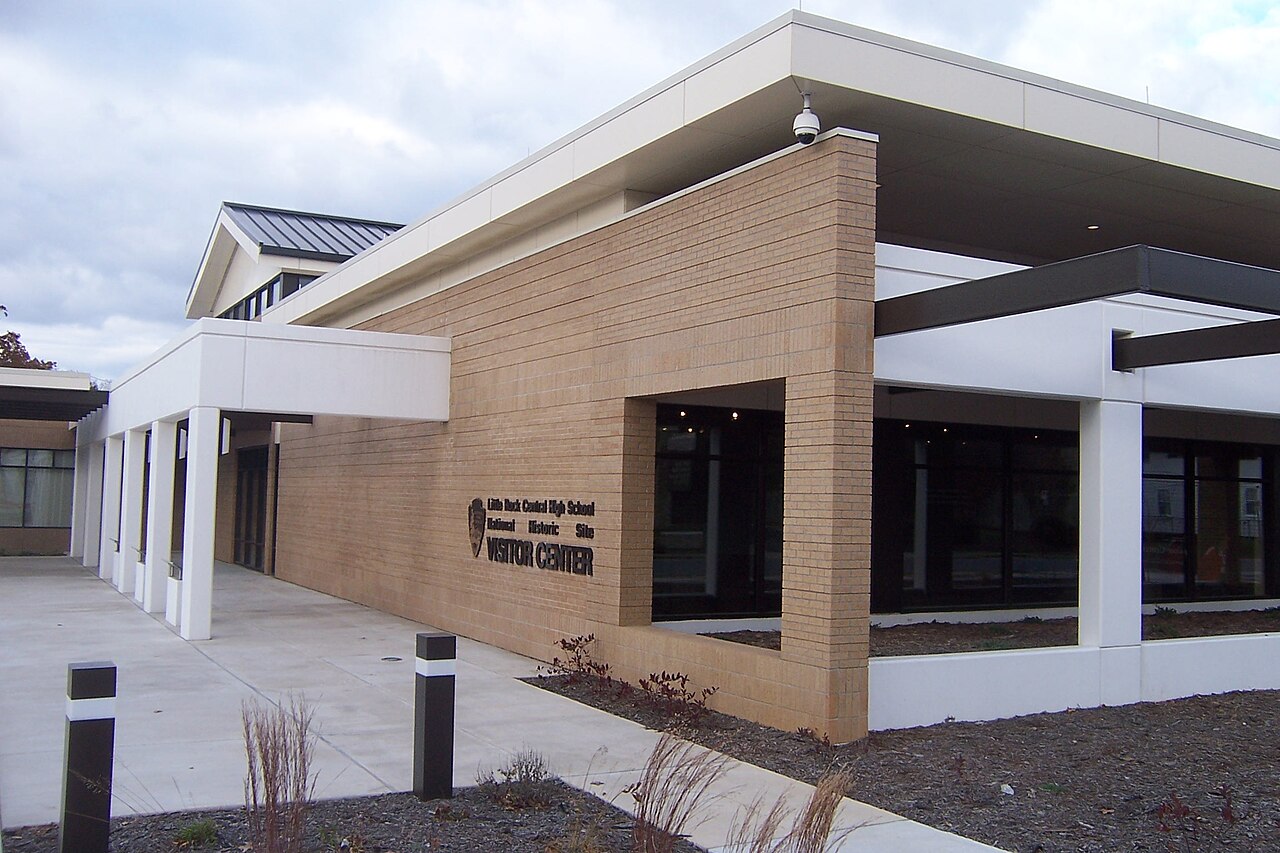
Few places in the United States carry the weight of Little Rock Central High School. In September 1957, three years after the Supreme Court's decision in Brown v. Board of Education, nine Black teenagers known as the Little Rock Nine tried to enter the all-white school under a court-ordered desegregation plan. Governor Orval Faubus called out the Arkansas National Guard to block them, crowds gathered outside, and President Eisenhower eventually sent federal troops to escort the students inside. The standoff became one of the defining images of the civil rights movement. Today the school is still a working public high school, and the surrounding site is managed by the National Park Service as the Little Rock Central High School National Historic Site. The visitor center occupies a restored former service station across the street from the school and tells the story through photographs, oral histories, film and artifacts. Outside, the sidewalk where the students walked and the front facade of the school will be familiar from the historic photographs, which makes the experience immediate in a way few historic sites manage. Ranger programs add detail, and the nearby Commemorative Park and memorial plaques extend the story across the neighborhood. A visit gives context to the whole city, because the crisis shaped Little Rock's national reputation for decades and is the subject of much local reflection today.
Plan to start at the visitor center, which is free to enter and which sets out the sequence of events before you step outside. The exhibits cover the lead-up, the crisis year, the closure of Little Rock's high schools the following year, and the long aftermath, and they are careful to include the voices of the students themselves.
Allow at least an hour, and more if you watch the film or join a ranger talk. Because the school is active, the building itself is not open to casual walk-ins; limited ranger-led tours of the school interior may be offered by advance reservation, so check the National Park Service page for the current schedule before you travel.
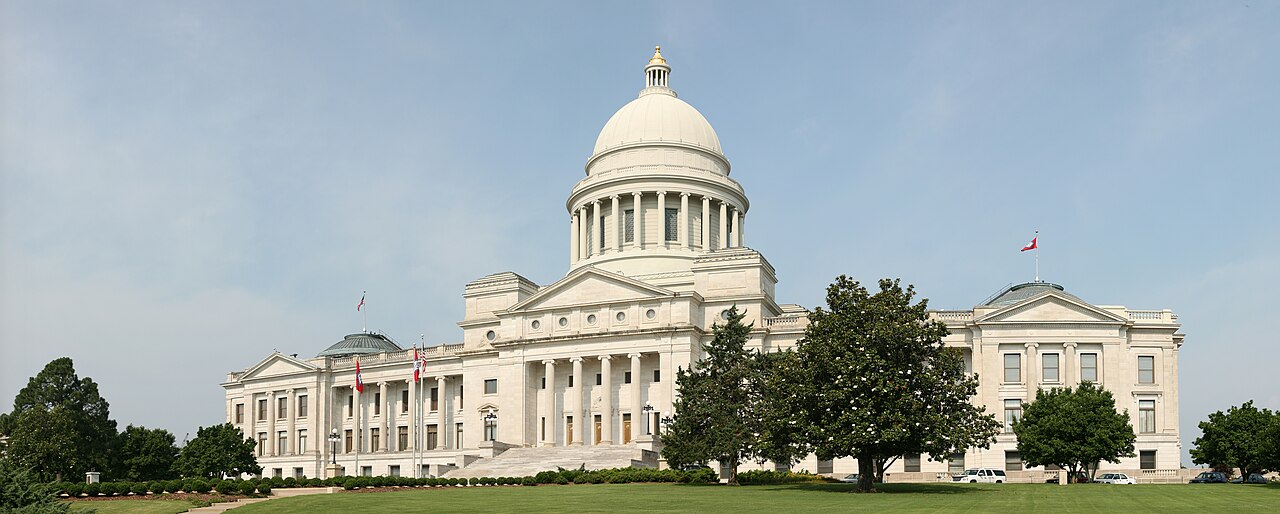
The neighborhood adds to the visit. The Commemorative Park across the street presents the history of the surrounding block, and the Daisy Bates House, the home of the NAACP leader who guided the students, sits a short drive away as part of the same story. The Little Rock Nine Memorial on the grounds of the Arkansas State Capitol, a set of bronze figures, makes a strong second stop, and the Mosaic Templars Cultural Center downtown deepens the Black history of Arkansas more broadly.
Treat the site with respect
This is both a school and a memorial, so keep voices low near the building, stay on public sidewalks, and do not photograph students. Weekday mornings tend to be calm outside school drop-off and pick-up periods, and the park is open for free exploration on its own schedule. Wear comfortable shoes and bring water in summer, because the walk between sites is short but exposed.
A few extra tips can deepen the visit. Read a short account of the crisis before you arrive, or watch a documentary afterward, because the sequence of events is easier to absorb with some background. Ask the rangers about the experiences of the students after 1957, including the lost year when the city's high schools closed.
If you travel with teenagers, this is one of the most effective history lessons in the country, because the site is real, present and still in use. Allow quiet time on the sidewalk across from the school, and consider adding the Daisy Bates House and the memorial on the Capitol lawn.
What to expect
The experience
A free National Park Service visitor center with exhibits and film, outdoor memorials across the street from an active high school, and ranger programs.
Best time
Weekday mornings after school drop-off, when the neighborhood is calm and the visitor center has room to explore.
How long
One to two hours at the visitor center and surrounding park.
Tips
The school building is active; interior tours are limited and may need a reservation. Respect students and staff. Check the park website for hours and tour availability.
Quick picks
- Best for
- History-minded travelers, families with older children, anyone interested in civil rights.
- Families
- Appropriate for school-age children with some context; the exhibits are serious and moving.
- Couples
- A quiet, reflective stop rather than a romantic one.
- Pair with
- The Arkansas State Capitol memorial and the Mosaic Templars Cultural Center.
- Time needed
- One to two hours.
Good questions
Is Little Rock Central High School open to visitors?+
The visitor center and Commemorative Park are open to the public. The school itself is active, and interior tours are limited and typically by reservation.
Does it cost anything?+
Entry to the National Park Service visitor center is free.
What happened here in 1957?+
Nine Black students tried to integrate the school, were blocked by the Arkansas National Guard, and entered later under federal troop escort.
Where is the visitor center?+
In a restored former gas station across the street from the school, which is part of the interpretation.
What else should I pair with it?+
The Little Rock Nine Memorial at the State Capitol and the Mosaic Templars Cultural Center build the wider story.