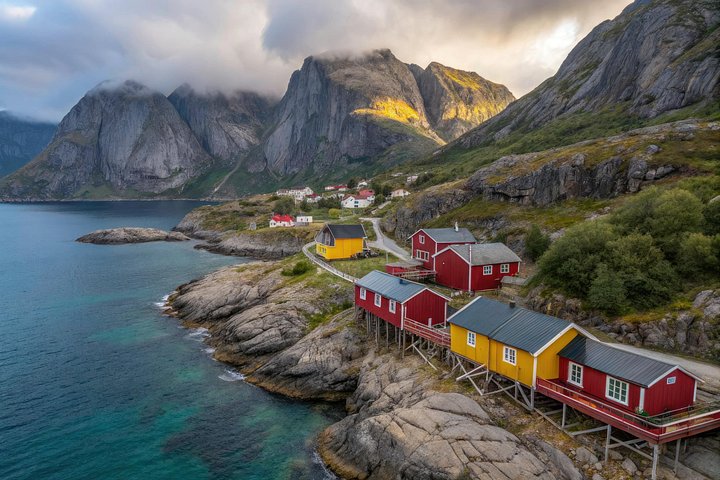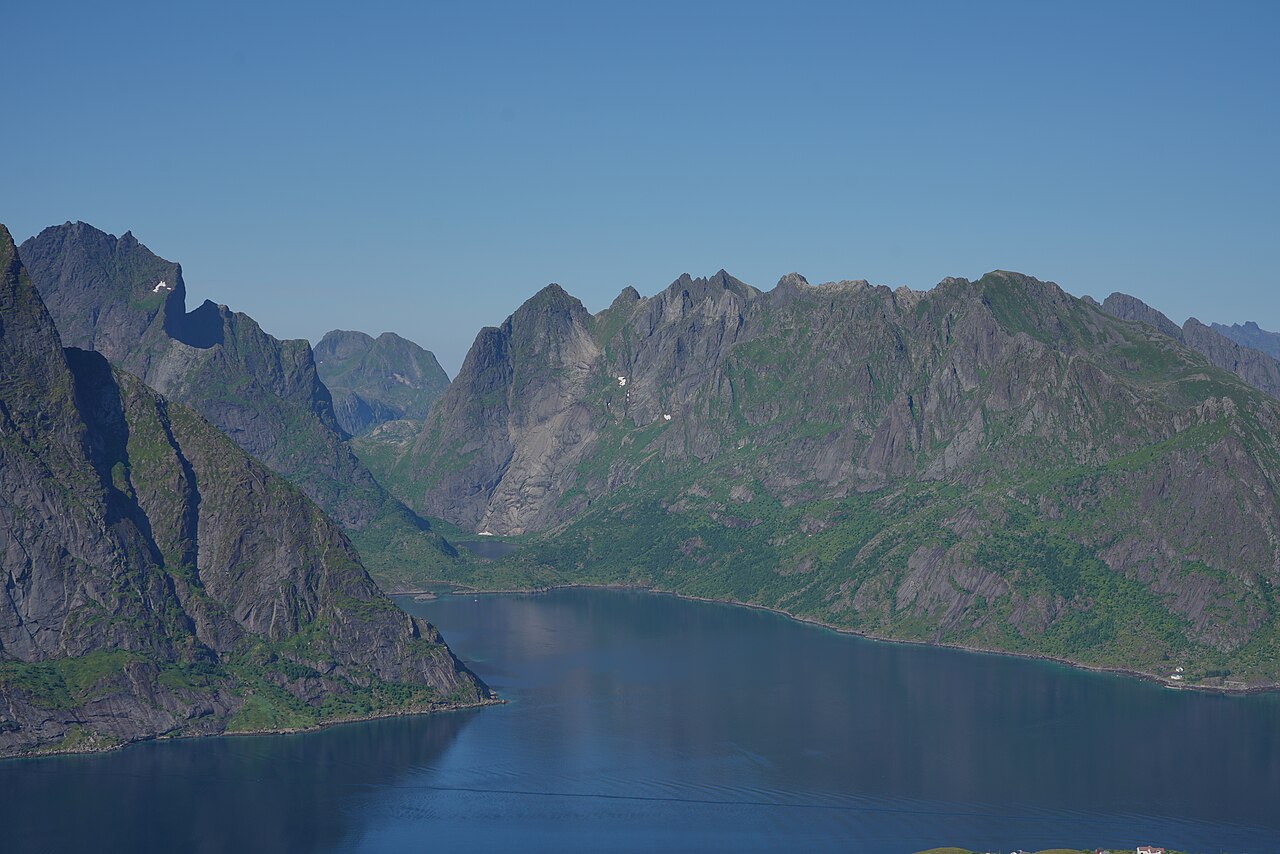
Kvalvika is a crescent of pale sand on the open Atlantic side of Moskenesøy, closed in on three sides by steep mountains and reached only on foot. The usual route starts at Fredvang and climbs over a low pass, about three kilometres each way, before dropping to the beach. The walk is described as easy by the local tourist board, though the final descent is steep and wet in places. Once there, the beach feels remote: waves roll in from the Norwegian Sea, the slopes of Ryten rise above, and in summer campers pitch tents above the high-tide line. There is no ticket or fee. For a November visit, remember that the days are short, the path can be slippery, and the weather on the exposed coast changes quickly, so go early, carry a head torch and be ready to turn back.
The route in practice
Park at the school in Fredvang or at the Innersand car park, then follow the road and signs toward Einangen. The path runs north of a lake, climbs steadily to a small lake called Forsvatnet, and then splits, with the right-hand branch dropping to the beach.
The walk takes about an hour and a half one way, and people who also climb Ryten need about two hours each way from the start. Sheep graze on the hill, so keep them undisturbed, and dogs must be on a leash between April and mid-November.
What changes in winter
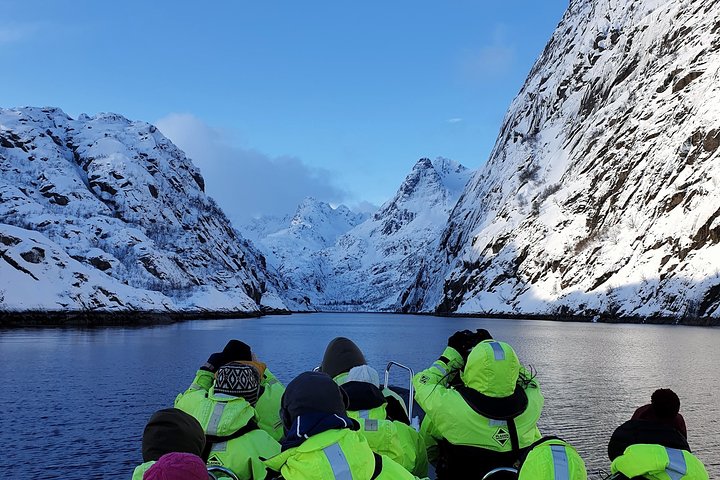
The tourist board advises going on skis or snowshoes when there is snow, and in November the ground can be soggy, frozen or covered in a first layer of snow. Daylight is limited to a few hours in late autumn, so leave at first light, carry a head torch, spare layers and a flask, and tell someone your plan.
Strong winds on the ridge and surf on the beach can be dangerous, so do not go near the water in rough conditions. Path work has been carried out in recent years, so follow any signs and detours.
The reward
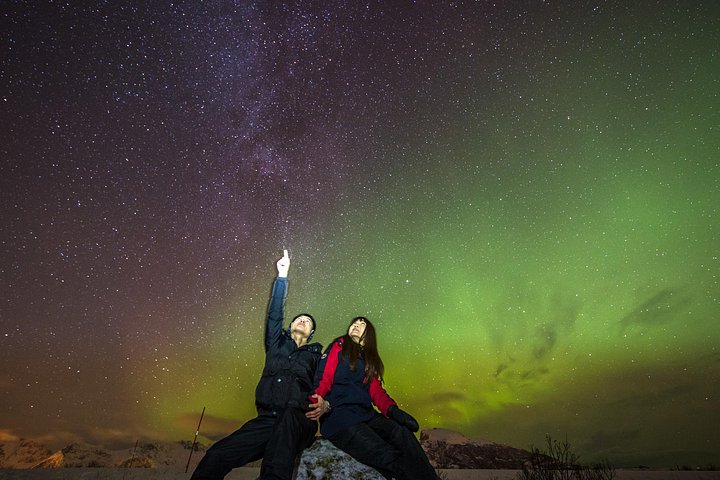
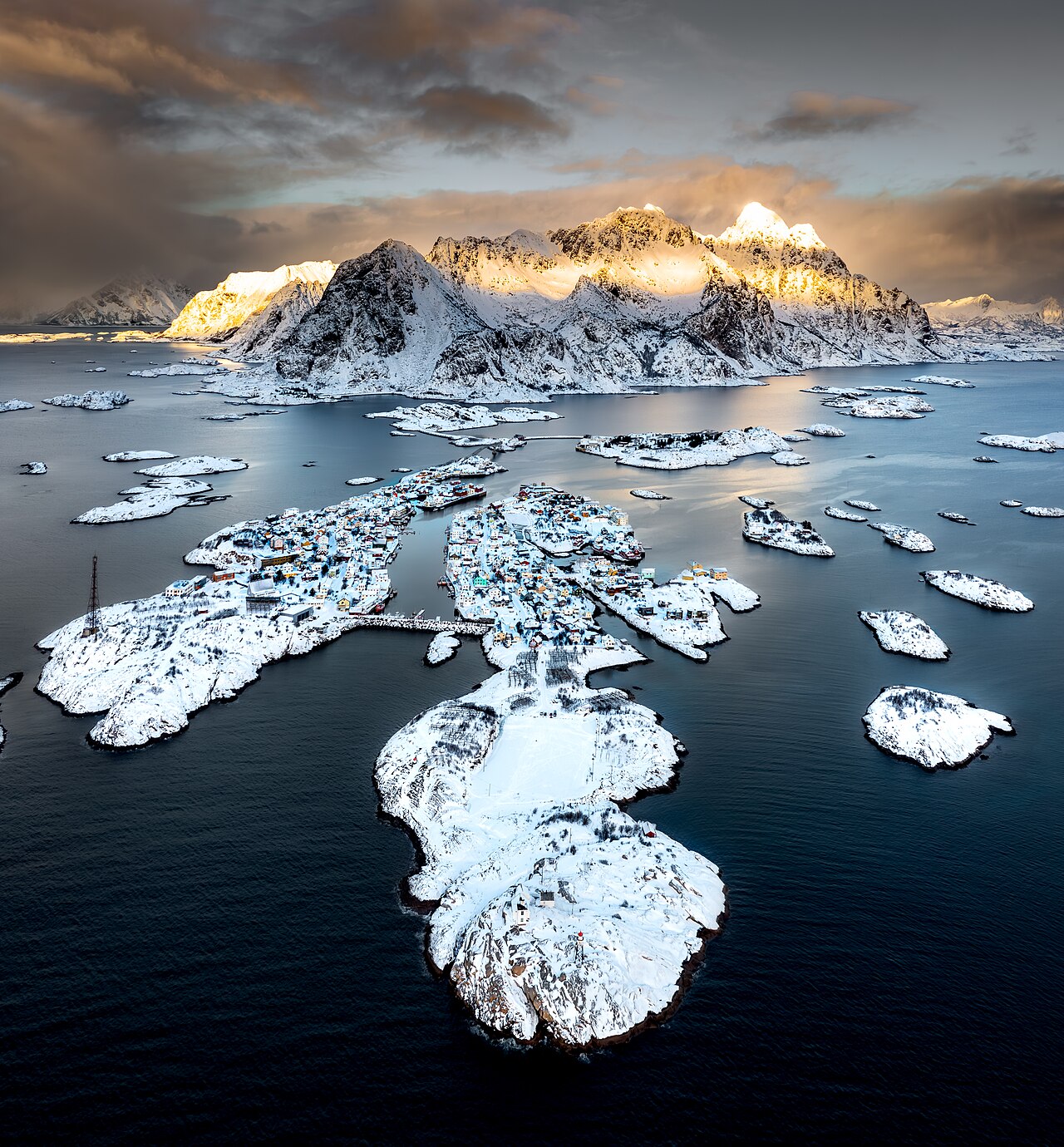
Even in dull weather the setting is striking, and on a clear winter day the low sun lights the peaks with warm colour. The beach is also a good place to wait for the northern lights, but only if you are properly equipped for a night walk back, which most visitors are not. A safer choice is to take the walk in daylight and head back before dark.
What to expect
The experience
A marked path of about three kilometres each way from Fredvang over a low pass to a beach enclosed by mountains.
Best time
Late spring to early autumn is easiest; in November go at first light on a dry, calm day.
How long
About an hour and a half each way, so three to four hours return with time on the sand.
Tips
Carry a head torch, spare layers and water, keep dogs on a leash, and turn back if wind or ice builds.
Quick picks
- Best for
- Walkers who want a wild beach without a technical climb.
- Families
- Fine for older children in good weather; the final descent is steep and wet in places.
- Couples
- A summer evening on the sand with a tent, or a bracing winter walk with a thermos.
- Pair with
- Nusfjord, Reine, or the scenic E10 drive.
- Time needed
- Half a day with the drive from Reine.
Good questions
How long is the walk to Kvalvika?+
About three kilometres and roughly one and a half hours each way from Fredvang. Allow three to four hours for the return trip.
Is it safe in November?+
It is possible on a calm, dry day, but daylight is short and the ground can be icy or wet. Go early, carry a head torch and turn back if the weather worsens.
Where do I park?+
At the school in Fredvang or at the Innersand car park. Follow the signs toward Einangen to find the path.
Can I take a dog?+
Yes, but dogs must be on a leash from April to mid-November, and you may need to carry them over steep sections on the descent.
Is there a fee?+
No. The hike and the beach are free, though parking may have signed rules.