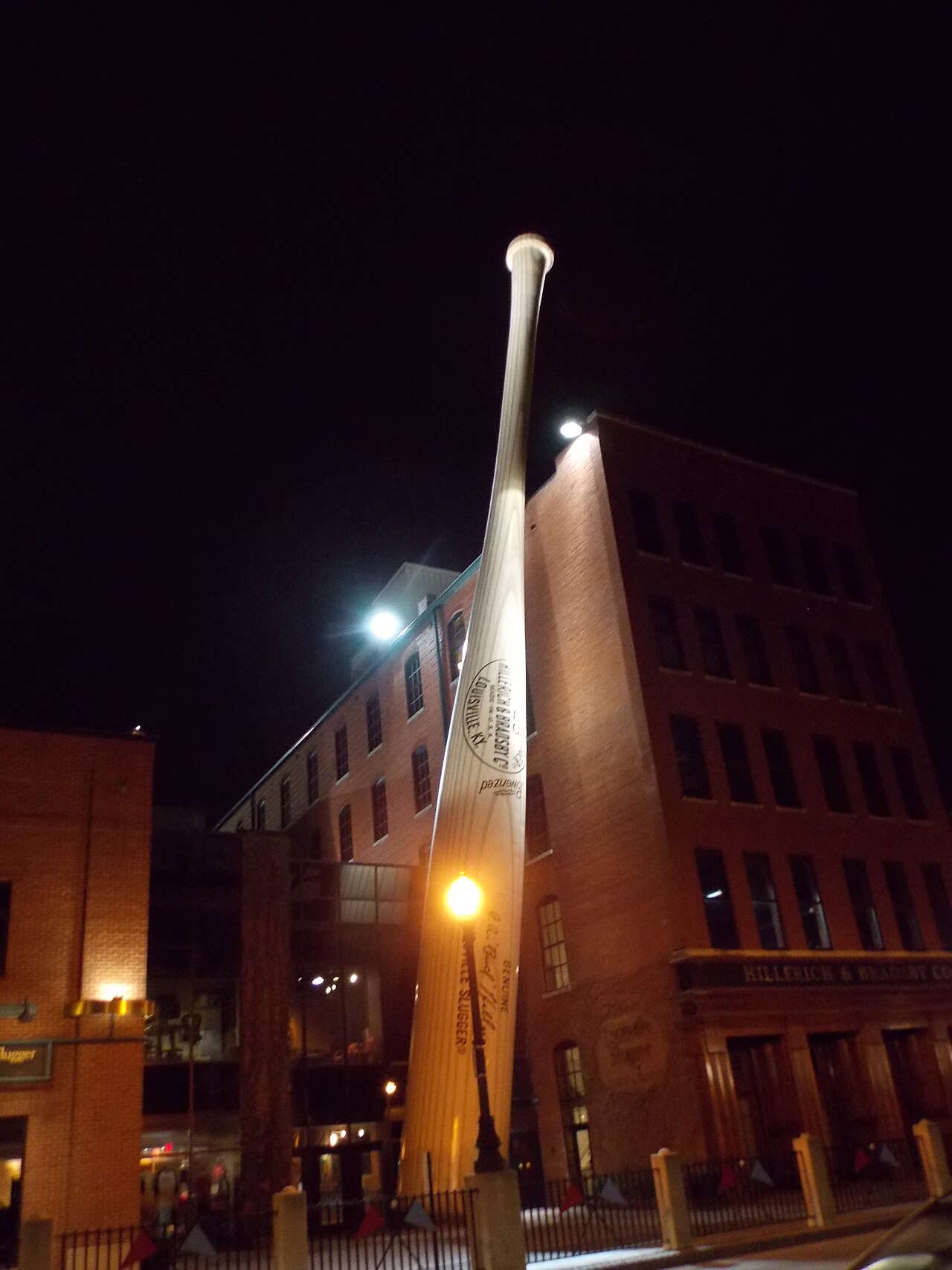
You cannot miss the Louisville Slugger Museum and Factory: a bat 120 feet tall leans against the building on West Main Street, an oversized replica of Babe Ruth's model. Inside, the museum tells the story of the Hillerich and Bradsby company, maker of the Louisville Slugger since the 1880s, and the players who swung its bats. The core of the visit is the factory tour, where you watch wood become bats, smell fresh-cut ash and maple, and see how lathes shape billets to precise specifications. Exhibits showcase bats used by legends, a batting cage lets you try a pitch and each visitor on the factory tour receives a miniature souvenir bat. It is a highlight for baseball fans and a surprisingly engaging stop for everyone else.
The museum emphasizes craft. Guides explain how the company selects wood, how species such as ash, maple and birch behave differently, and how professional players order bats to their own weights and lengths. The tour shows the stages from raw billet through lathe, sanding, finishing and branding, and it gives a sense of the skill and scale of the operation.
Because production schedules vary, what you see on a given day depends on whether the line is running, so ask about hours if the factory floor is a priority. Even when machines are quiet, the exhibits remain engaging.
Highlights include a vault of bats associated with famous players, memorabilia from baseball history and displays that explore how the industry has adapted to metal and composite bats. Kids love the hands-on experiences, from gripping bats used by pros to stepping into the batter's box. Photography is welcome in the museum areas, though restrictions may apply on the factory floor. The gift shop is the obvious place to pick up a personalized bat engraved with a name, which makes a fine keepsake.
Logistics
Allow about ninety minutes to two hours, check opening days and times, and consider arriving early when school groups are less common. The museum sits on Museum Row, so pair it with the Ali Center, Frazier Museum and Science Center for a full day downtown. The building is accessible, and staff can advise on any limitations.
Spring and summer are busy, particularly around the start of the baseball season and when the Louisville Bats play at the nearby ballpark, so book ahead if you are visiting on a weekend. If you want a more relaxed experience, visit on a weekday.
Bits of baseball lore make the tour richer. Legend holds that the first Louisville Slugger was made in the 1880s for a local star named Pete Browning, whose enthusiasm for the bats helped build the company's reputation. Since then, generations of major leaguers have ordered models stamped with their signatures, and the company keeps files of specifications for players past and present.
You may spot bats from the sport's biggest names on display, along with equipment from softball and other sports. Fans of other pastimes might enjoy the display on how bats are tested for durability. If you have time, catch a game of the local minor league team at the nearby ballpark during the season for a full baseball day.
What to expect
The experience
Museum galleries, a guided factory tour and a batting cage experience, with a miniature souvenir bat for factory tour guests.
Best time
Weekday mornings for fewer crowds. Check production schedules if you want to see machines running.
How long
About ninety minutes to two hours.
Tips
Ask about factory floor operating days, wear closed shoes and consider a custom engraved bat as a keepsake.
Quick picks
- Best for
- Baseball fans and families with school-age children.
- Families
- Excellent. Hands-on and short enough for most children.
- Couples
- A fun daytime stop, especially for sports fans.
- Pair with
- Muhammad Ali Center, Frazier History Museum and a Main Street lunch.
- Time needed
- Ninety minutes to two hours.
Good questions
How tall is the big bat?+
It stands 120 feet tall and is a replica of a bat used by Babe Ruth.
Do I get a souvenir?+
Factory tour guests receive a miniature bat, a popular keepsake.
Is the factory always running?+
Production schedules vary. Check ahead if seeing machines in action is important.
Is it good for children?+
Yes. The batting cage and hands-on displays suit school-age kids.
How long does the visit take?+
Plan on ninety minutes to two hours.