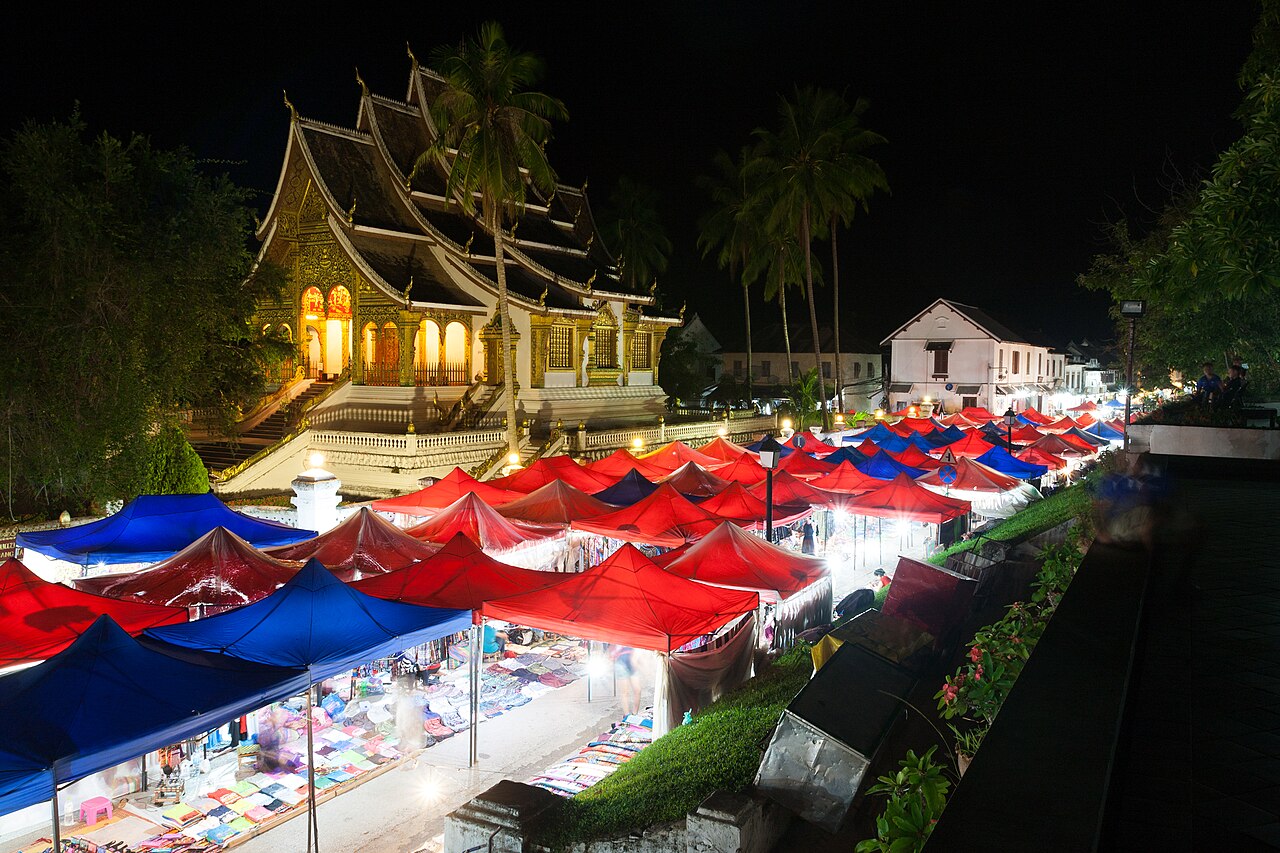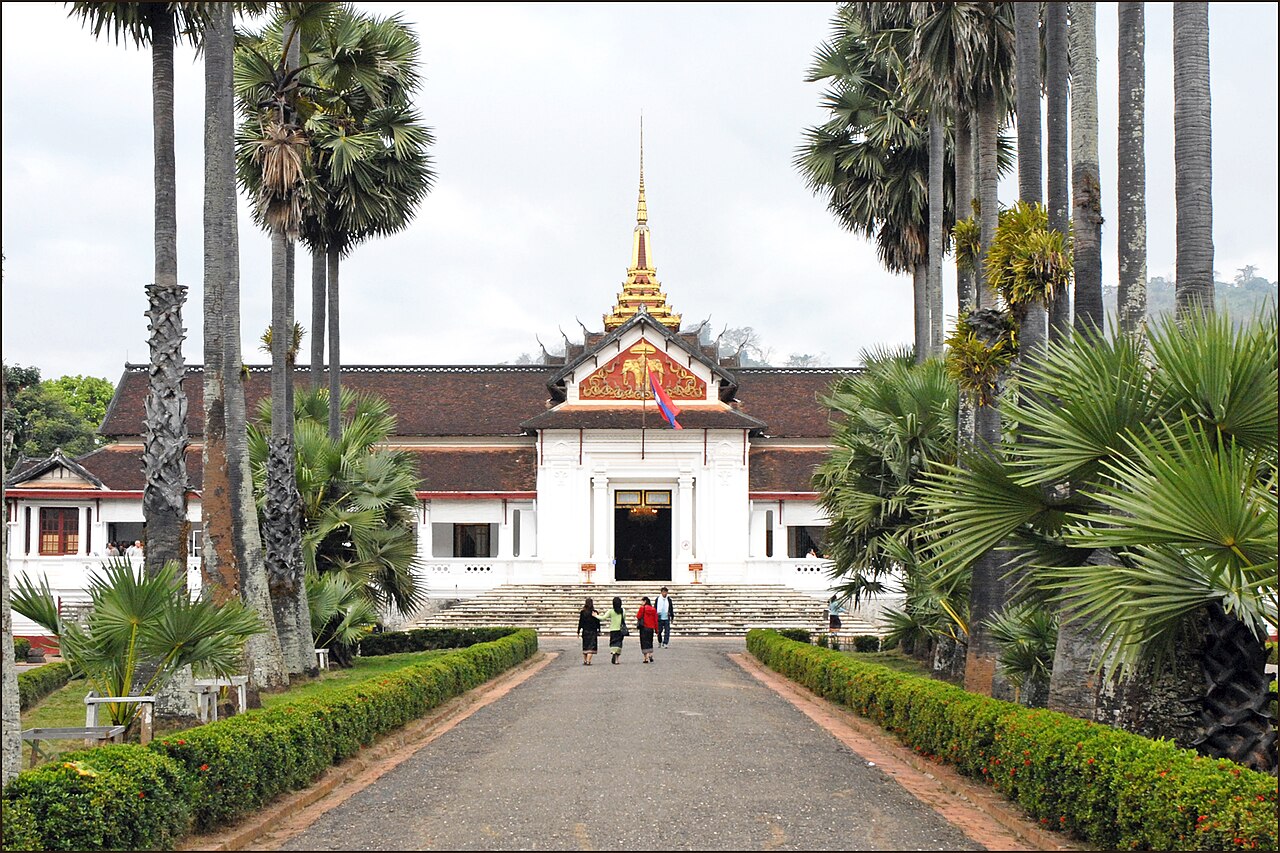
The Royal Palace was built in the early twentieth century as the home of King Sisavang Vong, and it blends Lao and French colonial styles in a long, low building behind a lawn. It was the last home of the royal family before the 1975 revolution, after which the government took it over, and it opened as the National Museum in 1995. Inside, the front wing holds reception halls with royal portraits, murals of Lao village life and gifts from foreign heads of state, and the throne hall shines with mirror mosaics and thrones. The back wing keeps the royal family's private rooms, a library and a room of Lao classical instruments and masks, much as they were left. In the grounds, the Haw Pha Bang pavilion shelters the Pha Bang, the gilded Buddha image from which the city takes its name, and a shed holds the royal barges and a small collection of mid-century cars. Opening hours are in two sessions, in the morning and after lunch, and the museum is on the same street as Mount Phousi.
This is a place where rules matter, and they are strictly enforced. You remove your shoes before entering, leave bags in the lockers near the entrance, and photography is not allowed inside the palace buildings. Dress conservatively with shoulders and knees covered, and women in short skirts or shorts can borrow a Lao skirt at the door. The restrictions can feel inconvenient, but they also mean the rooms are quiet and unhurried, and visitors tend to look more closely.
What to look for: the murals of 1930s Lao life in the reception room, the cast of the Pha Bang Buddha in the front wing, the mirror-mosaic throne hall with its tall windows, and the plain bedrooms of the king and queen in the back wing, which feel strikingly intimate after the grandeur of the reception halls. The musical instruments room shows how Lao classical music was once played at court. In the grounds the Haw Pha Bang is ornate, with gilded doors and carved panels, and worth the walk even if you skip the palace interior.
How to fit it in: the opening hours split the day, so check them locally and aim for the first session of the morning, which is cooler and quieter. Allow about an hour and a half. The hours and ticket prices come from third-party sources and may change, so confirm at the gate. The museum sits directly opposite the entrance to Mount Phousi and at the start of the night market street, which makes it easy to link with a climb and an evening walk. A guided city tour usually includes it as one of several stops.
What to expect
The experience
A self-guided walk through the palace's reception halls, throne room and private royal quarters, followed by the Haw Pha Bang pavilion and the royal barge shed in the grounds.
Best time
The first session of the morning, when it is cool and quiet; avoid the lunch break closure.
How long
About an hour to an hour and a half including the grounds.
Tips
Remove shoes, store bags in the lockers, do not photograph inside, and cover your shoulders and knees.
Quick picks
- Best for
- Visitors interested in Lao royal history and the story of the 1975 revolution.
- Families
- Older children may enjoy the cars and barges, but the no-photography and quiet rules make it hard for very young ones.
- Couples
- A calm, cultural hour before the climb up Mount Phousi across the street.
- Pair with
- Mount Phousi, the night market and Wat Xieng Thong.
- Time needed
- One and a half hours.
Good questions
What are the opening hours of the Royal Palace Museum?+
A third-party listing gives daily hours in two sessions, roughly 8:30 to 11:00 and 13:30 to 16:00. Confirm locally before you go as hours can change.
Can I take photos inside?+
No, photography is not allowed inside the palace buildings. You can usually photograph the grounds and the exterior.
What is the dress code?+
Dress conservatively with shoulders and knees covered. Women in short skirts or shorts can hire a Lao skirt at the entrance.
Where do I leave my bag?+
Bags are not allowed inside, so use the lockers near the entrance. Shoes are removed before entering.
Is it near other sights?+
Yes, it faces the entrance to Mount Phousi and marks the start of the night market street. You can see all three in one day.