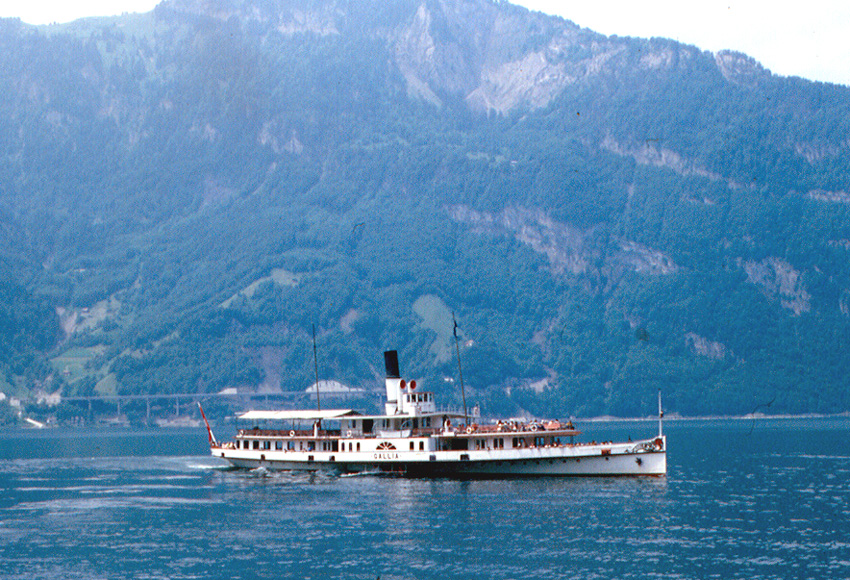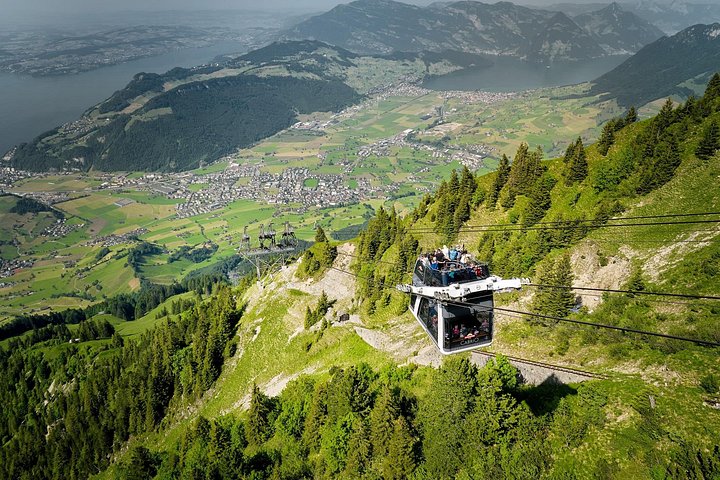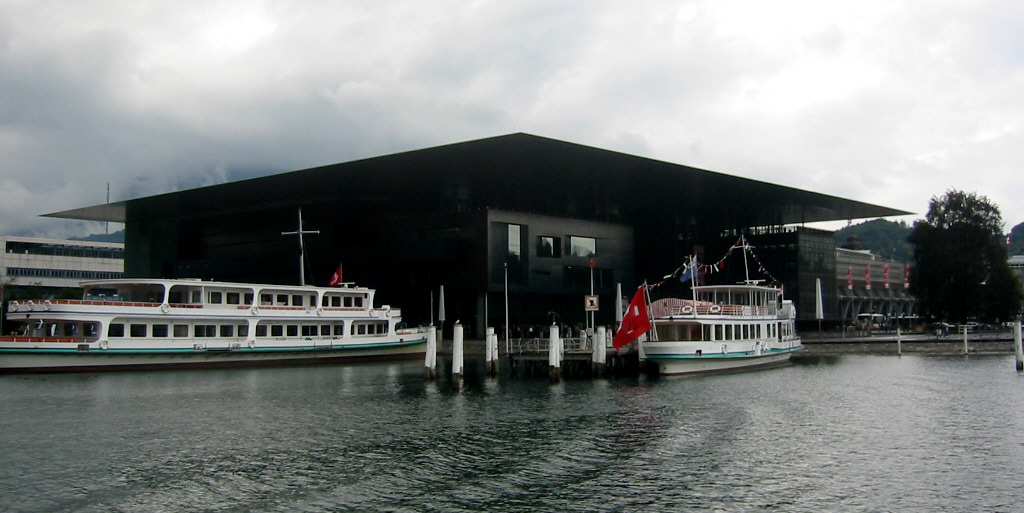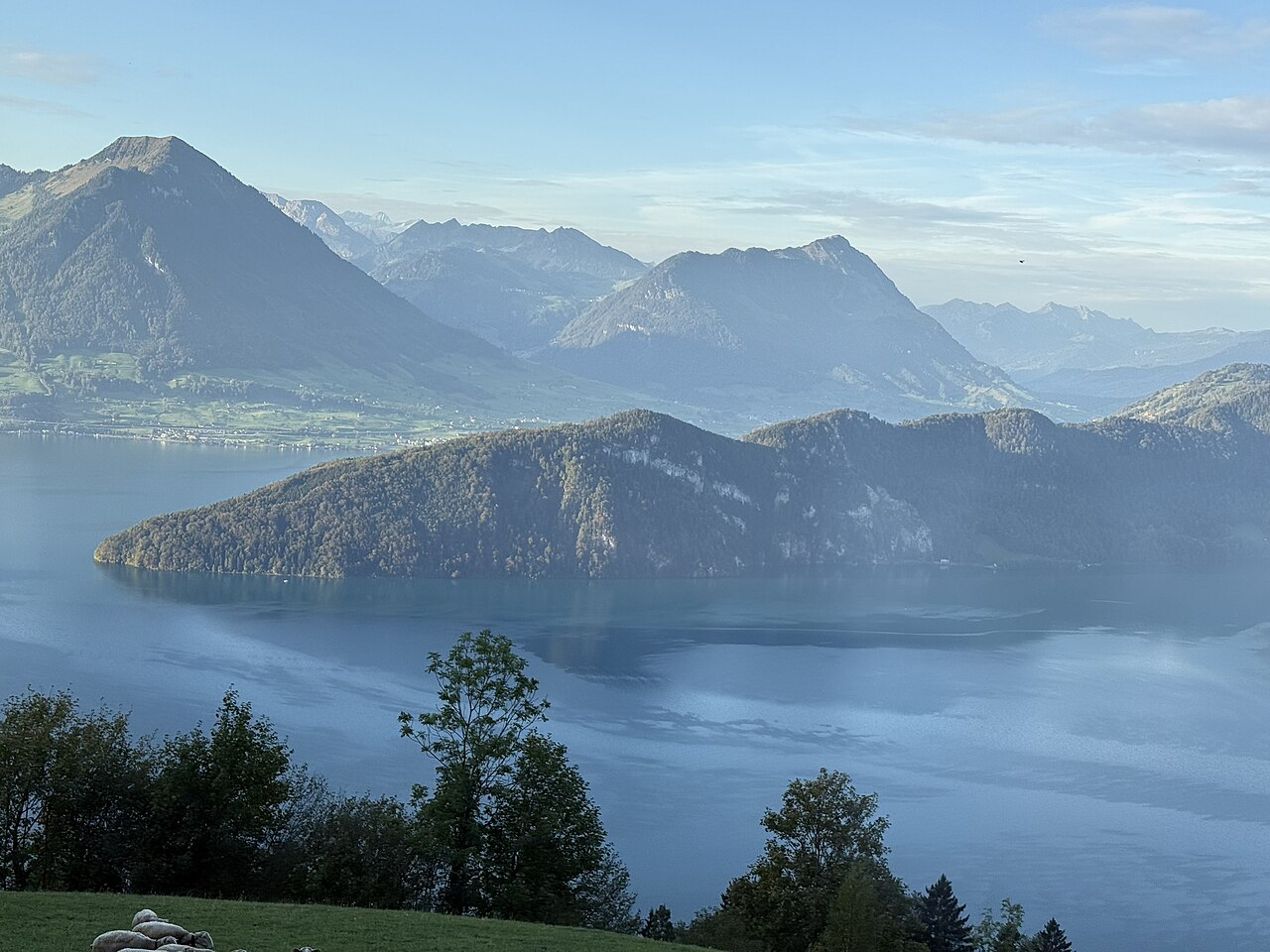
Mount Pilatus rises to about 2,100 metres directly behind Lucerne, and legend says a dragon lives on it. The classic way up is the Golden Round Trip: a boat from Lucerne to Alpnachstad, the cogwheel railway up the steepest rack line in the world, a descent by panorama gondola and aerial cableway to Kriens, and a bus back to the city. The mountain's lift system works on a seasonal calendar. The cogwheel railway from Alpnachstad typically runs from late spring to late autumn and then rests for the winter, while the gondolas and aerial cableway from Kriens run for most of the year apart from a maintenance break each autumn. The full loop is therefore only available in the warmer months, when the boat to Alpnachstad also sails. Tickets cover the guided Golden Roundtrip as well as self-guided trips from Alpnachstad or Kriens, so choose the one that matches the lift running on your date.
In practice this can mean two separate ways to the summit outside the warm months. When the cogwheel is running you can go up and down by rail from Alpnachstad, reached by train from Lucerne in about twenty minutes; when it rests for the winter, the Kriens gondola and aerial cableway are the way up.
At the changeover between the two timetables both may work for a short while, and you could in principle go up one and down the other. Either way, the summit is Pilatus Kulm, with a panoramic terrace, trails to two nearby viewpoints and, outside summer, a cold wind that surprises people in city shoes.
Choose the day carefully. A view needs clear weather; if cloud is sitting on the lake, the summit may be above it and bright, which is one of the pleasures of the mountain, but a low grey ceiling can also mean a wasted ticket. Check the webcam and the operator's timetable on the morning of your trip.
Booking a ticket with flexible dates is sensible in the colder months, and reservations for the cogwheel are recommended at weekends. Allow half a day for a simple round trip and a full day if you plan to walk.
What to bring
Warm layers, a windproof jacket, gloves and shoes with grip, since paths near the summit can be icy from late autumn. The summit has restaurants, though opening hours reduce in winter, so confirm lunch plans in advance. The first snow often arrives on the upper slopes in November, and the mountain looks its best then. If you want the full Golden Round Trip with the boat, wait for the summer timetable, which starts in May.
What to expect
The experience
A mountain excursion by cogwheel railway or by gondola and aerial cableway, ending on a summit terrace with trails and restaurants.
Best time
A clear morning; check the webcam and timetable, and avoid days with a low cloud ceiling.
How long
Four to six hours from Lucerne for a simple round trip.
Tips
Check which lift is running on your date, dress for winter at the summit and keep your dates flexible.
Quick picks
- Best for
- Anyone who wants an Alpine summit close to the city.
- Families
- A good choice, with short summit walks and a children's trail in summer; dress children warmly in winter.
- Couples
- A clear morning on the terrace and lunch at the summit.
- Pair with
- The Chapel Bridge and the Old Town on the evening before or after.
- Time needed
- Half a day at minimum, a full day with walks.
Good questions
Is the Pilatus cogwheel railway open in winter?+
No. It typically closes after late autumn and reopens in spring, so check the operator's calendar. The Kriens gondolas and aerial cableway are then the way to the summit.
When do the Kriens gondolas run?+
They run for most of the year, with a maintenance break in the autumn. Check the operator's calendar for the dates in the year you travel.
Can I do the Golden Round Trip in winter?+
Not in full. The boat to Alpnachstad runs only in the warmer months, so the classic loop returns with the summer timetable.
How do I get to the cogwheel station from Lucerne?+
Take the train from Lucerne to Alpnachstad, about twenty minutes, and the station is a short walk from the platform.
What should I wear at the summit?+
Warm layers, a windproof jacket, gloves and shoes with good grip, because paths can be icy and the wind is strong in late autumn.