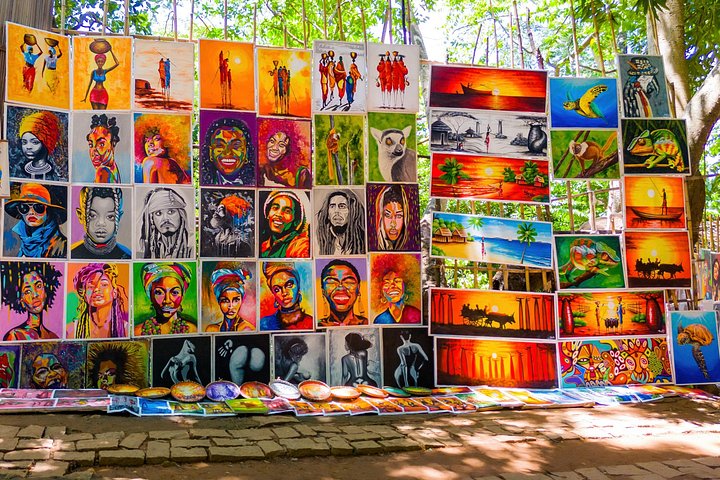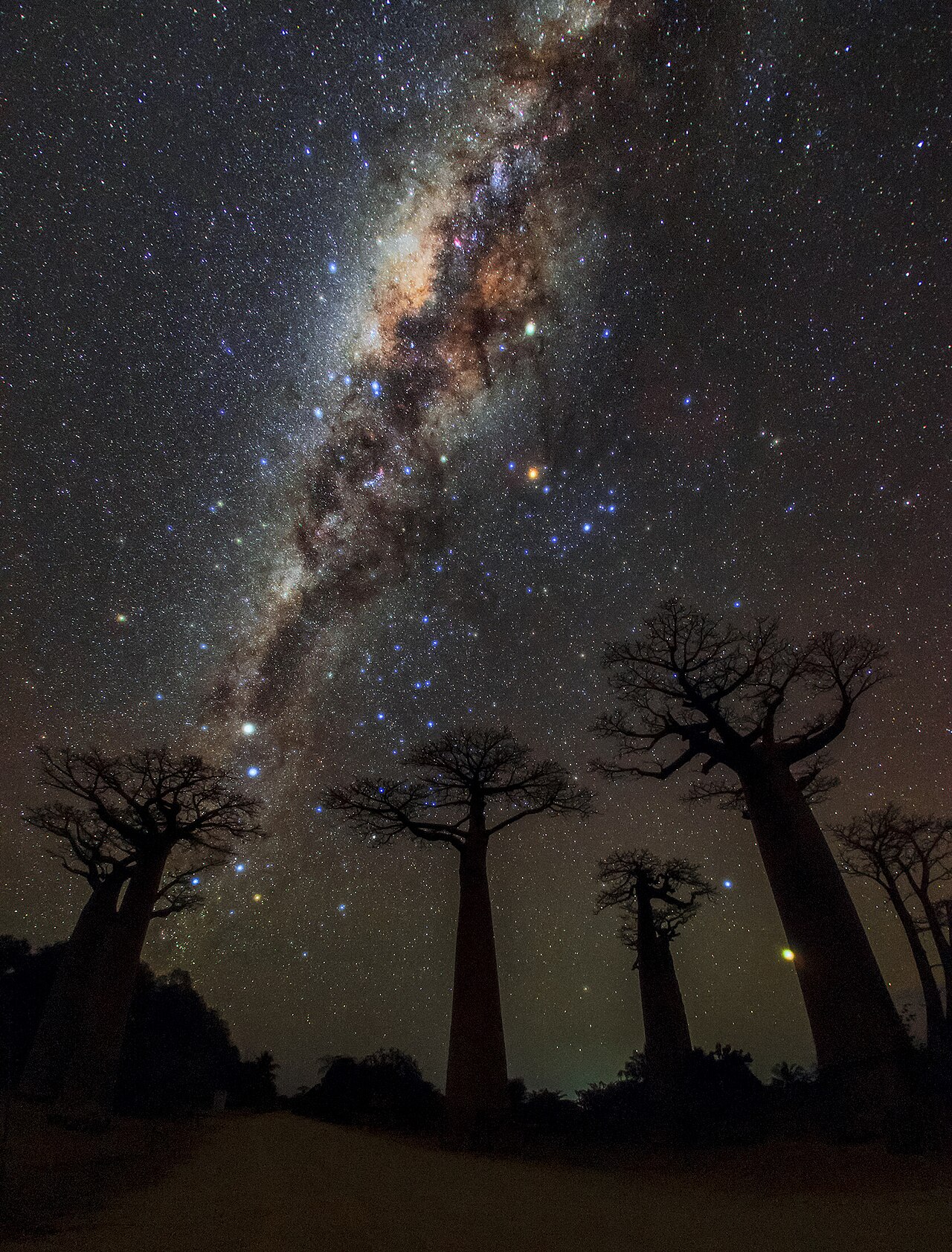
The Avenue of the Baobabs is a stretch of unpaved road on Madagascar's west coast, a short drive from the town of Morondava, where a few dozen giant Grandidier's baobabs stand in two loose lines on either side of the track. The trees are enormous, with smooth, columnar trunks that rise straight up before opening into a small crown of branches high above the ground, and many are said to be several centuries old. The setting is ordinary farmland and rice paddies, which makes the silhouettes all the more striking. Most visitors arrive in the late afternoon, wait for the sun to sink and the trunks to turn orange and red, and stay on for the dusk colour. Zebu carts, local children and small souvenir stalls add to the scene. There is no ticket office for the road itself, so you can come back at sunrise as well and see the trees in a different light.
The trees explain the fame. Grandidier's baobab is found only in Madagascar and is the tallest of the island's six native baobab species, known in Malagasy as renala, the mother of the forest. This stretch of road was once dense forest, and the baobabs are the survivors that were left standing as land was cleared for farming, which is why they now rise alone above the paddies.
The site has been given protected status, and local people still use the road every day for carts, bicycles and walking, so it feels like a working place and not a museum.
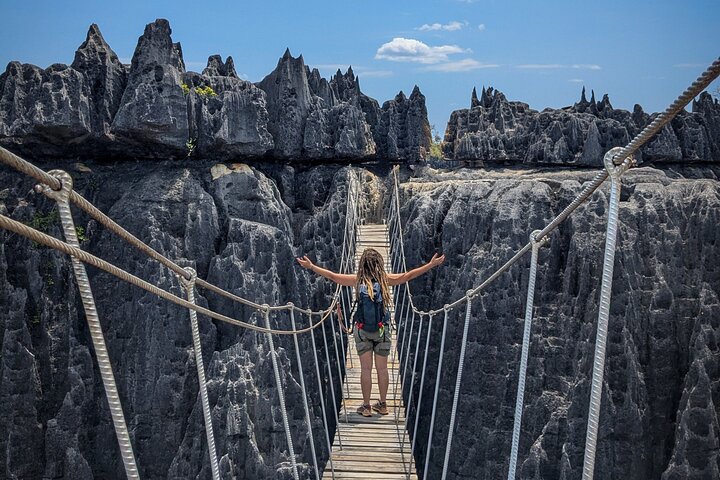
Getting there takes planning. Morondava is a long journey from Antananarivo, either a road trip that usually takes more than a day with an overnight stop or a domestic flight whose schedule you should confirm close to your dates. From Morondava the avenue is a short drive, and the same road continues towards the Tsiribihina river and the gateway to the Tsingy de Bemaraha, so many travellers pass it twice. Taxis and tours leave from town, and a driver who knows the light will time the visit for the golden hour.
The season changes the picture. The rainy season begins around November, so expect cloudier skies, sudden showers and muddy sections of track during the rains, and the baobabs turn green once the rains arrive, in contrast with their bare, sculptural look in the dry months. Carry small notes for souvenirs and drinks, ask before photographing people, and do not climb on or carve the trees. Bring insect repellent for the evening and a torch for the walk back to the car after dusk.
What to expect
The experience
A self-guided roadside visit on foot, walking along the track between the trees and waiting for the sunset light.
Best time
The hour before sunset, or early morning for softer light and far fewer people.
How long
One to two hours is enough, longer if you want both the golden hour and the dusk colours.
Tips
Wear closed shoes for dusty or muddy ground, carry small notes and water, and check the road conditions with your driver in the rainy season.
Quick picks
- Best for
- Photographers, sunset lovers and anyone who wants the classic image of Madagascar.
- Families
- Easy and open, with plenty of space to roam and local children selling small crafts, though the journey to Morondava is long.
- Couples
- A memorable sunset spot that is quiet at the edges once the tour groups leave.
- Pair with
- Pair it with the Tsingy de Bemaraha or a visit to the Kirindy forest near Morondava.
- Time needed
- Allow two hours including the drive from town, and plan the day around sunset.
Good questions
Is the Avenue of the Baobabs free to visit?+
The road itself has no ticket office, so visiting is free. You will usually pay for transport from Morondava and may buy small souvenirs from local sellers.
What is the best time of day to go?+
Late afternoon into sunset is the classic time, when the trunks glow orange and red. Sunrise is quieter and good for photographs without crowds.
How far is it from Morondava?+
It is a short drive on the road that leads toward the Tsiribihina river and the Tsingy. A driver or tour can take you there and wait while you walk.
Will the rainy season spoil the visit?+
The rainy season begins around November, so expect more cloud, showers and muddy tracks. The trees turn green after the rains, which gives a different but still striking view.
How do I get to Morondava from Antananarivo?+
By a long road journey that usually takes more than a day, or by a domestic flight. Confirm current schedules and road conditions close to your travel dates.