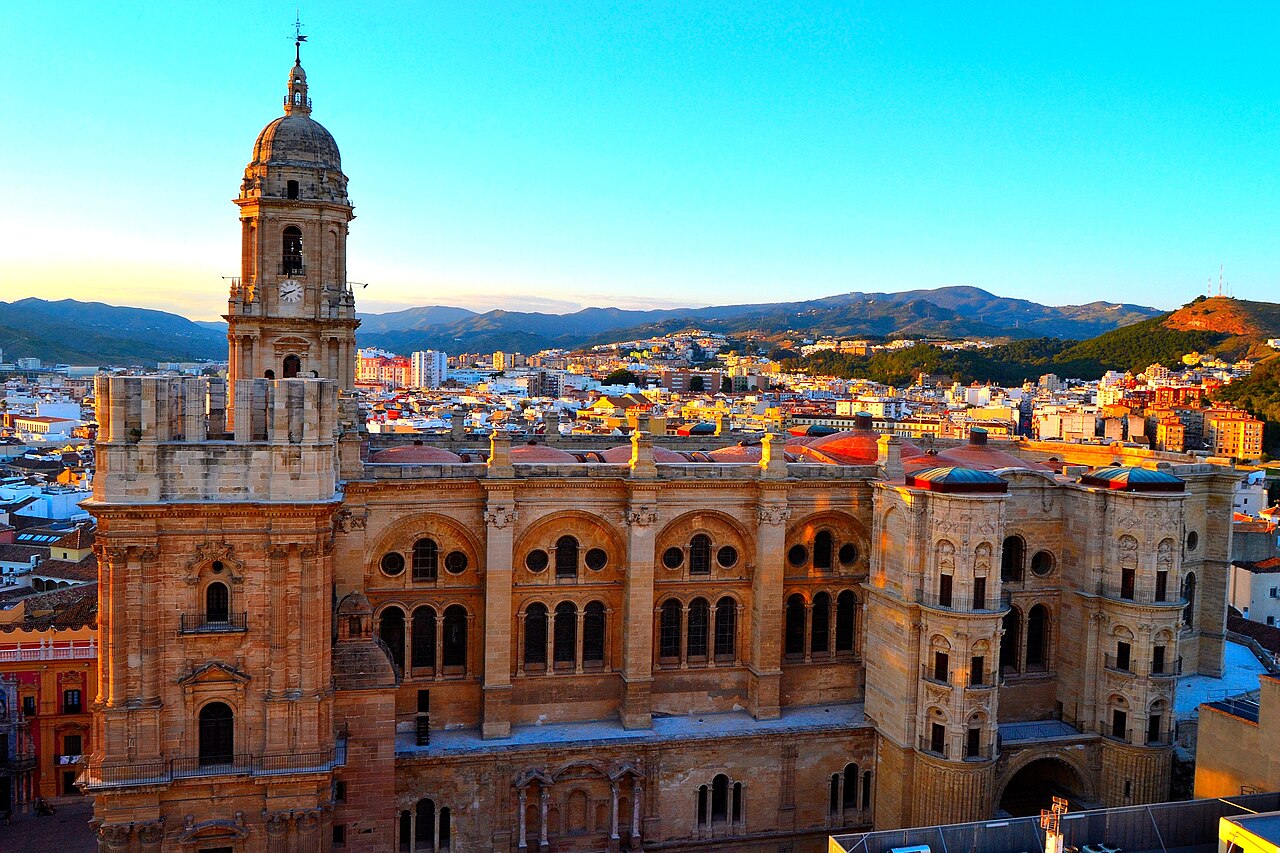
Málaga Cathedral rises above the rooftops of the old town like a stranded ship, and its nickname tells its story: La Manquita, the one-armed lady, because the south tower was never finished and the building has stood with one complete tower for centuries. Work began in the sixteenth century on the site of the city’s former mosque and continued for more than two hundred years, so the cathedral blends a Gothic plan, a Renaissance interior of tall white columns and vaults, and a Baroque main façade. Inside, look for the carved wooden choir stalls, with figures of saints by the seventeenth-century sculptor Pedro de Mena among others, the two great organs and the side chapels with their altarpieces. The cultural visit includes an audio guide in several languages, and the cathedral also offers a virtual-reality experience as an extra. A big project to put a new roof over the vaults has been under way for several years and is now expected to be finished around late 2027, and the popular rooftop tours are suspended while it continues. The interior remains open for visits, with paid entry most of the day and a short free window early each morning.
How to see it: enter through the side door on the Calle Molina Lario side, collect the audio guide and follow the route around the ambulatory and the chapels before sitting in the nave to take in the scale of the vaults. The choir in the centre of the nave is the artistic highlight, so give it time. Step outside afterwards to see the main façade on the Plaza del Obispo and the stump of the unfinished tower, best viewed from the square or from the rooftop bars nearby.
What to expect: paid visits run from mid-morning into the evening on weekdays, with shorter hours on Saturdays and afternoon-only visiting on Sundays, and last entry 45 minutes before closing. The interior is calm and cool, which makes it a good refuge in summer. Because of the roof works you may see scaffolding or protected areas, and the rooftop tours that used to climb the tower are not running.
Making the most of it: combine the cathedral with the Picasso Museum and the Alcazaba, all within a few minutes’ walk. Come back in the evening when the façade is lit up and the Plaza del Obispo fills with terraces. Check the cathedral’s own website before you go, because hours change around Easter and other religious festivals, and the rooftop tours will return only when the works are complete.
What to expect
The experience
A self-guided visit with an included audio guide through the nave, choir and chapels of a vast Renaissance cathedral.
Best time
Weekday mornings or late afternoons; on Sundays paid visits are in the afternoon only.
How long
About an hour, a little more if you listen to every audio guide stop.
Tips
Do not expect a rooftop tour, which is suspended for the roof works, and return after dark to see the façade lit up.
Quick picks
- Best for
- Architecture and history lovers, and anyone exploring the old town on foot.
- Families
- A short, cool visit that suits older children; the audio guide has a version for younger visitors.
- Couples
- Pair it with a drink on a terrace in the Plaza del Obispo as the façade lights up.
- Pair with
- The Picasso Museum and the Alcazaba, both a few minutes’ walk away.
- Time needed
- About an hour.
Good questions
Why is Málaga Cathedral called La Manquita?+
The name means the one-armed lady, because the second tower was never finished. The cathedral has stood with one complete tower for centuries.
Can you go on the roof of Málaga Cathedral?+
Not at the moment, because the rooftop visits are suspended while a new roof is built over the vaults. The works are reported to be running to around late 2027.
Is the audio guide included?+
Yes, the cultural visit ticket includes an audio guide in several languages. There is also a version designed for children.
Is Málaga Cathedral free to visit?+
There is a short free window early each morning, but most of the day visits require a modest ticket. Discounts apply for seniors, students and young visitors.
When is the cathedral open on Sundays?+
On Sundays paid visits run in the afternoon only, after the morning services. Hours change around Easter and other festivals, so check the official site.