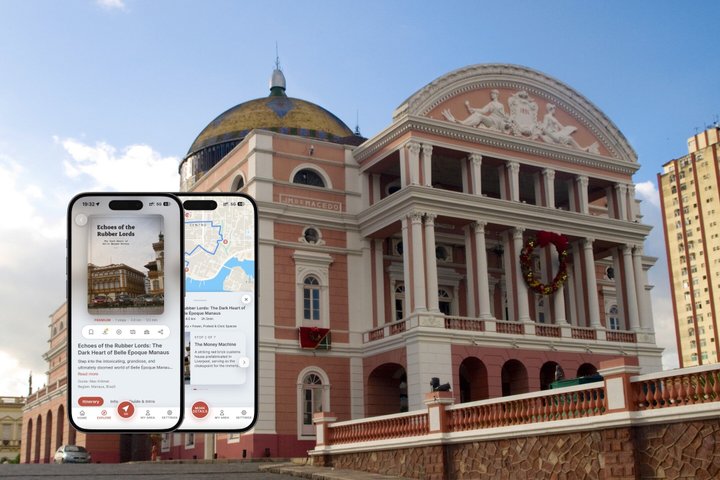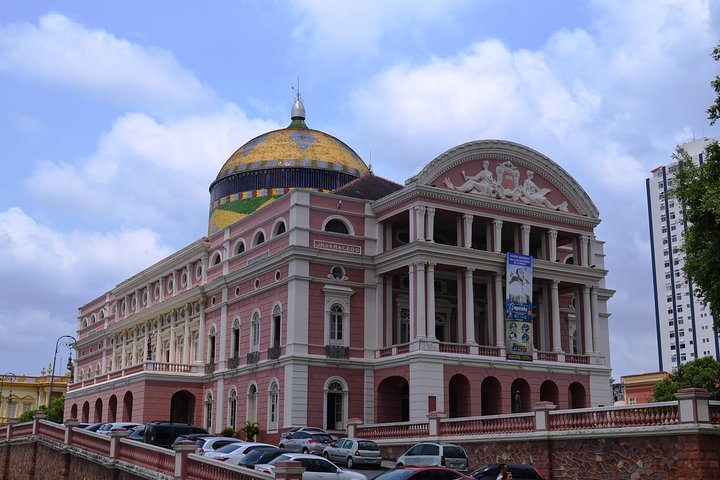
Teatro Amazonas stands on Praca Sao Sebastiao in the historic centre of Manaus, and it is the building that explains the city. It was inaugurated in 1896, at the height of the rubber boom, when fortunes made from latex paid for European marble, Murano glass chandeliers, ironwork shipped from Britain and a dome covered in tiles in the green, yellow and blue of the Brazilian flag. Seen from the square, the pink facade and that bright dome feel almost impossible in a city surrounded by rainforest, which is exactly the point. Inside, the horseshoe auditorium, the painted ceiling, the carved wood and the foyers recall a European opera house, yet local touches are everywhere, from Amazonian motifs to the parquet made of regional hardwoods. Guided visits take you through the auditorium, the galleries and the rooms behind the stage, and when a rehearsal is under way the guide may let you listen from the back.
The story behind the theatre is as interesting as the architecture. During the rubber boom, Manaus was one of the richest cities in South America, with electric light and trams before many European capitals, and the opera house was the proof of that wealth. When the boom collapsed in the early twentieth century the theatre fell quiet for decades, then was restored and reopened, and today it is again a working venue.
The Amazonas Opera Festival, usually held around April and May, fills the building with international and Brazilian productions, and concerts by the state orchestra and choirs run through much of the year. Even if you cannot see a performance, the guided visit is worth the time because the guides explain how materials were imported and assembled, why the tiles on the dome are the way they are, and how the building survived its long silence.
A visit pairs naturally with the rest of the historic centre. The square outside has cafes, a mosaic pavement in a wave pattern echoing the Meeting of the Waters, and benches in the shade of old trees. Within a short walk you can reach the Palacio Rio Negro, the old customs house, the Adolpho Lisboa market and the waterfront.
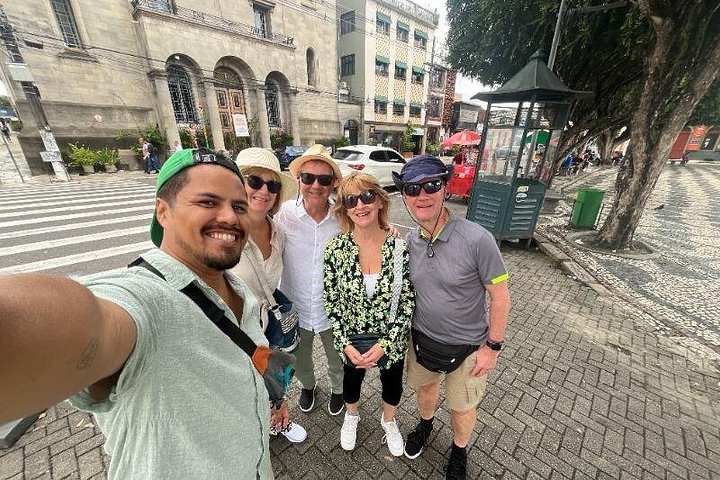
A walking or city tour that includes the theatre gives the context for all of these, and the tour linked here covers the opera house and the nearby Praca da Matriz, which makes a sensible first morning in the city.
Practical points help. Visits are usually offered in several languages at set times, with some days busier than others, so check current opening hours and any closing days when you plan. Dress modestly and comfortably, since the building can be warm and visits involve stairs. Photography is generally allowed in many areas but not during performances, and rules may differ for rehearsals.
If you want to attend an evening performance, look at the programme as early as you can, because popular dates sell out, and wear smart casual clothing. Heat and humidity make the morning the most pleasant time to walk the centre, so start early and finish at the market with a coffee.
If you want a particularly good visit, ask the guide about the restoration and the design of the stage curtain and the ceiling painting, both of which carry stories about the city and the river. Arrive a little early in case there is a queue, and consider a weekday for fewer crowds.
If a performance fits your dates, treat it as the highlight of the stay, with dinner in the centre before the show. Even a short visit changes how you read the rest of the historic area, because you understand what the boom years meant for the people who lived here.
What to expect
The experience
A guided walk through the auditorium, foyers and galleries, often combined with a short tour of the surrounding historic centre.
Best time
Morning, before the heat builds. Evenings are for performances.
How long
One hour for the visit, up to three with the surrounding square.
Tips
Check opening hours and closing days before you go. Wear light, modest clothing and comfortable shoes for the stairs.
Quick picks
- Best for
- First-time visitors, architecture lovers and anyone curious about the rubber boom.
- Families
- Good for older children who enjoy buildings and stories.
- Couples
- A romantic evening if you can catch a concert.
- Pair with
- The Adolpho Lisboa market and the Rubber Museum.
- Time needed
- Half a morning.
Good questions
When was the theatre built?+
It was inaugurated in 1896, during the rubber boom that made Manaus one of the richest cities in South America.
Can I go inside without seeing a show?+
Yes. Guided visits run on set days and times, and a tour of the historic centre often includes the theatre.
Why is the dome tiled in flag colours?+
The dome is covered in tiles in the green, yellow and blue of the Brazilian flag, a symbol of the young republic and of the city pride.
Is there an opera festival?+
The Amazonas Opera Festival usually runs around April and May. Check the dates for the year of your trip.
What should I wear?+
Light, modest clothes for a daytime visit. For a performance, smart casual is the norm.