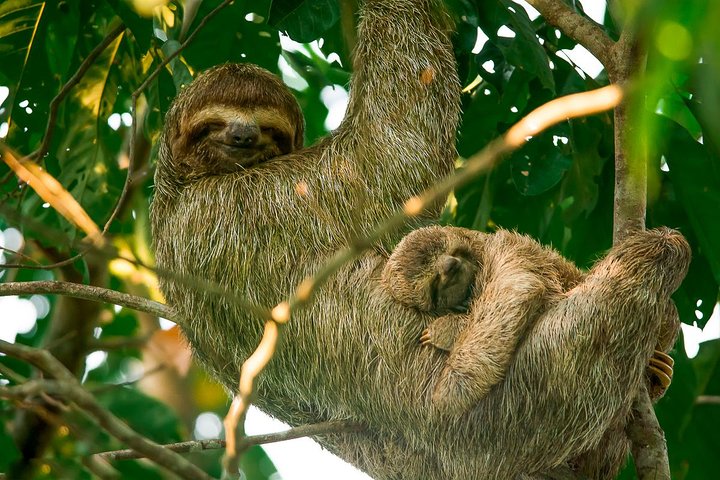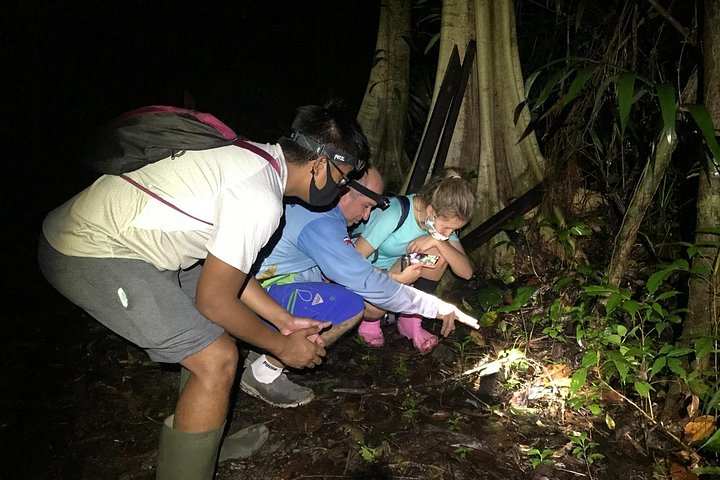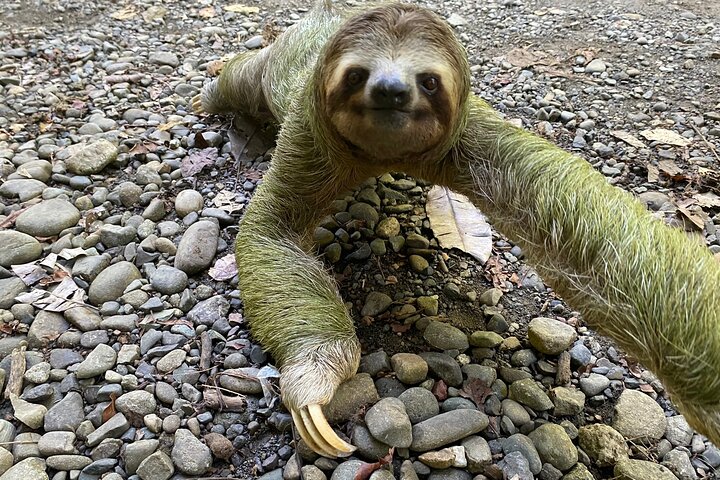
Manuel Antonio National Park is the reason most people come here, and it earns the fame. The park covers a compact headland of rainforest, mangrove and sand, with short, well-made trails that lead to Playa Manuel Antonio, Playa Espadilla Sur and the viewpoint over Punta Catedral. Within a few minutes of the entrance you are likely to meet white-faced capuchin monkeys, three-toed sloths, raccoons, iguanas and a good number of birds, often at close range. The sloths are the headline, but they are also the hardest animals to see without help: they hang motionless high in the canopy, camouflaged against the leaves. That is where a guide earns their fee. Certified guides carry spotting scopes, know where the animals sleep and can show you a sloth, a tree snake or a well-hidden frog that you would walk straight past alone. The tour linked here is a small-group walk of about two hours with a park ticket arranged for you, which also takes the stress out of the booking system, since the park sells tickets online only and does not sell at the gate. Plan around the closed day: the park is shut on Tuesdays and open Wednesday to Monday from 7am to 4pm. Arrive for the first slot, bring a reusable water bottle, and finish the morning with a swim at the beach before the heat and the afternoon rain arrive.
Understanding the rules makes the day easier. Entry is by timed online ticket, and in busy periods the tickets sell out several days ahead, so book before you travel in the dry season, from December to April, and over holidays. Food is not allowed inside the park, although water in a reusable bottle is, and plastic bottles are discouraged. Drones, beach umbrellas and coolers are not allowed, and bags may be checked at the entrance.
Tickets are for one entry only, so if you leave for lunch you will need another. Guides should be certified, so avoid people at the gate or along the road who offer a cheap tour or parking; the booked tour, or a guide arranged through your hotel, is the safer choice.
Working the visit
The main trail loop is short and mostly flat, with boardwalk and wide dirt paths, and a few sections that are wheelchair accessible. The longer trails to Cathedral Point and the viewpoint take more effort, with steps and some muddy sections after rain. In the green season, from May to November, the forest is at its lushest and the crowds are thinner, but showers usually arrive in the afternoon, so aim to be walking by 7am and finished by lunch.
The beach at the end of the trail is lovely but has rip currents on some days; follow the signs and the guards. Monkeys will approach bags and food, so keep everything zipped and never feed them.
Choosing a tour
A small group of about fifteen or fewer works best for spotting, while a private tour suits families with young children who need a slower pace. Morning tours see more animal activity and fewer people; the late-morning departures are the busiest. The tour page notes the park ticket detail, so check that the option you choose includes the entry fee before you pay.
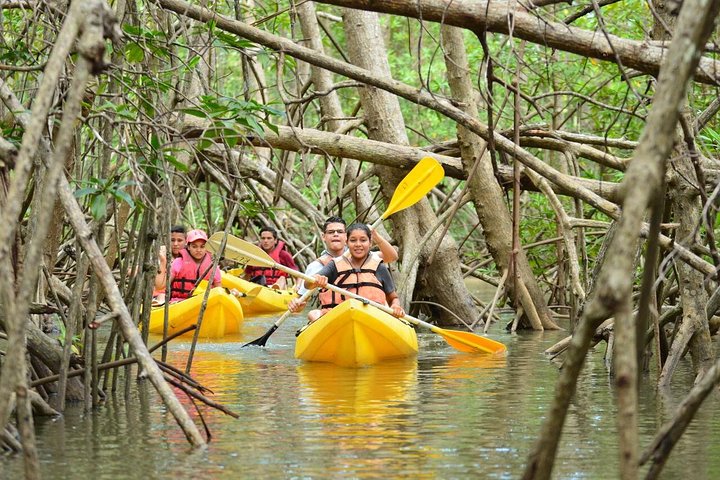
Pair the park with the public Playa Espadilla for a swim, a mangrove paddle on another day, and a relaxed dinner in the hills above the road, because there is plenty to do around the park without a second visit.
What to expect
The experience
A small-group guided walk of about two hours on the park's main trails, with a spotting scope, a stop at the beach and a park entry ticket arranged through the tour.
Best time
The first morning slot, around 7am, for cooler air, active animals and fewer people. Remember the park is closed on Tuesdays.
How long
Plan two to three hours inside, plus time for a swim at the beach afterwards.
Tips
Bring a reusable water bottle, a hat, sunscreen and sturdy shoes, keep food out of sight and confirm that your tour option includes the park ticket before you pay.
Quick picks
- Best for
- Every first-timer who wants to see sloths, monkeys and beaches in one morning.
- Families
- A private or family-sized tour works well, since guides know where the easy sightings are and keep a gentle pace for small legs.
- Couples
- Take the first tour of the day, then swim at the quiet end of the beach and have a long lunch back up the hill.
- Pair with
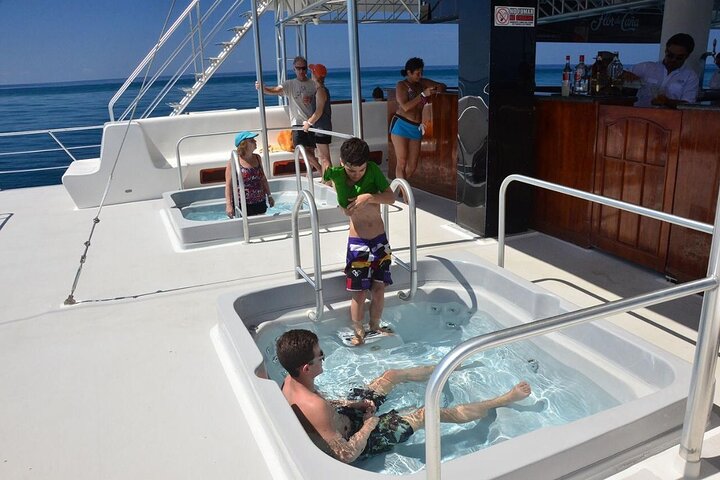
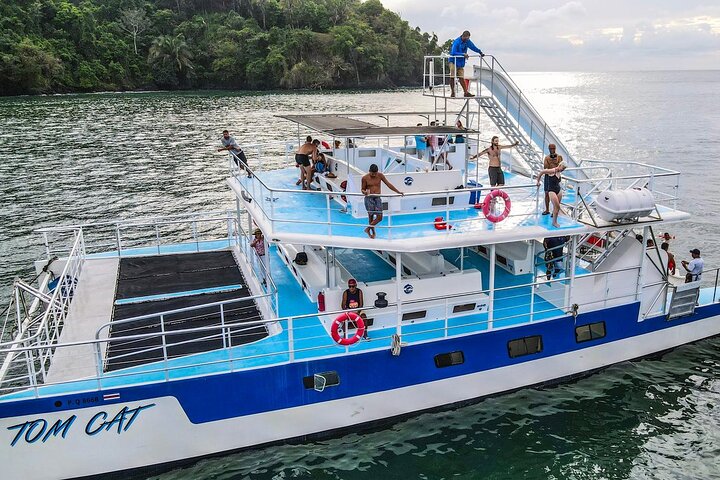
- A swim at Playa Espadilla, a Damas Island mangrove tour on another day and a sunset catamaran for the evening.
- Time needed
- About half a day, ideally the morning.
Good questions
Which day is Manuel Antonio National Park closed?+
The park is closed on Tuesdays and open Wednesday to Monday, generally from 7am to 4pm. Hours can change, so check the park's site in the week you travel.
Can I buy park tickets at the gate?+
No. Tickets are sold online only and in advance, and busy dates sell out, so book before you arrive or choose a guided tour that arranges the ticket for you.
Do I need a guide?+
It is not strictly required, but a certified guide with a spotting scope will show you far more wildlife, especially sloths. Book through a reputable tour rather than at the gate.
How much does the park cost?+
Adult visitors from abroad pay roughly US$18, with a lower fee for children aged two to twelve and free entry for toddlers. Prices can change, so confirm when you book.
Is the park worth it in the green season?+
Yes. The forest is greener, the crowds are thinner and the animals are just as active. Go early, because showers usually arrive in the afternoon.