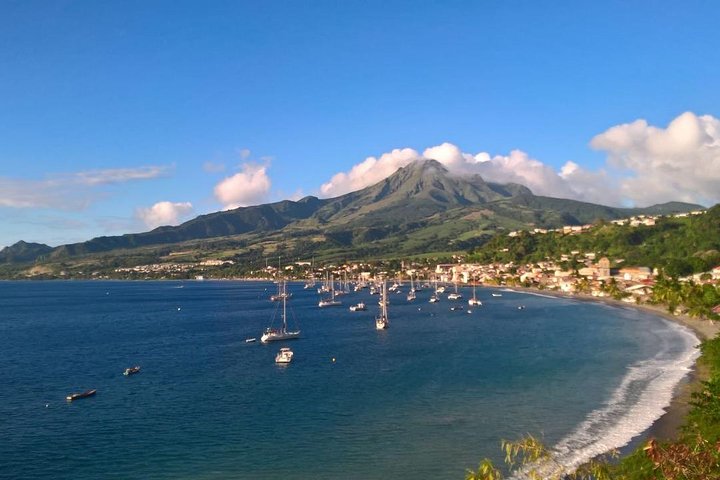
Mount Pelée is the highest point in Martinique at 1,397 metres, and the volcano that destroyed Saint-Pierre in 1902. Its summit, called Le Chinois, is the goal of the island's most famous hike. The easiest and most popular route is L'Aileron, which starts from the car park at Morne Rouge at about 820 metres. It is about 7.5 kilometres with roughly 700 metres of climbing, around three hours round trip to the second refuge, or about five and a half hours if you continue to Le Chinois and walk around the caldera. The Grande Savane trail from Le Prêcheur is a hot, exposed alternative of about four hours to the summit, and the Morne-Macouba trail from Grand Rivière is the hardest, a long day for fit, experienced hikers. The mountain is monitored, and guides from the island's hiking committee can lead the routes.
Why people do it
The summit gives you a volcanic crater, cloud forest and, on a clear morning, views down to the Caribbean and the Atlantic. The walk is steady rather than technical on L'Aileron, but the weather changes quickly and the trail can be muddy and slippery after rain, which is why timing matters.
What to know before you go
Start early. The tourism board advises aiming to reach the top before 10am, because cloud often builds around the summit later in the day. Wear proper walking shoes, a sun hat and a waterproof jacket, and carry snacks and plenty of water; on the exposed Grande Savane route, take at least two litres per person. Never hike alone, and tell someone your plan and expected return. The tourism page gives no current trail status or fees, so check conditions locally or with the hiking committee before you set out.
Other ways to meet the volcano
If you would rather not climb, the Centre de Découverte des Sciences de la Terre near Saint-Pierre and La Maison des Volcans in Morne Rouge cover the geology and history. The north coast tour to Saint-Pierre pairs well with a hike on a different day, because the town explains what the mountain did.
What to expect
The experience
A mountain trail from a car park at Morne Rouge, with a refuge on the way and an optional loop around the caldera at the top.
Best time
Early morning, aiming to reach the summit before 10am, on a dry day with a clear forecast.
How long
About three hours round trip to the second refuge, or five and a half hours with Le Chinois and the caldera.
Tips
Wear grippy shoes, carry water and a rain jacket, check conditions before you leave, and do not hike alone.
Quick picks
- Best for
- Fit walkers who want Martinique's signature hike and a real sense of the volcano.
- Families
- Only for older children who walk well; the trail is steady but long and the weather can turn quickly.
- Couples
- A shared morning challenge with a big view if the cloud lifts, followed by a rum tasting or lunch in the north.
- Pair with
- Saint-Pierre and its museum, to understand the 1902 eruption.
- Time needed
- Allow a full morning, or most of a day with the caldera walk and travel.
Good questions
How high is Mount Pelée?+
It is 1,397 metres, the highest point in Martinique. The summit is called Le Chinois.
Which trail is easiest?+
L'Aileron, from the car park at Morne Rouge at 820 metres, is the trail of lowest difficulty and the most popular. It is about 7.5 kilometres with around 700 metres of climbing.
When should I start?+
As early as you can. The tourism board suggests reaching the top before 10am, since cloud often forms around the summit later in the day.
Do I need a guide?+
Not on L'Aileron in good weather, but guides from the hiking committee can share the plants, geology and history. Never hike alone, and always tell someone your plan.
Is the volcano dangerous?+
It is closely monitored, and Martinique treats the mountain seriously. Check weather and trail conditions locally before setting out, especially after rain.