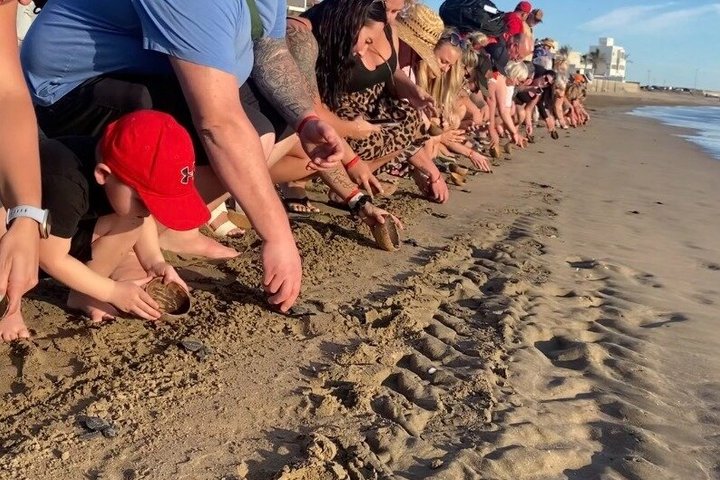
Sea turtles have nested on the beaches of the Mexican Pacific for millions of years, and the coast around Mazatlán is part of that long story. A conservation encounter gives visitors a way to see the work that goes into protecting them. On an outing like this you travel to a beach or protected camp, hear from the people who look after the nests, and learn why hatchlings need such careful help: eggs are vulnerable to predators, lights, vehicles and people, and only a small fraction of the turtles that hatch ever reach adulthood. Depending on the season, you may be able to watch or take part in a release, when small turtles are set down on the sand and make their way to the sea under the watch of the guides. Outside the nesting and hatching months the programme focuses on explanation, the beach itself and time to relax. The experience suits families, curious travellers and anyone who would like a day that feels useful as well as enjoyable. It also pairs naturally with a slow beach afternoon, since the outing is built around time by the water rather than a rushed schedule. Expect a short briefing, simple rules for how to behave near the animals, and a calm pace.
Timing matters a great deal. Sea turtle nesting and hatching follow a seasonal pattern, and hatchlings are not available every day of the year. If seeing a release is the main reason for going, ask the operator what is realistic for your dates and whether the outing still makes sense if no hatchlings are present. In many programmes the educational part continues regardless of the season, but the memorable moment of watching tiny turtles head for the surf cannot be guaranteed.
The golden rules are the same everywhere. Do not touch hatchlings unless a guide invites you to, do not use flash photography, keep your hands free of sunscreen and insect repellent where asked, and stay behind any lines marked by the staff. Turtles find the sea by moving toward the brightest horizon, so artificial lights and crowds can confuse them. Guides will usually explain the rules clearly at the start, and following them is part of the point of the visit.
What to bring
Sun protection, a hat, water, a towel and swimwear if a beach swim is part of the day. Wear shoes that are easy to take off and expect sand. Carry a little cash for any donation box or small purchase, since conservation groups often rely on voluntary contributions to continue their work. Children are usually welcome and tend to remember the experience for a long time, but they need to be old enough to follow the rules around the animals.
This outing is a good counterpart to the busy old town and the Malecón. After a morning of history and food, a quiet day on a protected beach shows another side of the coast. Travellers who want more time on the sand can combine it with a visit to Stone Island, and those who prefer to stay in the city can pair it with the aquarium. Check the departure point and transport arrangements when you reserve, allow a relaxed morning, and finish with a seafood lunch at a palapa if one is on the way.
What to expect
The experience
A guided conservation outing with a briefing on sea turtles, time with the programme staff and a relaxed beach stay.
Best time
During the local nesting and hatching season if you hope to see a release; ask the operator for dates.
How long
About half a day including travel.
Tips
Follow the guides on handling, avoid flash, bring sun protection and a towel, and carry a little cash for donations.
Quick picks
- Best for
- Families and animal lovers who want a gentle, educational outing.
- Families
- Excellent for children old enough to follow simple rules around the animals.
- Couples
- A quiet, memorable morning away from the busy centre.
- Pair with
- Stone Island, the aquarium or a seafood lunch.
- Time needed
- Half a day.
Good questions
Will I definitely see baby turtles?+
Not on every date. Hatchlings follow a seasonal pattern, so ask the operator what is likely for your visit.
Can I touch the turtles?+
Only if a guide invites you to. Follow the rules for handling and avoid flash photography.
Is it suitable for children?+
Yes, for children old enough to follow simple instructions near the animals.
What should I bring?+
Sun protection, a hat, water, a towel and a little cash for donations.
Is it just about turtles?+
The programme includes time on the beach and an explanation of the conservation work, so it works as a relaxed day out even when no hatchlings are present.