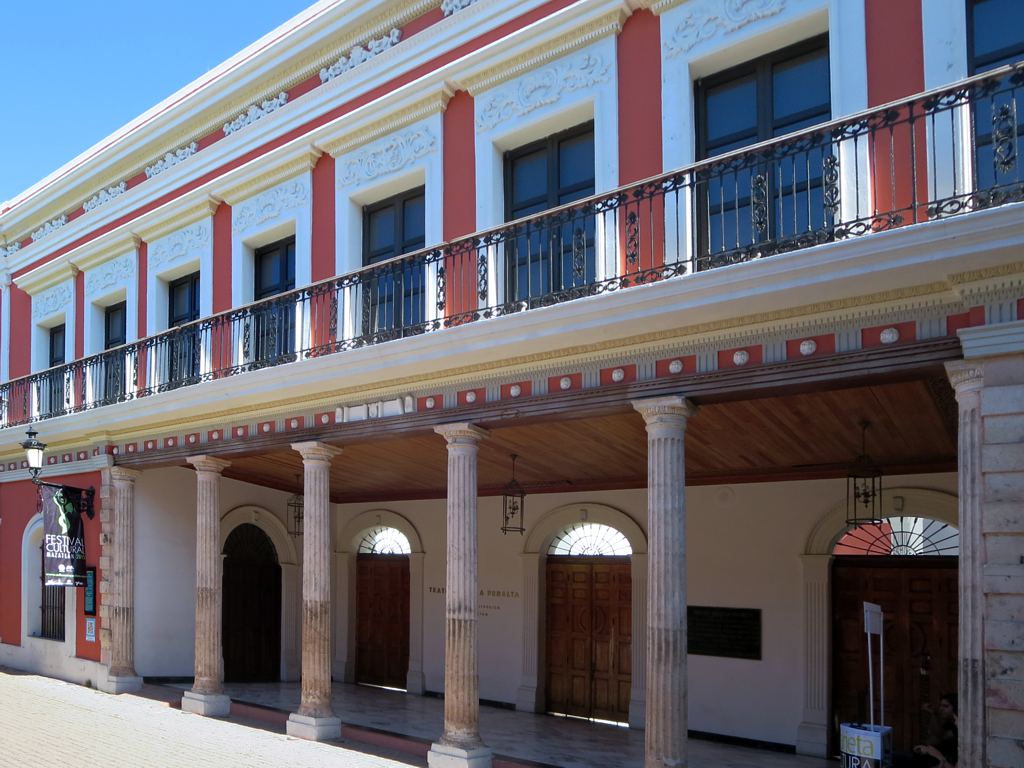
The Teatro Ángela Peralta is the grand old theatre of Mazatlán, set a short walk from Plazuela Machado in the Historic Center. Construction began in 1869 and it first opened in 1874 as the Teatro Rubio, hosting performances for decades before it declined. It carries the name of the soprano Ángela Peralta, known as the Mexican Nightingale, who died in Mazatlán in 1883. A hurricane severely damaged the building in 1975, and a long restoration beginning in the mid-1980s brought it back; it was reinaugurated as the Teatro Ángela Peralta in October 1992. The restoration kept the neoclassical facade and baroque interior while building a modern theatre inside the original shell. It was declared a national heritage site in 1990. Today it hosts concerts, theatre, dance and the big cultural events of the city, including seasons linked to the annual Carnaval, and it is one of the best reasons to plan an evening around a performance rather than only a restaurant.
What to see
Even if you do not attend a show, the building rewards a look from the street. The facade faces the old town streets close to the plaza, and the theatre sits beside the former Hotel Iturbide where the soprano is recorded as having died. When a performance is on, the interior with its tiers and ornament is the real attraction. The Historic Center site also mentions virtual tours of the theatre, which are a useful preview if you cannot get inside.
Planning
There is no fixed visitor schedule that we could confirm, so the most reliable approach is to check the current programme before you travel. The Culturamazatlán events calendar and the theatre's own social pages carry the schedule, and tickets for popular events can sell out around festival periods. Dress is smart casual and most performances are in Spanish, though music and dance need no translation.
Make it an evening
Combine a performance with an early dinner on Plazuela Machado, which is a short walk, and then stroll back to your hotel through the lit streets. The theatre pairs naturally with a daytime visit to the cathedral and the Historic Center, so you can see the architecture in daylight and the building in action at night. If your dates are fixed, look at the programme first and build the rest of the trip around the show you most want to see.
What to expect
The experience
Either an exterior visit to admire the landmark building, or an evening performance of music, theatre or dance inside the restored hall.
Best time
Evening, when performances take place, followed by dinner on the nearby plaza.
How long
Plan one to two hours for a show, or twenty minutes for the facade.
Tips
Check the current programme and book ahead for festival dates, dress smart casual and expect most spoken performances in Spanish.
Quick picks
- Best for
- Culture lovers who want to see a restored 19th-century theatre in use.
- Families
- Choose a family-friendly concert or dance programme, as many shows suit older children.
- Couples
- A performance followed by dinner on the plaza is a classic evening.
- Pair with
- Plazuela Machado, the cathedral and an evening walk along Olas Altas.
- Time needed
- An evening.
Good questions
Who was Ángela Peralta?+
She was a celebrated Mexican soprano nicknamed the Mexican Nightingale, who died in Mazatlán in 1883. The theatre was named in her honour when it was restored and reopened in 1992.
When was the theatre built?+
Construction began in 1869 and it opened in 1874 as the Teatro Rubio. After damage from a hurricane in 1975 it was restored and reinaugurated in October 1992.
How do I find out what is on?+
Check the Culturamazatlan events calendar and the theatre's social media pages for the current programme. Schedules change through the year, with the busiest period around Carnaval.
Can I visit without seeing a show?+
You can admire the facade and surroundings from the street at any time. Access to the interior outside performances is not something we could confirm, so ask locally or check before you go.
Is it worth the trip if I do not speak Spanish?+
Yes, especially for concerts, ballet and music programmes, which do not rely on language. The building itself is a highlight even for a short look.