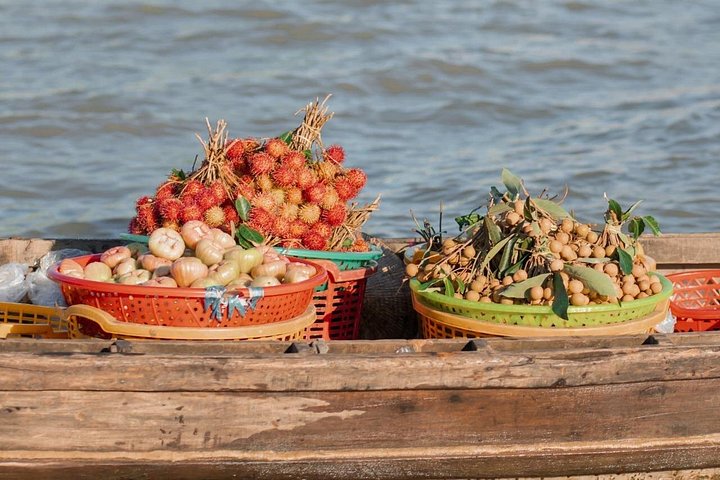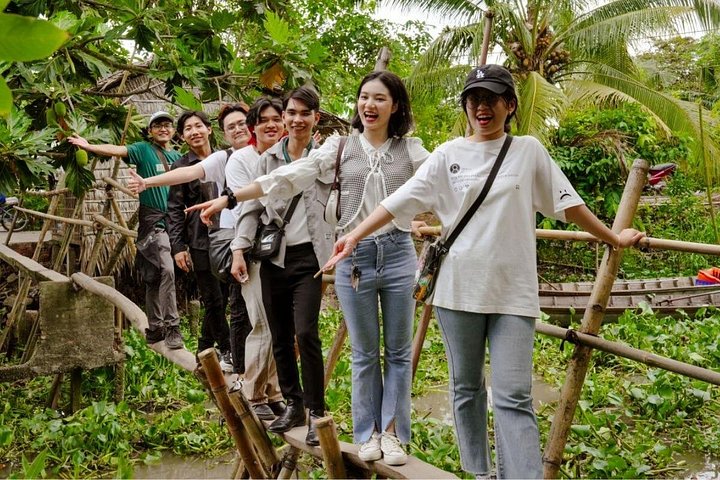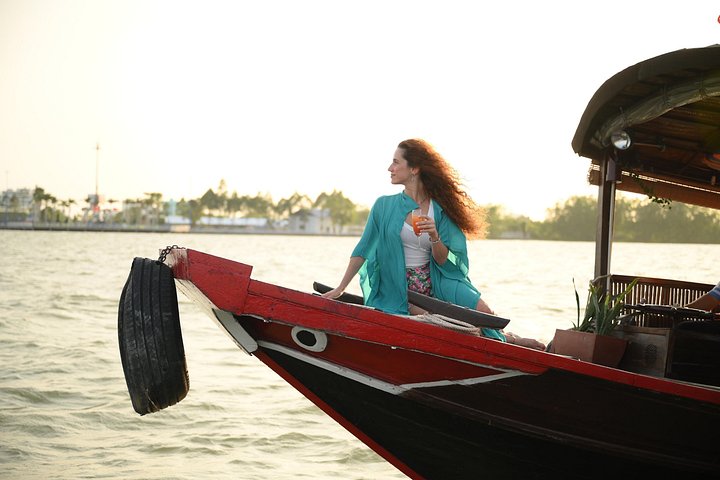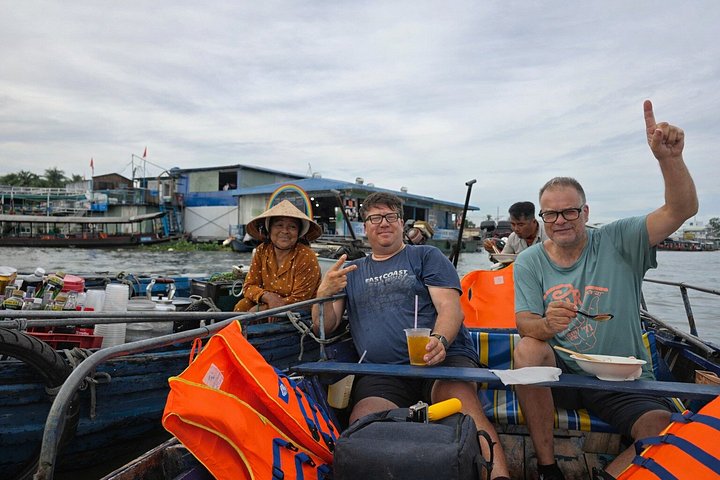
Rice noodles are the quiet backbone of delta cooking, appearing in the soups, salads and stir-fries that fill menus from Can Tho to the sea. This tour, whose title pairs Cai Rang with a breakfast rice noodle workshop, takes you from the busy river to a family workshop where you see the process from soaked rice to finished strands. The Cai Rang market gives you the setting, with boats stacked with produce and vendors cooking noodle soup on board for traders. The workshop gives you the craft, and it is surprisingly absorbing because so much about noodle making is physical: the grinding of soaked rice into a smooth liquid, the thin spreading of the batter over a hot steaming surface, the quick lifting of the delicate sheet, the drying in the sun and the cutting into ribbons. After seeing it done, you usually try a turn at the steaming rack and then eat noodles for breakfast. The pairing suits food lovers who want more than a plate in front of them, and the early timing means you eat while the day is still cool.
How it works
The tour begins early in Can Tho, with a guide and a boat to the floating market. After the market visit you travel to the workshop, which is typically in a village near the river. The price is moderate, and the title says breakfast is part of the programme, but confirm exactly what is included before you book, including drinks, since some operators serve tea and coffee while others do not.
What to expect
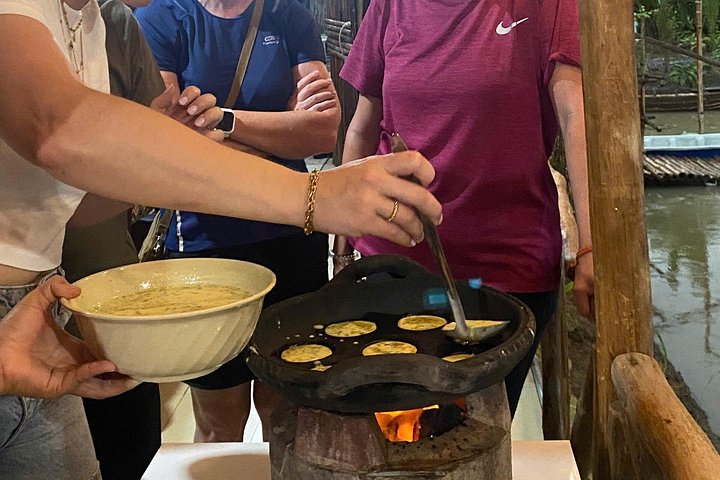
Noodle workshops are working spaces, so expect steam, flour and warm air. Guides usually walk you through each step in turn, and you will be asked to help with spreading or cutting, which is harder than it looks. The result tastes best straight from the rack with a splash of fish sauce, a few herbs and some shallots, although some workshops cook the noodles into a soup or stir-fry.
The family running the workshop is often multi-generational, and the small-scale production is a reminder that many delta foods start in home kitchens rather than factories. Photography is welcome, but ask first before pointing a camera at people at work.
Making the most of it
Wear a top you do not mind marking and shoes that are easy to slip off, since some workshops have damp floors. Bring a hat for the river and a small amount of cash for souvenirs, dried noodles and snacks. If you eat meat-free, let the operator know in advance because the sauces and broths may contain fish or pork.
This is a good morning to combine with a food tour later in the day, because a gentle breakfast on the river and workshop pace leaves time to rest before the evening.
For families, it is an easy craft activity that keeps children engaged, and the early start tends to end around late morning, leaving the afternoon free for the pool or a museum. Workshops are family businesses, so the rhythm of the visit follows the family’s working day, and visitors who arrive with curiosity and a little patience are welcomed warmly. Ask the guide to explain the difference between fresh noodles and dried ones, because the answer says a lot about how food travels across the delta, and watch for the simple tools, such as bamboo racks and cloth-covered steamers, that have changed little over generations.
What to expect
The experience
A guided morning with a floating-market boat visit and a hands-on rice noodle workshop followed by breakfast.
Best time
Early morning, when the market is busiest.
How long
Around four to five hours.
Tips
Wear clothes that can get marked, slip-off shoes and a hat, and flag dietary needs in advance.
Quick picks
- Best for
- Food lovers who want to see how noodles are made.
- Families
- A hands-on activity that holds children’s attention.
- Couples
- Easy, social and delicious.
- Pair with
- An afternoon food tour or a cooking class on another day.
- Time needed
- Half a day.
Good questions
Will I make noodles myself?+
Usually you help with part of the process, such as spreading batter or cutting, under the family’s guidance.
Is breakfast included?+
The tour title mentions a breakfast noodle workshop. Confirm what is served and whether drinks are included.
Can I join if I avoid meat or fish?+
Ask the operator in advance. Many broths and sauces use fish sauce or pork, and a vegetarian version can often be arranged.
Can I buy noodles to take home?+
Dried noodles are often sold at the workshop. Check customs rules for your home country before packing food.
How is this different from a food tour?+
It is a craft-and-market morning, not a tasting walk. You watch and try one food in depth.