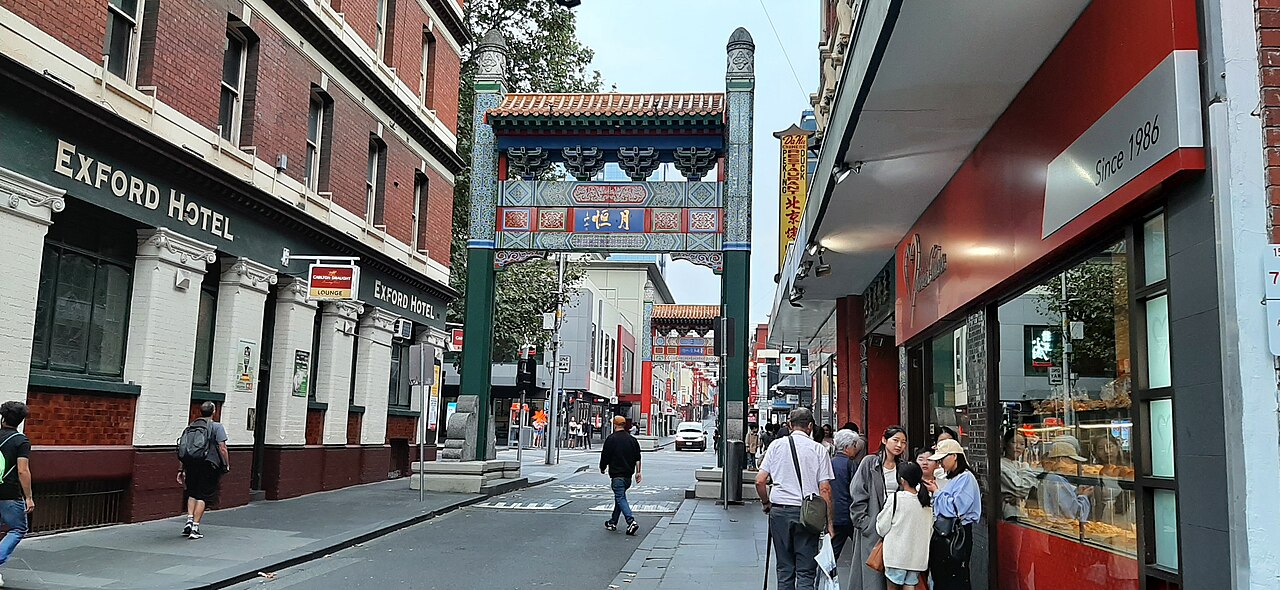
Melbourne's Chinatown is the oldest in Australia and is often described as the longest continuously running Chinatown in the Western world. It grew up along Little Bourke Street in the 1850s, when Chinese miners arrived in their thousands during the Victorian gold rush and merchants, boarding houses and temples followed. Today it runs along Little Bourke Street at the eastern end of the CBD, framed by ornate golden-roofed gateways and strung with red lanterns, with narrow lanes branching off on either side. The precinct is above all a place to eat. Dumpling houses, noodle bars, Cantonese restaurants, Sichuan and Malaysian kitchens and yum cha dining rooms fill the street and its lanes, ranging from cheap and cheerful canteens to institutions; the City of Melbourne's own guide highlights long-standing names such as Flower Drum, Supper Inn and HuTong Dumpling Bar. Beyond food, you will find karaoke, Asian fashion and grocery stores, buskers and hidden cocktail bars, plus the Chinatown Cinema, which screens Chinese-language films. The Museum of Chinese Australian History, in Cohen Place off Little Bourke Street, tells the story of Chinese migration to Australia, from the goldfields to the present day, and houses processional dragons used in Melbourne's festivals; it is a modest ticketed visit that gives the street real depth. Lunar New Year, usually in late January or February, is the highlight of the calendar, with lion dances, street food and weekend pop-ups, and the Moon Lantern Festival brings lanterns and family events later in the year. Walking the street is free at any hour, and Chinatown sits close to the theatres of the East End and Bourke Street Mall, so it is an easy pre-show dinner stop.
Chinatown rewards a slow wander rather than a single destination. Start at the arches at the Swanston Street end of Little Bourke Street and walk east towards Spring Street, poking into the side lanes such as Cohen Place and Heffernan Lane, where you will find the museum, hidden restaurants and bars. Lunchtime and early evening are the liveliest times, and the lanes glow with neon and lanterns after dark.
Eat as the locals do. For a casual meal, share plates of dumplings and noodles at one of the bustling canteens; for a special occasion, book one of the grand Cantonese dining rooms well in advance. Yum cha at weekends is busy, so arrive early or expect to queue. Many restaurants stay open late, which suits theatre-goers from the nearby Princess, Comedy and Her Majesty's theatres.
Chinatown is part of a much wider Asian food scene in Melbourne, and it is honest to say that some of the most exciting regional Chinese cooking is now found in suburbs such as Box Hill and Glen Waverley. Still, for history, atmosphere and convenience, Little Bourke Street is unmatched. Pair it with a laneway coffee crawl, a show in the East End or a walk to Parliament House and the Fitzroy Gardens.
What to expect
The experience
A free-to-walk historic precinct on Little Bourke Street with restaurants, dumpling bars, shops, hidden bars and the ticketed Museum of Chinese Australian History.
Best time
Lunchtime or early evening for atmosphere; Lunar New Year for festivities.
How long
One to three hours, depending on how long you linger over food.
Tips
Explore the side lanes. Book ahead for the famous Cantonese restaurants. Arrive early for weekend yum cha.
Quick picks
- Best for
- Food lovers, history buffs and anyone looking for a lively, central dinner before a show.
- Families
- Dumplings and noodles please everyone, and the dragons in the museum fascinate children.
- Couples
- A pre-theatre dinner or a hidden-bar crawl after dark.
- Pair with
- The laneways and coffee scene, the East End theatres, or Fitzroy Gardens.
- Time needed
- One to three hours.
Good questions
Is Melbourne's Chinatown the oldest in Australia?+
Yes. It dates from the 1850s gold rush and is often described as the longest continuously running Chinatown in the Western world.
Where is Chinatown in Melbourne?+
Along Little Bourke Street in the eastern part of the CBD, marked by golden-roofed arches and red lanterns, with lanes branching off on both sides. It is inside the Free Tram Zone and a few minutes' walk from Bourke Street Mall and Parliament Station.
What is the Museum of Chinese Australian History?+
A museum in Cohen Place, off Little Bourke Street, telling the story of Chinese migration to Australia from the goldfields onwards, including processional dragons used in festivals.
When is Lunar New Year in Chinatown?+
Usually in late January or February, with lion dances, street food and weekend pop-ups. Check the City of Melbourne events listings for exact dates.
What should I eat in Chinatown?+
Dumplings, noodles and yum cha are the classics, with many regional Chinese and Asian cuisines represented. For a special occasion, book a famous Cantonese restaurant well ahead.