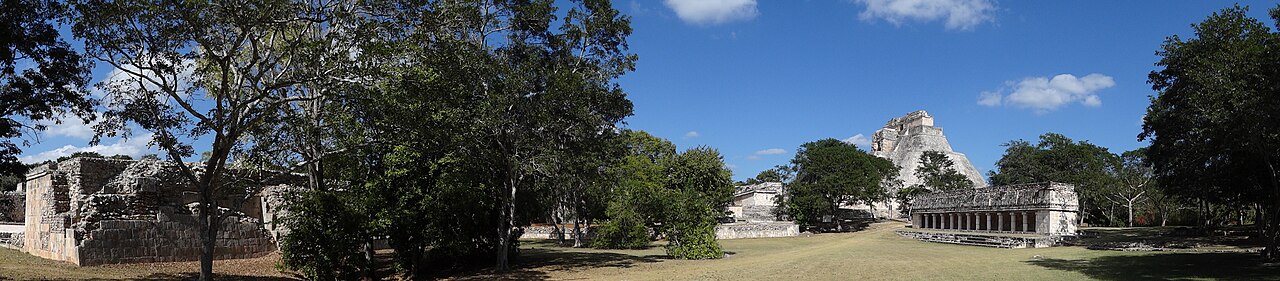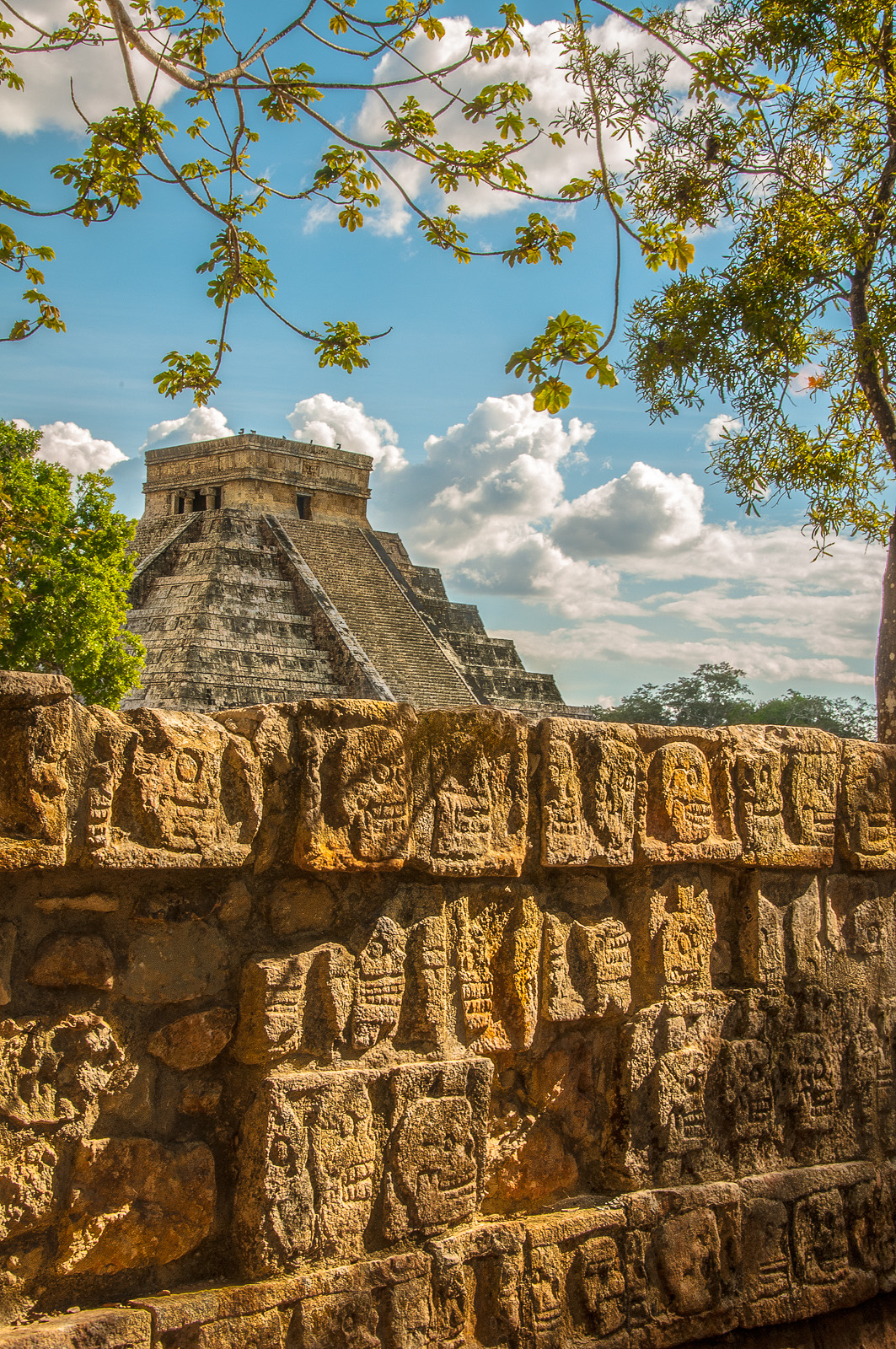
Chichén Itzá is the most visited archaeological site in Mexico and one of the New Seven Wonders of the World, and it earns the crowds. The site is a Maya and Toltec-influenced city that flourished roughly between the seventh and eleventh centuries, and its centrepiece is El Castillo, the stepped pyramid of Kukulcán whose four staircases and 365 steps are aligned to the sun. Around it sit the Great Ball Court, the largest known in Mesoamerica, the Temple of the Warriors with its colonnades, the Platform of the Skulls, the round observatory known as El Caracol and the Sacred Cenote, the sinkhole where offerings were made. The scale is easy to underestimate from a photograph. It is a wide, flat, mostly shadeless site, and the walk from the entrance to the Sacred Cenote and back is a couple of kilometres on uneven paths. Most visitors come on a day trip from Mérida, Cancún or Playa del Carmen, which means the busiest window is late morning, when tour groups converge. Arrive at opening or in the last hours and the experience changes completely. A guide is worth having, because the carvings, acoustics and astronomy are what turn a pile of stones into a city.
The ticket rules matter here more than at any other Yucatán site. Admission has two components: a federal fee collected for INAH, the national institute that runs Mexican archaeological sites, and a separate Yucatán state fee. Foreign adults pay both, which in 2026 came to roughly 676 to 697 pesos combined depending on the source, while Mexican citizens pay a much lower rate and Yucatán residents with a valid local ID pay only the federal part. INAH sells a federal-only ticket online, so read any confirmation carefully; a voucher that covers only part of the fee will leave you paying the balance at the gate. Many bundled day tours also exclude admission, so check the inclusions before you compare prices.
Rules on the day: the pyramids and structures cannot be climbed, drones and large backpacks are not allowed, non-professional video recording carries a small extra fee, and professional equipment needs an INAH permit. Hours are generally from eight in the morning to late afternoon with last entry around mid afternoon, and the site is open every day, but check before you travel because areas can be restricted. Vendors line the paths inside, so decide in advance whether you want souvenirs. The Sacred Cenote is an archaeological and ceremonial feature, not a swimming spot; plan a swim at a separate cenote such as Ik Kil on the way back.
Choosing how to go: a self-drive visit with an entry ticket gives you the most control, a guided small-group tour adds context and skip-the-line handling, and a day trip from Mérida usually combines Chichén Itzá with a cenote and Izamal or Valladolid. Bring a hat, water and a refillable bottle, wear closed shoes for uneven paths and keep cash in pesos as a back-up. The separate evening light show has its own ticket and dates and is not covered by the daytime entry.
What to expect
The experience
A self-paced walk past El Castillo, the Great Ball Court, the Temple of the Warriors and the Sacred Cenote, with optional live guides and a security check at the entrance.
Best time
Opening time or the last couple of hours before closing, when the tour coaches have not arrived or have left and the light is softer for photographs.
How long
Three to four hours on site including a guided loop, plus roughly two hours of driving each way from Mérida.
Tips
Buy the full admission, confirm what a tour includes, carry pesos, wear a hat and closed shoes, and do not plan to climb or swim; the pyramid is closed to climbing and the Sacred Cenote is not for bathing.
Quick picks
- Best for
- Every first-timer to the Yucatán, since this is the site that defines the Maya world for most visitors.
- Families
- Children enjoy the clap echo at El Castillo and the ball court, but the site is hot and shadeless, so bring water and plan breaks.
- Couples
- Arrive at opening for quiet photographs, then cool off at Ik Kil or have a long lunch in Valladolid on the way back.
- Pair with
- A cenote swim, the colonial town of Valladolid or Izamal, and a Mérida street food evening to finish the day.
- Time needed
- A full day from Mérida, usually seven to ten hours door to door.
Good questions
How much does Chichén Itzá cost for foreign visitors?+
Foreign adults pay a federal INAH fee plus a Yucatán state fee, and in 2026 the combined total was roughly 676 to 697 pesos depending on the source. Confirm the full amount before paying, because reseller pages describe it differently.
Can you climb El Castillo?+
No. Climbing the pyramid and other structures at Chichén Itzá is not allowed, and barriers keep visitors at the base. You can walk around the base and photograph it from several angles.
Do day tours from Mérida include the entrance fee?+
It depends on the product. Some include admission and some do not, in which case the fee is paid at the gate in pesos or by card, so read the inclusions before you book.
What time should I arrive?+
Be at the gate when it opens or arrive for the last few hours. Late morning is the busiest time because coach tours arrive together, and the midday heat is intense.
Is the night show included in the day ticket?+
No. The evening light show is a separate experience with its own dates, price and entry procedure, so check the official schedule if you want to see it.