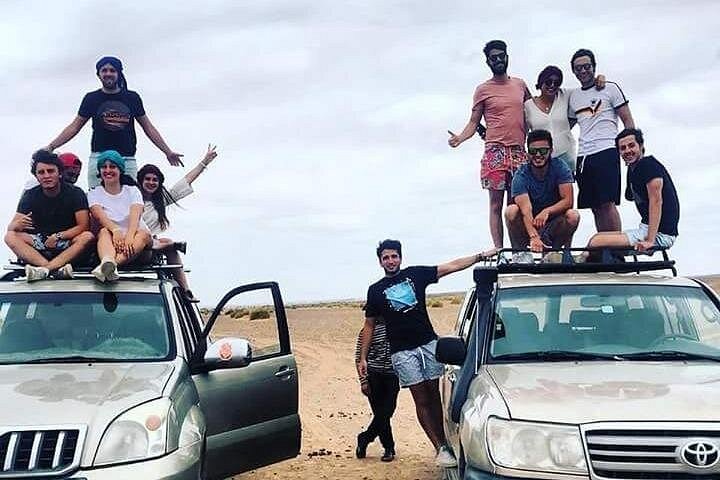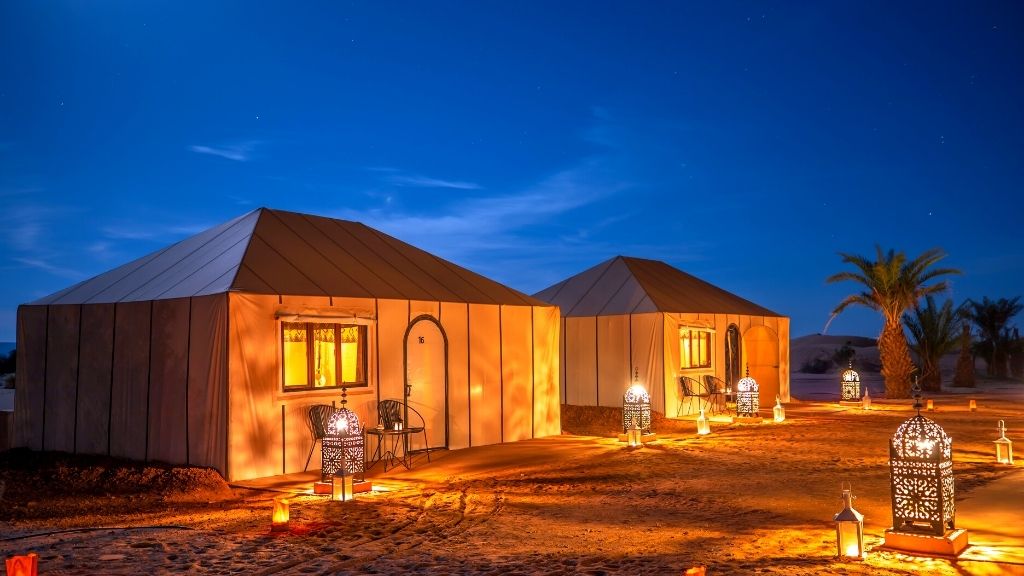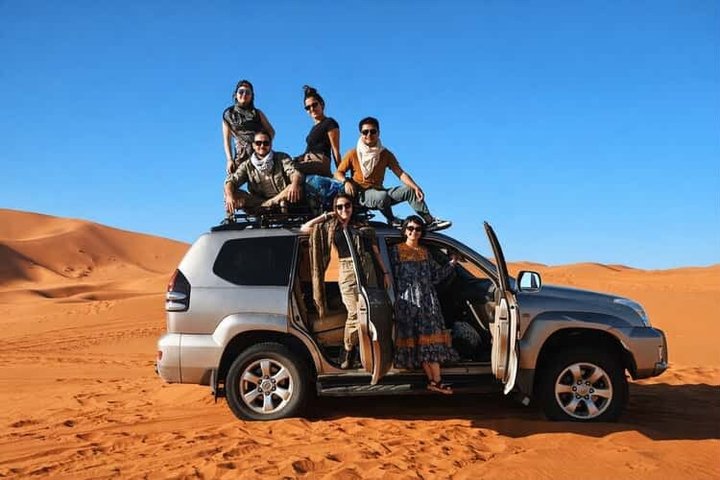
The people of this region are as much a draw as the dunes. This tour takes you by 4x4 to meet a nomad family living in a tent or simple house on the edge of the erg, where you are usually offered mint tea, bread and a chance to ask questions through your guide. From there it continues to Khamlia, a small village a few kilometres south of Merzouga that is known for Gnawa music. The Gnawa are descendants of people brought across the Sahara from West Africa, and their trance-like songs, driven by iron castanets called qraqeb and a deep three-stringed bass lute, are among the best-known musical traditions in Morocco. A short performance in the village is often the highlight of the day.
Cultural visits work best when approached with curiosity and respect. Ask your guide how nomad life has changed, since many families now split their year between tents and permanent homes, and tourism has become part of the economy. You can usually take photographs with permission, but always ask first, particularly of women and children. Small purchases of handmade crafts, tea or bread are a polite way to say thank you, and tipping the musicians is customary after a performance.
Khamlia is an interesting place in its own right. The village sits close to the dunes and has a distinct identity, with a community whose music and customs reflect both Saharan and sub-Saharan heritage. A performance can range from a short demonstration to a more extended session of song and dance. Listen for the interplay between the drum, the metal castanets and call-and-response vocals. Many visitors find it far more moving than the staged shows offered elsewhere because it comes from people who treat it as part of their own culture.
Choose this tour if you want context for the landscape, or as a daytime complement to an overnight in the dunes. It is a good family activity because it is gentle, shaded and not physically demanding. Mornings are best for visits, as nomad families are more likely to be at home and the light is good for photographs.
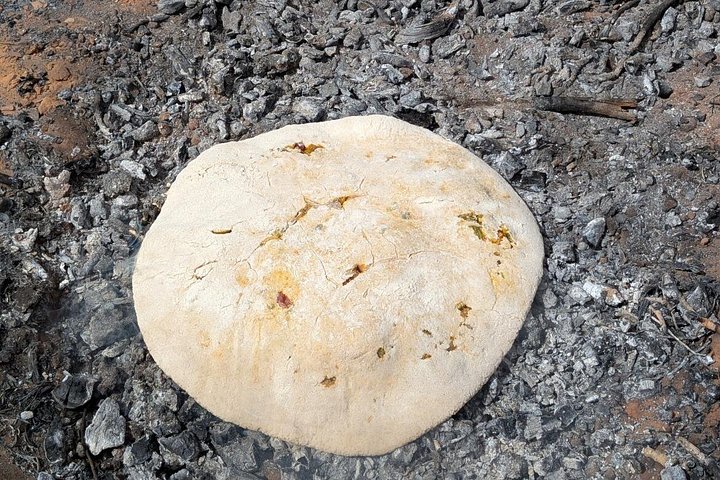
Bring water, a hat and some small notes, and ask the operator whether lunch or a Berber pizza baked in the sand is part of the programme. If your schedule is tight, a half-day 4x4 tour may cover similar ground, but the Khamlia stop is what makes this one distinctive.
To make the visit more meaningful, prepare a few questions and listen to the answers. Ask about water, grazing, school and how families prepare for the hottest months. Respect the household by removing your shoes if asked, sitting where you are invited and accepting at least one glass of tea. Music sessions are often best in the late afternoon, so try to schedule your visit then. If you are interested in the drums and castanets, ask whether you can try them under supervision, since many musicians enjoy sharing the instruments.
Be realistic about what you will see. Fully traditional nomadic life has become rare, and many families now combine seasonal tents with permanent houses and work in tourism, farming or trade. A good guide explains this honestly and does not pretend that the visit is a glimpse of the past. The value lies in conversation, tea and music. Families appreciate when visitors buy a handcrafted item or a bag of dates, and they notice when guests treat the visit with curiosity instead of as a photograph opportunity.
What to expect
The experience
A guided 4x4 visit to a nomad family and the village of Khamlia, with a short Gnawa music performance.
Best time
Morning or afternoon all year.
How long
About three to four hours.
Tips
Ask before photographing people, carry small notes for tips and purchases, and be open to conversation.
Quick picks
- Best for
- Culture-minded travellers who want more than scenery.
- Families
- Gentle and engaging for children.
- Couples
- A thoughtful way to spend a morning.
- Pair with
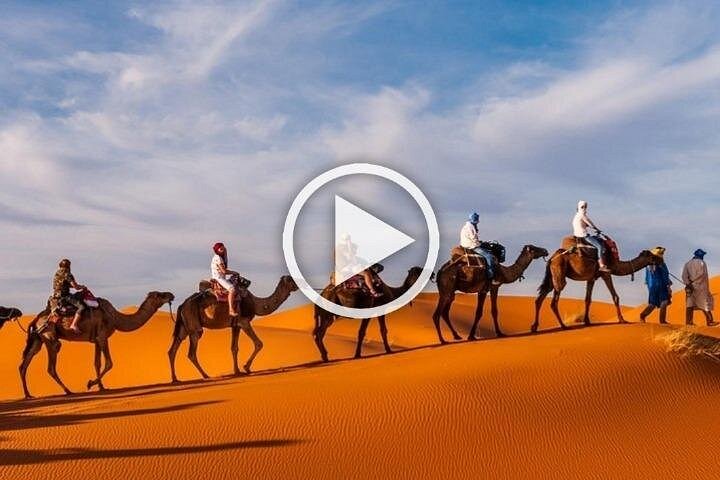
- A camel trek or a cooking class.
- Time needed
- Half a day.
Good questions
What is Gnawa music?+
A spiritual and rhythmic tradition with roots in West Africa, played with castanets, drums and a bass lute.
Is the nomad visit staged?+
Experiences vary. Many families host visitors regularly, but a good guide explains what is typical.
Should I tip the musicians?+
Yes, a small tip is customary after a performance.
Can I take photographs?+
Usually, but ask first, especially when photographing people.
Is the tour long?+
Typically three to four hours including drives.