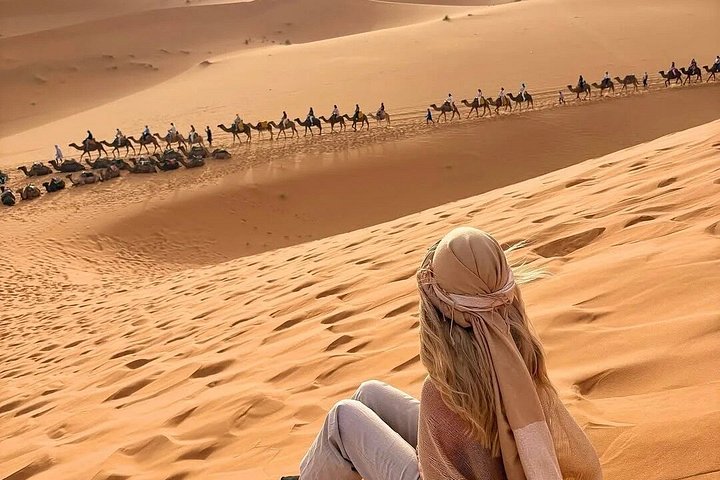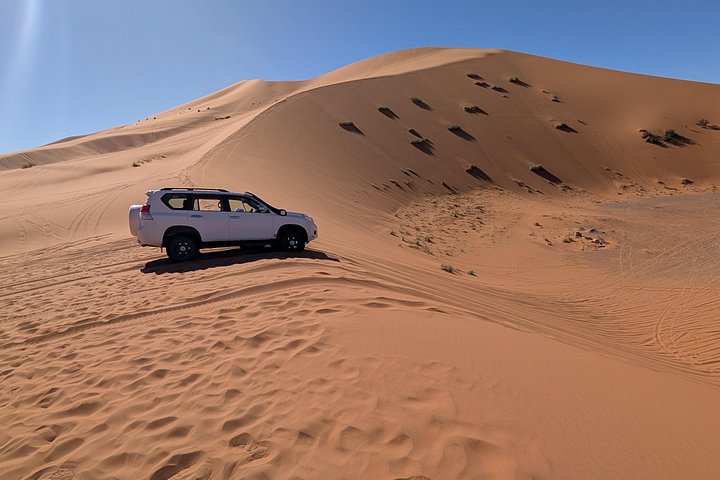
Sunrise is the quietest and coolest time to visit the Sahara. This early morning 4x4 tour collects you from your hotel or camp before first light, drives across the plain to a good starting point and leaves you to climb a dune on foot while the sky turns from black to pink to gold. As the sun clears the horizon, the sand ridges light up in long, crisp shadows, and the silence is complete except for the wind and the occasional call of a desert bird. After the show, the jeep carries you back for breakfast, or on to a village stop, so that you finish the morning with plenty of day left to explore.
The key to a good sunrise is preparation. Check the time of first light, which shifts through the year, and make sure the pickup is early enough to reach your dune before the sun appears. Dress in layers, since pre-dawn air in the desert is cold even in summer, and bring a torch or head torch for the walk. Footwear should be closed and easy to empty. If you are fit, ask your guide to take you to a higher ridge for the best view; if not, a lower dune still gives a beautiful outlook.
Photographers will want a tripod or a stable surface and a lens that handles both wide landscapes and details such as footprints, ripples and beetle trails. The most striking photographs often come in the half hour before sunrise, when the sky has colour but the sun is not yet visible. Wind can obscure the view with blowing sand, so protect your gear with a cover and change lenses carefully.
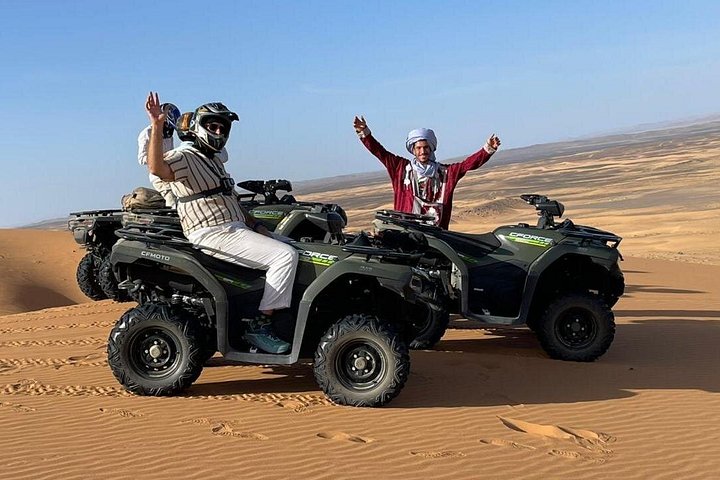
This tour suits people who are not staying in a desert camp but still want a dawn view, and it can be combined with a visit to the village, a nomad camp or a quick quad ride. If you do sleep in the dunes, you can often climb for sunrise from camp without a separate vehicle, which is cheaper but less flexible.
Sunrise outings are less crowded than sunset ones, and the cooler air makes dune climbing more pleasant. Because the day starts so early, plan a restful afternoon, and avoid scheduling a long drive straight after unless you are happy to sleep in the car.
Choose your base for the tour with care. If you sleep in the village, the vehicle can reach the dunes quickly, whereas a camp deep in the sand allows you to walk up from your tent without a drive. Check the weather the evening before, because cloud on the horizon can hide the first light, and a clear sky tends to follow a calm night. After the climb, take your time over breakfast; hot tea and fresh bread taste especially good after an early start in the cold.
A good sunrise also depends on patience. After the sun appears, stay for ten minutes, because shadows grow long and sand patterns glow in the low light. Look back at your footprints and at the textures on the dunes, which are some of the most photogenic details. If you are with a group, ask for a few quiet minutes. Carry a hot drink in a flask, and consider a light snack for the walk, since the air is cold and the climb is tiring.
What to expect
The experience
An early 4x4 transfer to the dunes, a climb for sunrise and a return for breakfast.
Best time
Year-round; wear layers in every season.
How long
About two to three hours, starting before dawn.
Tips
Bring a torch, a warm layer, a scarf and water, and check the sunrise time the night before.
Quick picks
- Best for
- Photographers and early risers.
- Families
- Possible with older children who can manage an early start.
- Couples
- A quiet, romantic start to the day.
- Pair with
- An afternoon camel ride or a village lunch.
- Time needed
- A morning.
Good questions
How early is the pickup?+
Typically 45 to 90 minutes before sunrise, depending on the season. Confirm with the operator.
Is it cold at dawn?+
Yes, even in summer. Wear layers and a hat.
Do I have to climb a dune?+
It is optional, but a climb gives the best view.
Can I photograph the sunrise?+
Yes. Bring a tripod and protect your lens from sand.
Is breakfast included?+
Some tours include it. Check before you go.