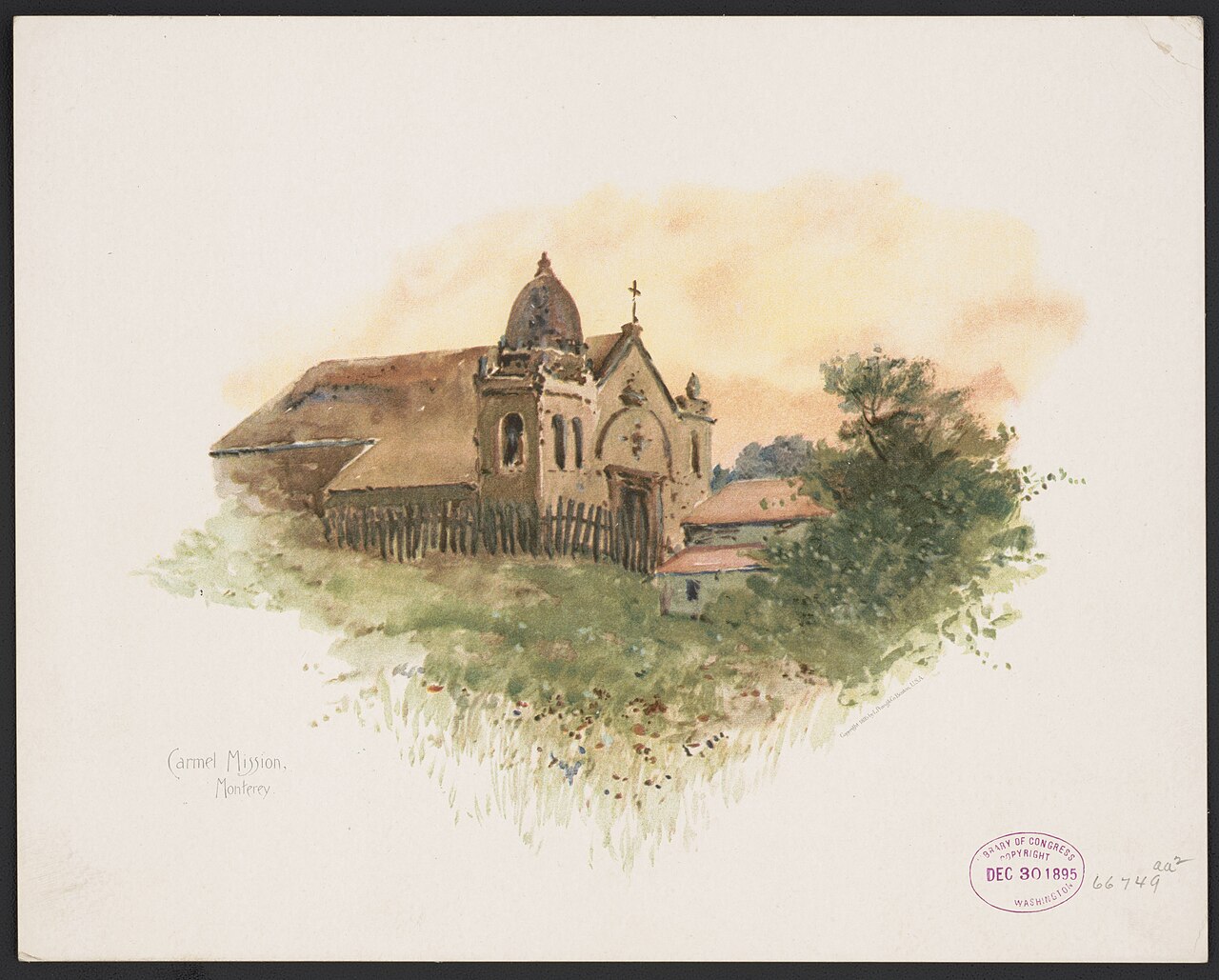
Mission San Carlos Borromeo del Rio Carmelo — Carmel Mission — is the jewel of the California chain: the 1797 sandstone basilica whose catenary-curved ceiling, Moorish bell tower, and star-shaped facade window make it the missions' architectural masterpiece, set in gardens where bougainvillea spills over adobe and fountains hold the courtyard hush. It was Father Junipero Serra's headquarters and favorite; he's buried beneath the sanctuary floor, and the complex's five museum spaces — including California's first library and the cell where Serra died — carry the full, complicated story of the mission era, told with increasing honesty about its impact on the Ohlone and Esselen peoples whose labor built it. An active parish and basilica; modest admission, self-guided, an unhurried 90 minutes.
Serra founded the mission at Monterey in 1770 and moved it a year later to the Carmel River's mouth — better soil, and distance from the presidio — making it the second of the chain and his own seat as father-president. The stone church that followed (1793-1797, master mason Manuel Ruiz) became the missions' high-water mark: golden Santa Lucia sandstone, the parabolic vault unique in the chain, the Mudejar tower with its Moorish dome, and the star window centering a facade that painters and photographers have never exhausted. Serra died here in 1784 and lies beneath the sanctuary with his successors Crespi and Lasuen — the mission era's beginning and administration in one floor.
The complex rewards slow circuits. The basilica interior holds the restored reredos and the chain's oldest surviving liturgical art; the Harry Downie Museum tells the 20th-century restoration story (the church stood roofless for decades — Downie's lifework rebuilt it); the Convento Museum keeps Serra's spartan cell and California's first library (his books, still shelved); the Jo Mora chapel houses the celebrated bronze-and-travertine Serra memorial cenotaph; and the courtyards — fountains, bougainvillea, the pet cemetery kids hunt for — hold the quiet the place is loved for. The telling has matured: exhibits and plaques increasingly center the Ohlone and Esselen experience — the labor, mortality, and cultural cost of the system — and the descendant communities' continuing presence; Serra's 2015 canonization made the complexity unavoidable, and the mission engages rather than airbrushes it.
Logistics
An active Catholic basilica and parish — visiting hours flex around masses and the wedding calendar (Saturdays especially); modest admission funds preservation; allow 60-90 minutes self-guided. It sits at Carmel's quiet south edge, five minutes from the village and three from Point Lobos — the natural midpoint of a Carmel day. The facade at late-afternoon gold, tower against cypress, is among the most photographed frames on the peninsula; the courtyard benches at the same hour are the underrated version.
What to expect
The experience
The 1797 stone basilica and gardens of California's most beautiful mission — Serra's tomb and restored cell, five museum rooms including the state's first library, and bougainvillea courtyards. Active parish; self-guided visits.
Best time
Late afternoon for the golden sandstone and quiet courtyards; check the mass and wedding schedule (Saturdays book solid) around which visiting hours flex.
How long
An unhurried 60-90 minutes.
Tips
It's a working basilica — quiet voices and covered shoulders travel well. Find the star window from inside at the right hour. The Downie Museum's roofless-ruin photos recast everything you just walked through. Pair with the village and Point Lobos; all three sit within five minutes.
Quick picks
- Best for
- History and architecture travelers — it's the mission the other twenty are compared against.
- Families
- The courtyard fountains, pet cemetery hunt, and garden paths carry kids while adults read.
- Couples
- The golden-hour facade and courtyard benches are Carmel's quietest half hour.
- Pair with
- Carmel-by-the-Sea's lanes five minutes north; Point Lobos three south.
- Time needed
- About an hour and a half.
Good questions
Is Junipero Serra really buried there?+
Yes — beneath the sanctuary floor before the altar, alongside missionaries Crespi and Lasuen. The Mora cenotaph in the side chapel is the memorial sculpture, not the grave.
Does the mission address the harder history?+
Increasingly directly — exhibits engage the mission system's impact on the Ohlone and Esselen peoples, the labor and losses behind the architecture, and the descendant communities today.
Can we attend mass or just visit?+
Both — it's an active parish and basilica with regular masses (visitors welcome), and self-guided touring hours around the liturgical and wedding calendar.
How long does a visit take?+
Sixty to ninety minutes covers the basilica, the five museum spaces, and the courtyards without rushing.
Why is this mission the famous one?+
Architecture and history together: the chain's most beautiful church — the stone vault, Moorish tower, star window — plus Serra's headquarters and tomb, restored from ruin into the benchmark of the 21.