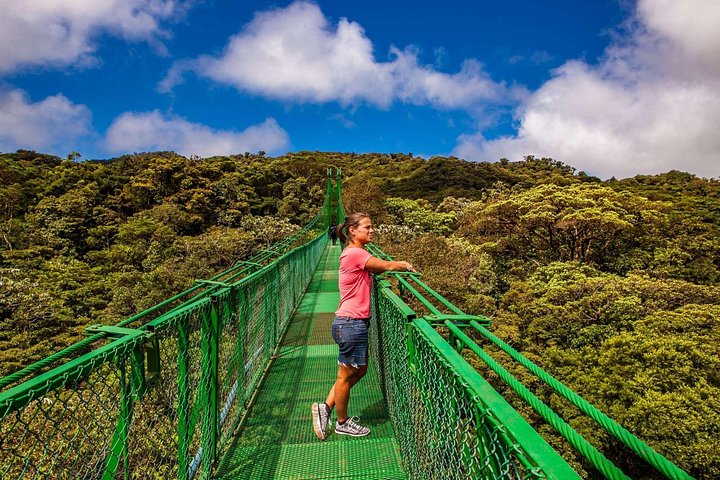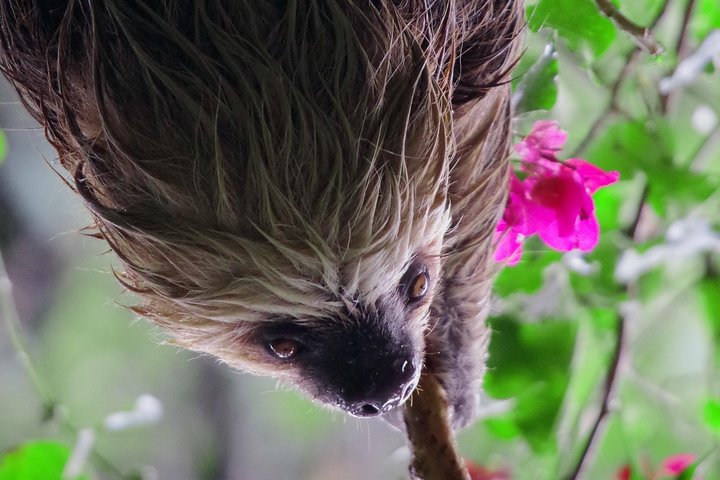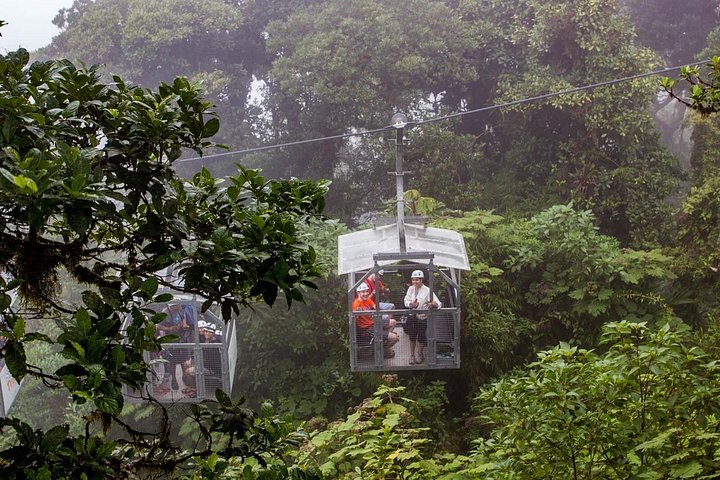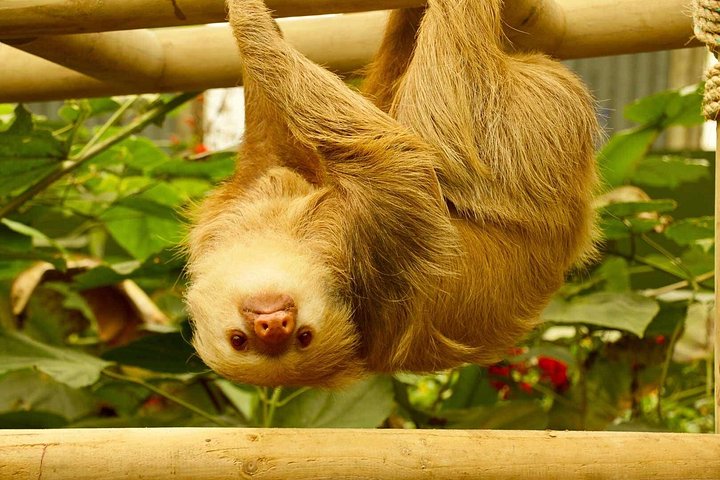
Sloths are the animal most visitors to Costa Rica hope to see, and they are famously hard to spot in the wild, tucked high in the canopy and almost motionless. The Selvatura Sloth Habitat solves that problem. Within Selvatura Park, rescued sloths live in a habitat set among trees and platforms where you can watch them climb, feed and sleep at close range. The visit is short, about half an hour for most people, and the ticket also covers the park's insect exhibition, curated by entomologist Dr Richard Whitten, and a short film called Jewels of the Rain Forest that plays several times a day. It is an easy, low-effort stop that suits families, older travellers and anyone who wants a guaranteed encounter before heading into the forest to look for wildlife the hard way.
Why visit
A sloth in the wild moves a few metres a day and is usually a brown lump in a tree, so a habitat where animals are visible and active is a useful complement to a night walk or guided hike. The animals here are rescued individuals, and the habitat lets you learn how sloths feed, why they come to the ground only rarely and how threats such as roads and power lines affect them.
Reviews are mixed on value, with some visitors finding the visit brief for the price, so treat it as one part of a Selvatura day rather than the whole outing. The insect exhibition has thousands of specimens and is a pleasant surprise for children who like bugs.
Planning it
The ticket is a park admission ticket, so you can combine it with the hanging bridges, the hummingbird garden and the herpetarium on the same day, and you pay once for the entry. The park is open daily, and the booking page offers free cancellation up to a day before.
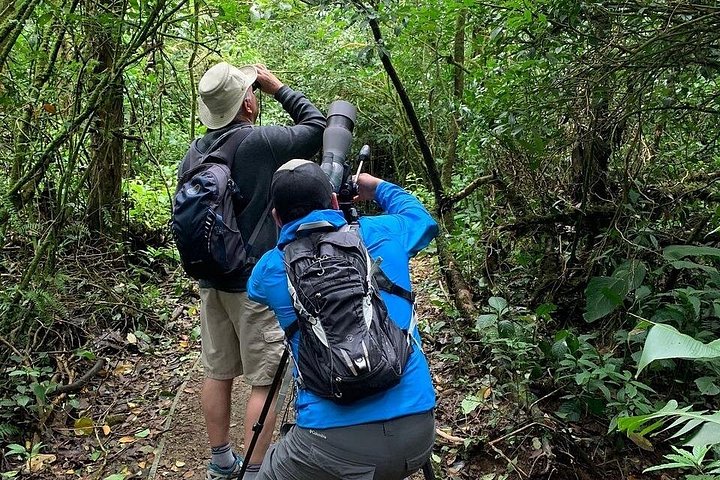
The habitat is not designed for wheelchair access. Keep voices low and do not try to touch the animals, which are sensitive to stress. If your main goal is wildlife in its natural setting, add a guided night walk, where you might see a wild sloth with a spotting scope, but there are no guarantees.
What to expect
The experience
A short walk through a landscaped sloth habitat and an insect exhibition, with a film shown several times a day.
Best time
Morning or early afternoon, when sloths are more likely to be moving, and before tour groups arrive around midday.
How long
About thirty minutes to an hour, longer if you add the other Selvatura exhibits.
Tips
Keep your voice down, do not touch the animals, and pair the visit with the bridges or hummingbird garden to make the most of the park ticket.
Quick picks
- Best for
- Travellers who want a guaranteed, close-up sloth sighting.
- Families
- An easy, short stop that children usually love, with bugs and a film as extras.
- Couples
- A light, quick add-on to a bridges walk rather than a full outing.
- Pair with
- The Selvatura hanging bridges, hummingbird garden and a guided night walk.
- Time needed
- Under an hour on its own; half a day with the rest of the park.
Good questions
Are the sloths wild?+
The sloths in the habitat are rescued animals living in a managed setting. They are not wild, which is why sightings are reliable.
How long does the visit take?+
Most visitors spend around half an hour, perhaps an hour with the insect exhibition and film. It works best combined with other Selvatura attractions.
Is it worth it if I will see sloths in the wild?+
Wild sloths are hard to find and not guaranteed, so many travellers like the certainty of the habitat. If you only want wild animals, a guided night walk is the alternative.
Can I touch or feed the sloths?+
No, the animals are not for touching or feeding. Visitors watch from a respectful distance.
Is it accessible?+
The habitat is not set up for wheelchair access, and the wider park has steps and slopes. Contact the park if you have specific mobility needs.