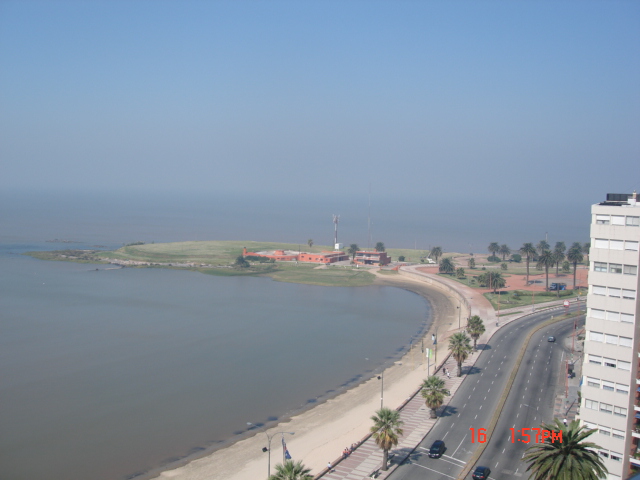
La Rambla is the thread that ties Montevideo together. This continuous coastal avenue and promenade runs for about 22 km along the Río de la Plata, from the Rambla Sur near the old city, past the beaches of Ramírez, Pocitos and Buceo, to Carrasco in the east. Uruguay has put it forward for UNESCO World Heritage status, and it is protected as a national historic monument. The Rambla Sur, inaugurated in 1935, has a long pink granite wall-bench and viewing terraces over the river. At Pocitos, the broad urban beach with high-rise apartments behind it is the city's summer playground, and in the late afternoon locals of every age walk, jog, fish and sit on the seawall with a thermos of hot water and a mate gourd. It costs nothing, you can join it anywhere, and bikes can be hired in several spots. The promenade is also the best place to watch the sun set over the river.
Why it matters: the Rambla is the country's living room. It was developed in the early twentieth century as part of a push for public green space and equal access to leisure, and its design mixes Art Deco and modern buildings, small parks and statues. The scale is surprising: a coast road with wide pavements, cycle paths in some stretches and beaches that are busy in summer and calm in spring. In November, the river is cool and the beaches quiet, but the promenade is already full on weekend afternoons.
How to do it: you do not need to walk all 22 km. A good first-timer plan is to start at the Rambla Sur near Ciudad Vieja, walk or ride to Parque Rodó and Playa Ramírez, continue to Punta Carretas, and finish at Pocitos for sunset, a cold drink and dinner. A taxi or bus can bring you back. Cyclists can cover much more, and shared bike services and rental shops operate in different areas, though availability changes, so check locally. Take layers, because the river wind can feel cooler than the temperature suggests, and sunscreen in any season.
Beyond the walk, the Rambla is a social scene. You will see groups sharing mate, families with picnic gear, and anglers casting from the rocks. On Sundays traffic is often heavier and the promenade is busier. Be aware of your belongings at quiet stretches after dark, and use the busy sections in the evening. Swimming is common on beaches in summer, and lifeguards operate seasonally, so ask locally about water quality and conditions before swimming. It is a simple, free, authentic Montevideo experience that pairs naturally with every other sight in the city.
What to expect
The experience
A self-guided walk or bike ride along the seawall, with beaches, parks and monuments, and no entry fee anywhere.
Best time
Late afternoon into sunset, when residents come out with their mate.
How long
Two to four hours for a segment, or a full day by bike.
Tips
Choose the Ciudad Vieja to Pocitos stretch, bring a windproof layer, and take a taxi back when you are tired.
Quick picks
- Best for
- Everyone, since it is free, scenic and shows how Montevideo really lives.
- Families
- Wide paths, playgrounds and beaches make it very family friendly, though watch children near the water.
- Couples
- Sunset at Pocitos or Punta Carretas, then dinner nearby.
- Pair with
- Ciudad Vieja at one end and the Mercado del Puerto for lunch.
- Time needed
- A few hours for a good stretch.
Good questions
How long is the Rambla?+
It is about 22 km along the river coast, according to the UNESCO tentative list entry. You can join and leave it at many points.
Can I cycle along it?+
Yes, much of it suits bikes, and rentals are available in several areas. Check locally for current rental options.
Is it safe at night?+
Busy stretches near Pocitos stay lively in the evening, while quiet sections empty quickly. Stick to populated parts after dark and keep valuables out of sight.
When is the best time to go?+
Late afternoon and sunset are the best, when locals gather. Early morning is calm for runs and bike rides.
Can I swim at the beaches?+
Beaches such as Pocitos are used for bathing in the warm months, with seasonal lifeguards. In spring the water is cool, so check conditions locally.