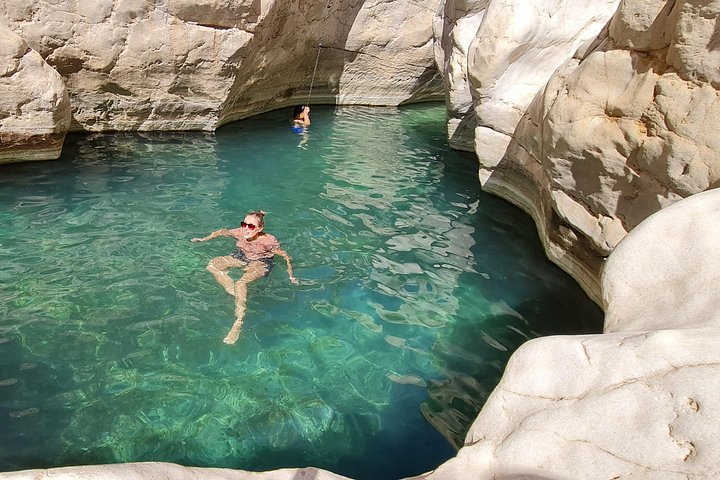
The Dimaniyat Islands are a string of nine small, rocky islands lying a short boat ride off the Batinah coast, west of Muscat, and they are protected as a nature reserve. The surrounding water is clear and calm in the right season, and the reefs below the surface are among the healthiest in northern Oman, with hard and soft corals, shoals of colourful reef fish and, with luck, hawksbill and green turtles gliding past. Because the islands are a reserve, visitors snorkel from the boat rather than landing, and that care is why the underwater scenery is so good. Trips usually leave from the coast near Barka or Al Seeb, roughly an hour’s drive from central Muscat, and many operators include hotel pick-up. The boat crossing takes around forty-five minutes to an hour depending on the sea, and most trips include two snorkelling stops, light refreshments and sometimes lunch on board. Equipment is provided, and guides are generally on hand to help beginners, so you do not need to be an experienced swimmer to enjoy it, though a reasonable level of confidence in the water is useful.
What you might see
The reefs are home to parrotfish, butterflyfish, angelfish, groupers and the occasional ray or reef shark, which are harmless to swimmers. Turtles are the highlight for many visitors, but sightings are never guaranteed, so treat them as a bonus. The islands are also a nesting site for seabirds, and the boat trip often gives good views of them. Because conditions underwater vary, visibility is best when the sea is calm and the sun is high.
When to go
The usual season is from about October to May, when the sea is calmer and the air is comfortable. Summer trips can run, but heat and sea conditions are less pleasant, and operators may cancel in rough weather, so ask about the cancellation policy when you book. A morning departure usually gives the calmest water and the best light under the surface.
Practical tips
Bring a swimsuit, a rash vest or T-shirt, a hat, strong reef-safe sunscreen and a towel. Seasickness tablets are worth taking if you are prone to it, and a waterproof camera or phone case will capture the fish. Follow the guide’s advice about not touching the coral or the turtles, since the reserve depends on visitors respecting it.
A reserve or park fee may be included in the price or collected separately, so check what your trip covers. The trip fits well with a quiet beach afternoon back in Muscat, or with the dolphin cruise on a different day, giving you a taste of Oman’s marine life from two angles.
Many visitors combine the trip with a relaxed lunch on the way back, and the road along the Batinah coast passes small fishing villages and date plantations that are worth a short stop if time allows. If you are travelling with a group of mixed abilities, tell the operator in advance, because a good guide can adjust the pace, stay close to nervous swimmers and choose the calmest spots. Photographers will enjoy the clear light, and a simple underwater camera is all you need to capture the reef.
What to expect
The experience
A boat crossing from the Batinah coast to the reserve, with two snorkelling stops over coral reefs, equipment provided and refreshments on board.
Best time
A morning departure between October and May, when the sea is calmest.
How long
Roughly four to six hours including the drive from Muscat and the boat crossing.
Tips
Bring a rash vest, reef-safe sunscreen and seasickness tablets, and do not touch the coral or turtles.
Quick picks
- Best for
- Snorkellers and nature lovers who want clear water and healthy reefs.
- Families
- Good for confident swimmers aged around eight and over; check age rules and life-jacket availability with the operator.
- Couples
- A relaxed sea day that suits couples who like being on the water.
- Pair with
- A quiet afternoon on Qurum Beach or a dolphin watching cruise on another day.
- Time needed
- Half a day, with the drive and boat crossing.
Good questions
Can I land on the islands?+
Generally no. The islands are a nature reserve, so visitors snorkel from the boat to protect the wildlife and the reefs.
When is the best time to go?+
The usual season is from about October to May, when the sea is calmer. Operators may cancel in rough weather, so ask about the cancellation policy.
Will I see turtles?+
Turtles are often seen but never guaranteed, so treat them as a bonus. You are more certain to see plenty of reef fish and coral.
Do I need to be a strong swimmer?+
You should be comfortable in the water. Life jackets and guides are usually available, but ask the operator about support for beginners.
What should I bring?+
A swimsuit, rash vest or T-shirt, hat, reef-safe sunscreen, towel and seasickness tablets if you are prone to it.