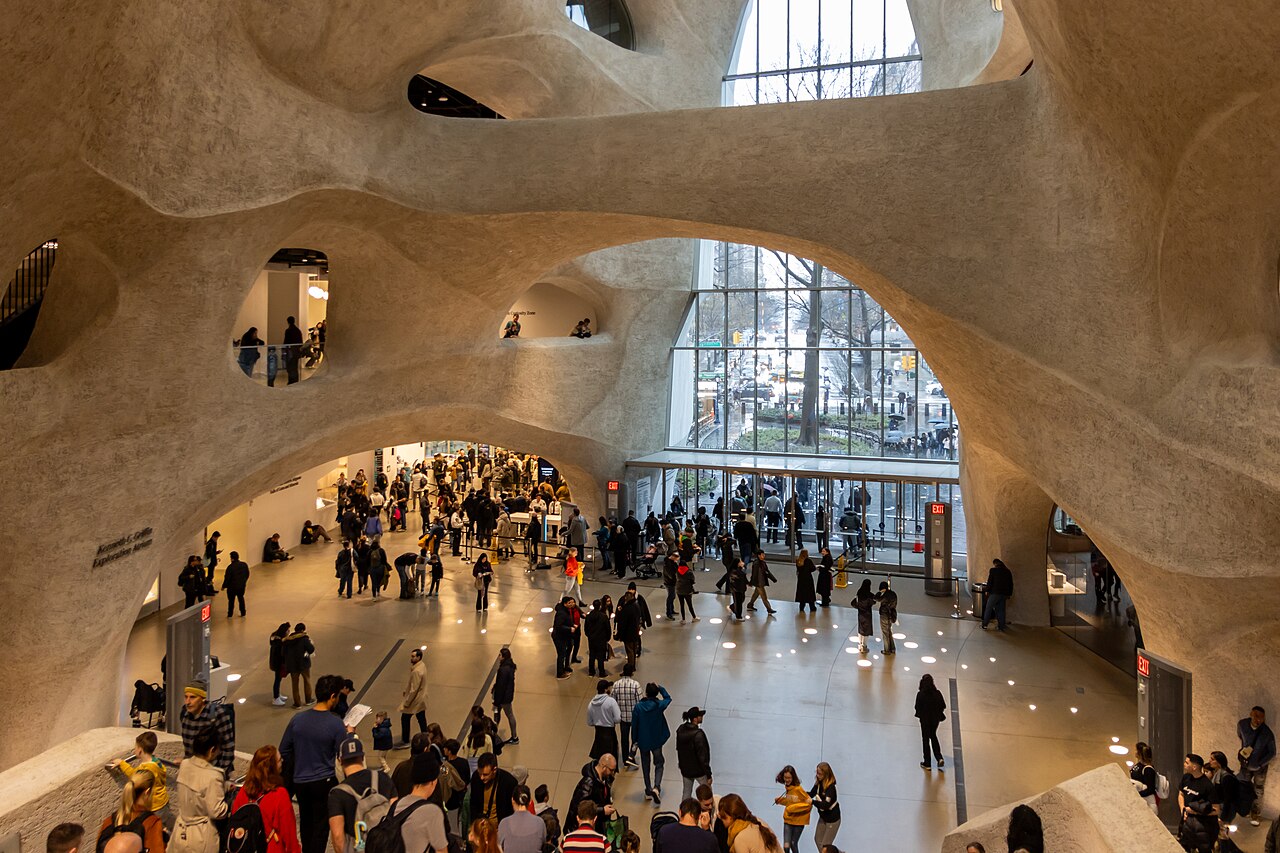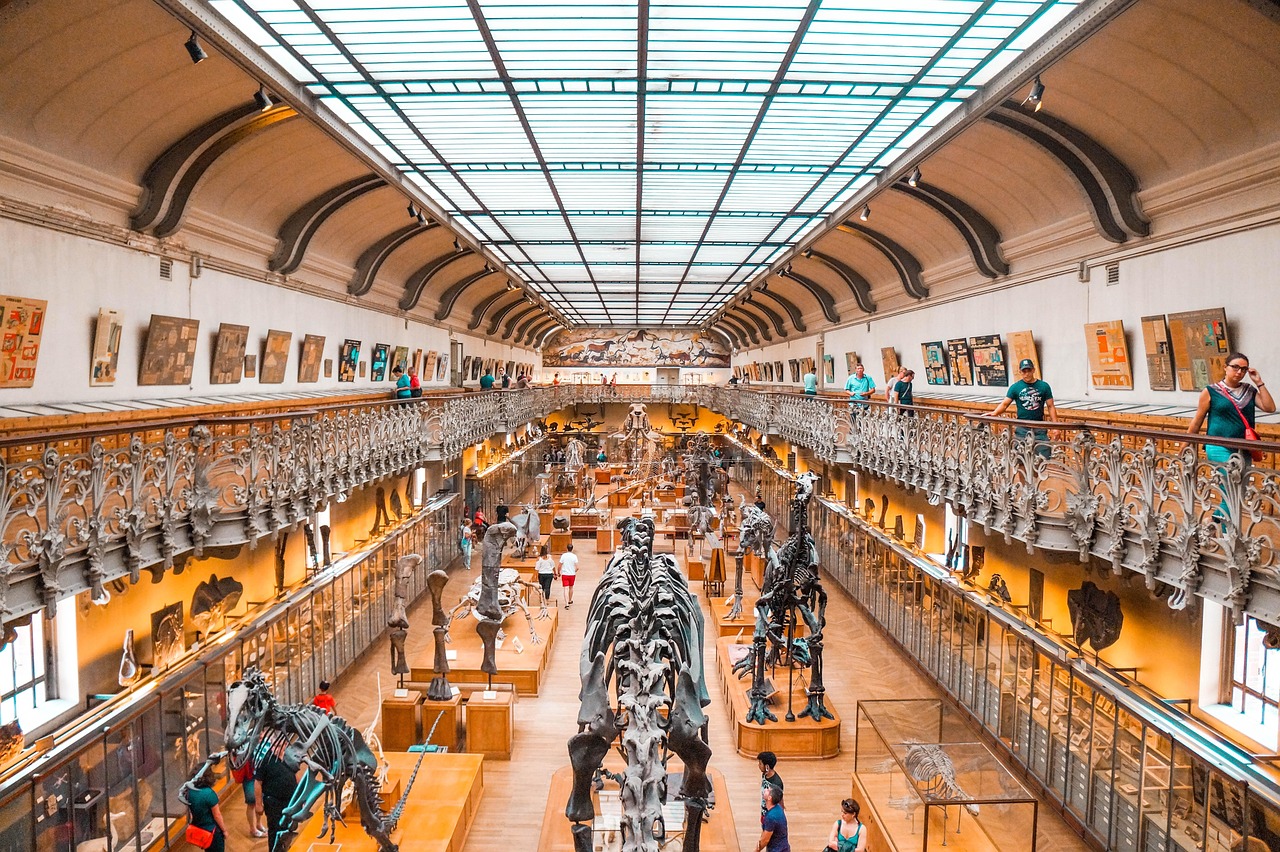
The Smithsonian's National Museum of Natural History is the giant of the National Mall in every sense: one of the most visited museums on earth, with a collection numbering in the hundreds of millions of specimens, and a public floor that hands visitors the greatest hits of the natural world for free, no ticket needed. The rotunda sets the tone with a towering African bush elephant under the dome. From there the classics radiate out: the David H. Koch Hall of Fossils — Deep Time, reopened in 2019 after a five-year renovation, tells life's history through dinosaurs including a Tyrannosaurus rex posed mid-attack; the Sant Ocean Hall hangs a life-size North Atlantic right whale model over its galleries; the Hall of Human Origins traces our own family tree; and upstairs the Janet Annenberg Hooker Hall of Geology, Gems and Minerals holds the Hope Diamond, the 45-carat blue gem with a famous curse legend, in a rotating vault. The O. Orkin Insect Zoo with its live tarantula feedings and the butterfly pavilion round out the family favorites. The honest notes: summer and spring-break crowds are intense, especially around the Hope Diamond and the fossil hall; security lines form at the entrances; and as a federal institution its doors depend on government funding, so check operating status before any trip. Fit: families, science lovers, rainy days in Washington and every free-museum itinerary.
The museum opened in 1910 in its Beaux-Arts building on the Mall, and behind the public halls it is one of the world's great research institutions, where Smithsonian scientists study everything from meteorites to deep-sea life. The public exhibits have been steadily modernized — the Deep Time hall is the showpiece, reframing dinosaurs within the whole sweep of climate and evolution, and making the case that humans are now part of the fossil record being written. Some of the stars carry their own stories: the Hope Diamond arrived in 1958 as a gift from the jeweler Harry Winston, who famously sent it through the US mail; the elephant has stood in the rotunda since 1959; and the ocean hall's whale model portrays Phoenix, a real North Atlantic right whale that scientists have followed since her birth.
The visit craft
Arrive at opening and go straight to the second floor for the Hope Diamond before lines form, then head down to the fossil hall while it is still manageable. The Constitution Avenue entrance usually has shorter lines than the Mall side. With young kids, the insect zoo and the ocean hall are the best bets; the butterfly pavilion is a small paid add-on.
The cafe is crowded at lunch, so eat early or picnic on the Mall. The Kenneth E. Behring Family Hall of Mammals, with its lion and other animals in lifelike habitat settings, is another easy win for kids, and the megalodon jaws in the ocean hall make a good photo stop.
Practicals and fit
10th Street and Constitution Avenue NW, open daily with free admission and no tickets required, two to four hours. Metro to Federal Triangle or Smithsonian. It sits beside the National Museum of American History and across the Mall from the National Air and Space Museum, so a free Smithsonian day is easy to build. Hours are 10 a.m. to 5:30 p.m. every day of the year except December 25, and the Ocean Terrace Café on the first floor is the in-house food option.
What to expect
The experience
Free Smithsonian halls on the National Mall — the rotunda elephant, the Deep Time dinosaur hall, the ocean hall, human origins, the insect zoo and the Hope Diamond. No tickets required.
Best time
Opening time on weekdays outside spring break and summer; late afternoons are calmer.
How long
Two to four hours.
Tips
See the Hope Diamond first, then the fossil hall. Use the Constitution Avenue entrance for shorter lines. Check the Smithsonian operating status before travel, especially around federal budget deadlines.
Quick picks
- Best for
- Free family science on the National Mall.
- Families
- Dinosaurs, a giant whale, live insects and a cursed diamond — the free family day in DC.
- Couples
- The gem hall and the Deep Time story, then a walk down the Mall.
- Pair with
- The National Air and Space Museum across the Mall for a free Smithsonian day.
- Time needed
- Half a day on the Mall.
Good questions
Is the National Museum of Natural History free?+
Yes — admission is free and no tickets are required; only some extras, such as the butterfly pavilion, carry a fee.
Where is the Hope Diamond?+
On the second floor in the Hall of Geology, Gems and Minerals — go early, because the line builds through the day.
Can the museum close during a government shutdown?+
Yes — Smithsonian museums depend on federal funding and have closed during past funding lapses, so check the venue's site before your trip.
What is the best entrance?+
The Constitution Avenue entrance often has shorter security lines than the National Mall entrance. The nearest Metro station is Federal Triangle, on the Blue, Orange and Silver lines.
How long should we spend?+
Two to four hours covers the major halls; dinosaur fans can easily take longer. The Deep Time hall alone rewards an hour, with the T. rex and Triceratops as headliners and fossils tracing billions of years of life on earth.