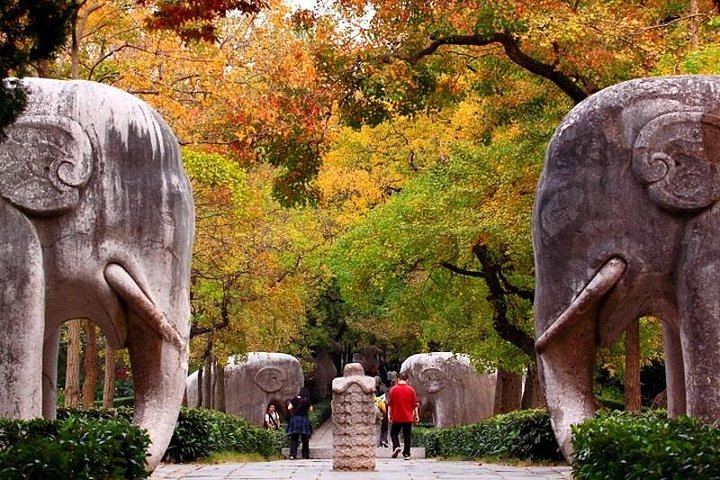
The Ming Xiaoling Mausoleum is the burial place of Zhu Yuanzhang, the Hongwu Emperor who founded the Ming dynasty in 1368 and made Nanjing his capital, and of his wife, Empress Ma. Building began in the late fourteenth century at the foot of Purple Mountain, and the tomb became the model for later imperial tombs, including those near Beijing. It forms part of the UNESCO World Heritage status of the Imperial Tombs of the Ming and Qing dynasties, to which it was added in 2003. Today the complex is a calm, wooded park rather than a single building, and its pleasure lies in the long approach as much as the tomb itself. The best-loved feature is the Sacred Way, a processional avenue lined with pairs of carved stone animals, including lions, camels, elephants, horses and mythical beasts, followed by stone ministers and generals standing guard in pairs. The animals are large, weathered and full of character, and they give the walk a sense of ceremony that few Chinese sights can match. Beyond the avenue, the route passes through gates and a ruined hall to a great stone gatehouse and the walled tomb mound at the rear, where the emperor is believed to rest. The spacious grounds, old trees and long perspectives make it a good place to slow down after the busier city sights, and in early spring the nearby plum blossom hill draws crowds of flower lovers.
How to visit
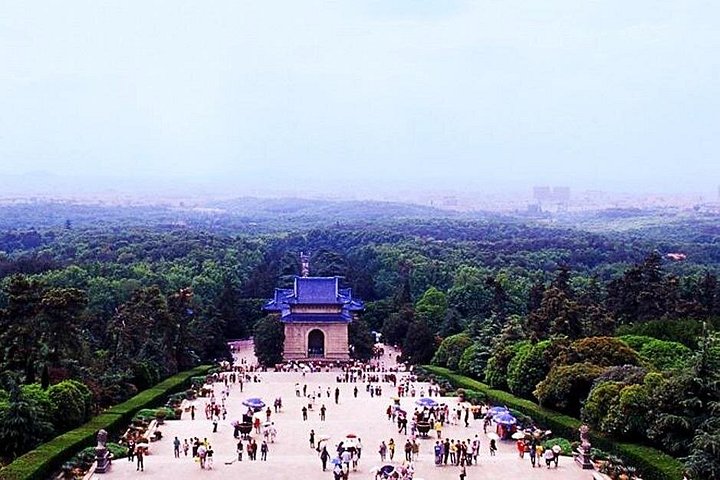
The mausoleum lies in the Purple Mountain scenic area on the east side of the city, near the Sun Yat-sen Mausoleum, and the two are commonly visited together. The linked product is a private tour of around six hours that combines Xiaoling with the Ming city wall and a memorial hall, so check the details for the exact stops, the meeting point and whether entrance fees and lunch are included. Opening hours and any timed entry can change, so confirm with the operator.
What to expect
You walk through the entrance gate and along the Sacred Way, a stroll of some length on flat paving, with benches and shade trees. The stone animals are the photographic highlight, and a local guide can explain the symbolism, such as why lions guard the road and what the pairs of ministers and generals represent. At the far end, you climb a ramp to the tomb enclosure and a viewing point over the mound. Expect to walk a couple of kilometres in total, so comfortable shoes and water are important.
How to get the most from it: go early to enjoy the avenue without crowds, and visit on a clear day when the light falls nicely on the stone. Spring brings plum blossom to the surrounding hill, and autumn brings golden leaves along the approach. Reading a little about the Hongwu Emperor beforehand gives context, because his story, from peasant orphan to emperor, is one of the great rises in Chinese history. Pair the morning here with the Sun Yat-sen Mausoleum for a rounded look at two very different eras of Nanjing's past.
Planning note
The mausoleum grounds are open-air and exposed, so in summer take a hat and plenty of water, and in winter dress warmly because the wind sweeps across the open avenue. If you use a guide, ask them to point out the difference between the military and civil stone figures, which is easy to miss.
What to expect
The experience
A private guided half-day that walks the Sacred Way and tomb enclosure, then continues to other Ming and memorial sites.
Best time
Early morning on a clear day; spring for plum blossom and autumn for golden leaves.
How long
Two to three hours on foot, longer on a six-hour combined tour.
Tips
Wear comfortable shoes, bring water, and ask the guide to explain the symbolism of the stone animals.
Quick picks
- Best for
- History lovers, photographers and anyone interested in Ming dynasty heritage.
- Families
- Children enjoy spotting the stone animals; the paths are flat but long.
- Couples
- A peaceful, shaded walk, especially at opening time.
- Pair with
- Sun Yat-sen Mausoleum and the Ming city wall.
- Time needed
- A morning.
Good questions
Who is buried at Xiaoling?+
The Hongwu Emperor, Zhu Yuanzhang, founder of the Ming dynasty, and Empress Ma. The tomb was begun in the late fourteenth century.
What is the Sacred Way?+
It is a long processional avenue lined with carved stone animals and guardian figures in pairs, leading toward the tomb. It is the best-known feature of the site.
Is Xiaoling a UNESCO site?+
Yes. It was added in 2003 as part of the World Heritage status of the Imperial Tombs of the Ming and Qing dynasties.
How much walking is involved?+
Expect a couple of kilometres on flat paving with some gentle ramps. Comfortable shoes are enough, and the grounds are shaded.
When is plum blossom season?+
Plum blossom on the nearby hill usually peaks in late winter and early spring, though the exact timing varies from year to year.