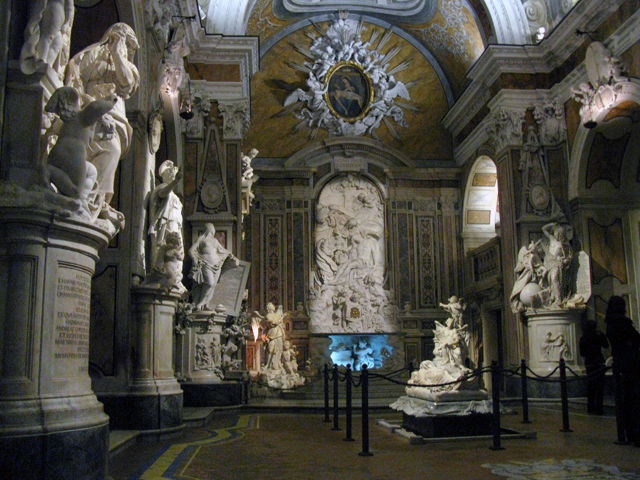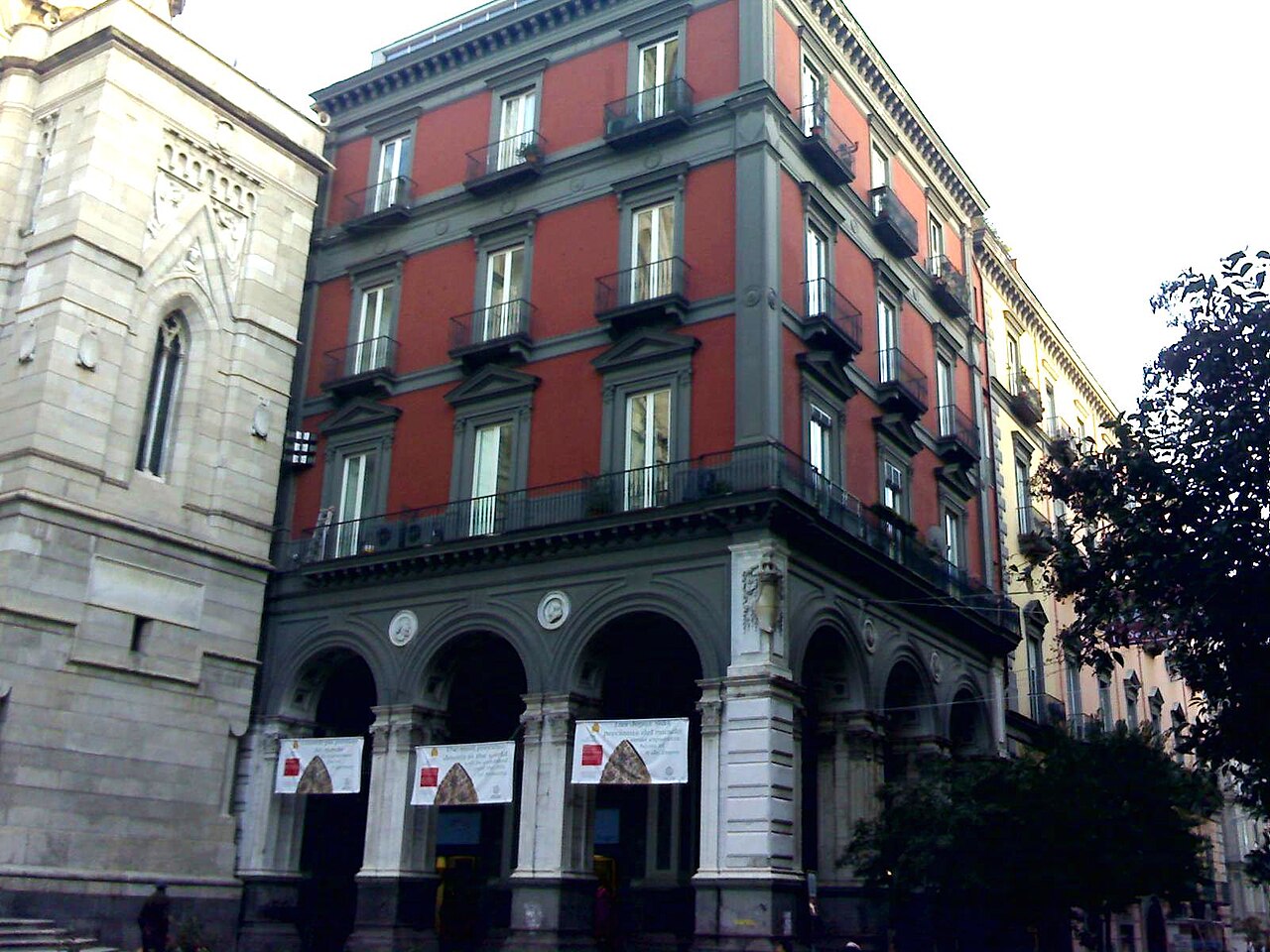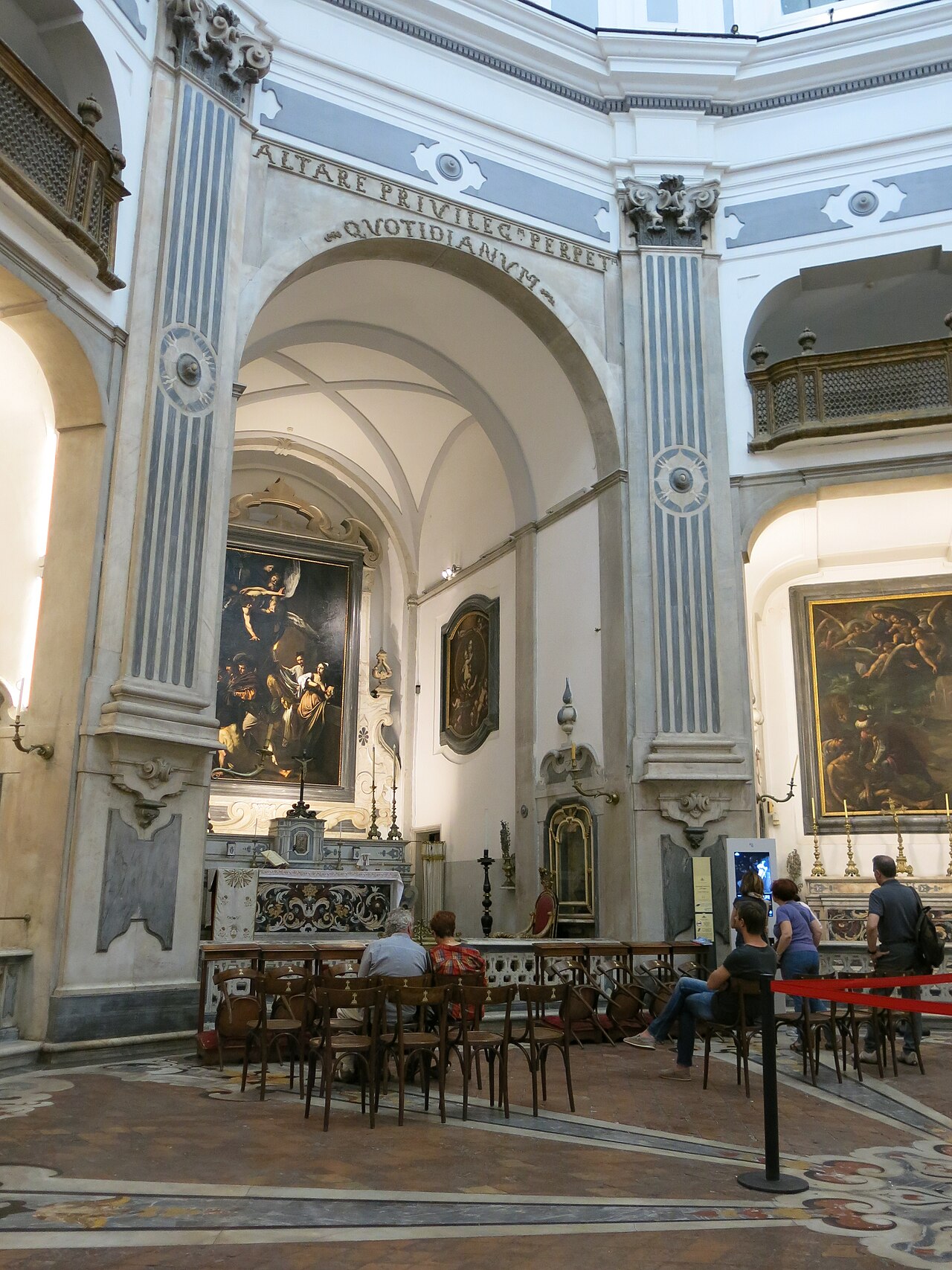
The Pio Monte della Misericordia is the one place in Naples where you can stand in front of a Caravaggio exactly where he meant it to hang. The institution was founded in 1602 by seven young Neapolitan noblemen who pledged to carry out works of mercy: feeding the hungry, nursing the sick, visiting prisoners, burying the dead, ransoming Christian slaves. It still exists and still does charitable work today, from the same building on Via dei Tribunali, in the heart of the historic centre. In 1606 Caravaggio arrived in Naples, a fugitive from Rome after killing a man, and the Pio Monte commissioned him to paint an altarpiece. The Seven Works of Mercy, finished in 1607, crams all seven acts into a single night-time street scene that feels unmistakably Neapolitan: a man drinks from the jawbone of an ass, a woman breastfeeds an old prisoner through the bars, a corpse is carried off feet first, a saint cuts his cloak for a beggar, while the Madonna and Child look down with angels tumbling through the dark above. Its raw realism and dramatic light changed painting in Naples overnight. The governors soon decreed that the painting should never be sold or moved, and it remains above the high altar of the small octagonal church, surrounded by other altarpieces on the theme of mercy by Neapolitan painters including Luca Giordano, Battistello Caracciolo and Fabrizio Santafede. Upstairs, the Quadreria, the foundation's picture gallery, displays works from the sixteenth to nineteenth centuries by Giordano, Ribera, Stanzione and others, alongside the historic apartment, archive and silver. Fit: art lovers first, history buffs, and any first-timer walking Via dei Tribunali who has half an hour to spare.
Why it matters: Caravaggio spent less than a year in Naples on his first stay, but his influence on local painters was immense, and this canvas is the reason. Seeing it in situ, lit from the side as it was designed to be, is very different from seeing a Caravaggio in a museum hall. There is also a small, special view from the upper floor's coretto, a balcony room from which the painting can be seen from above.
How to do it well: the visit takes thirty to sixty minutes. Go in the morning or early afternoon on a weekday for quiet; the church is small and groups fill it quickly. An audio guide helps with the other altarpieces and the gallery upstairs, and the ticket also lets you into the picture gallery and apartment. Look closely at the individual figures, one act of mercy at a time, before stepping back to take in the whole.
Practicals: the entrance is at Via dei Tribunali 253, near the Duomo. It is generally open Monday to Saturday and on Sunday mornings, but check current hours before setting out. A modest ticket applies. Combine with the Treasure of San Gennaro and the Duomo, a few steps away, then pizza on Via dei Tribunali. For more Caravaggio, his late Flagellation of Christ hangs at the Capodimonte museum.
What to expect
The experience
A small octagonal church with Caravaggio's altarpiece in its original place, plus an upstairs picture gallery, historic apartment and a balcony view of the painting from above.
Best time
Weekday mornings, before tour groups. Sundays have shorter, morning-only hours.
How long
Thirty minutes to an hour.
Tips
Use the audio guide. Visit the upstairs balcony for the view of the painting from above. Combine with the Treasure of San Gennaro and the Duomo nearby.
Quick picks
- Best for
- Seeing a Caravaggio exactly where it was painted to hang.
- Families
- A short, focused stop; best for older children interested in art.
- Couples
- A quiet half-hour of great art before lunch on Via dei Tribunali.
- Pair with
- Treasure of San Gennaro, Sansevero Chapel and Capodimonte for more Caravaggio.
- Time needed
- Under an hour.
Good questions
Which Caravaggio is at the Pio Monte della Misericordia?+
The Seven Works of Mercy, painted in 1607 for the church's high altar. It shows all seven acts of mercy in one dramatic Neapolitan street scene.
Can the painting ever leave Naples?+
The foundation's governors decided early in the seventeenth century that the painting should never be sold or moved, and it has stayed in the church ever since.
What else is there to see?+
Altarpieces by Luca Giordano, Battistello Caracciolo and others in the church, and upstairs a picture gallery with works by Giordano, Ribera and Stanzione, plus the historic apartment and silver.
Is the Pio Monte still active?+
Yes. Founded in 1602 by seven noblemen to carry out works of mercy, it remains a working charitable institution in the same building.
Where is it?+
At Via dei Tribunali 253 in the historic centre, a short walk from the Duomo and the Museum of the Treasure of San Gennaro.