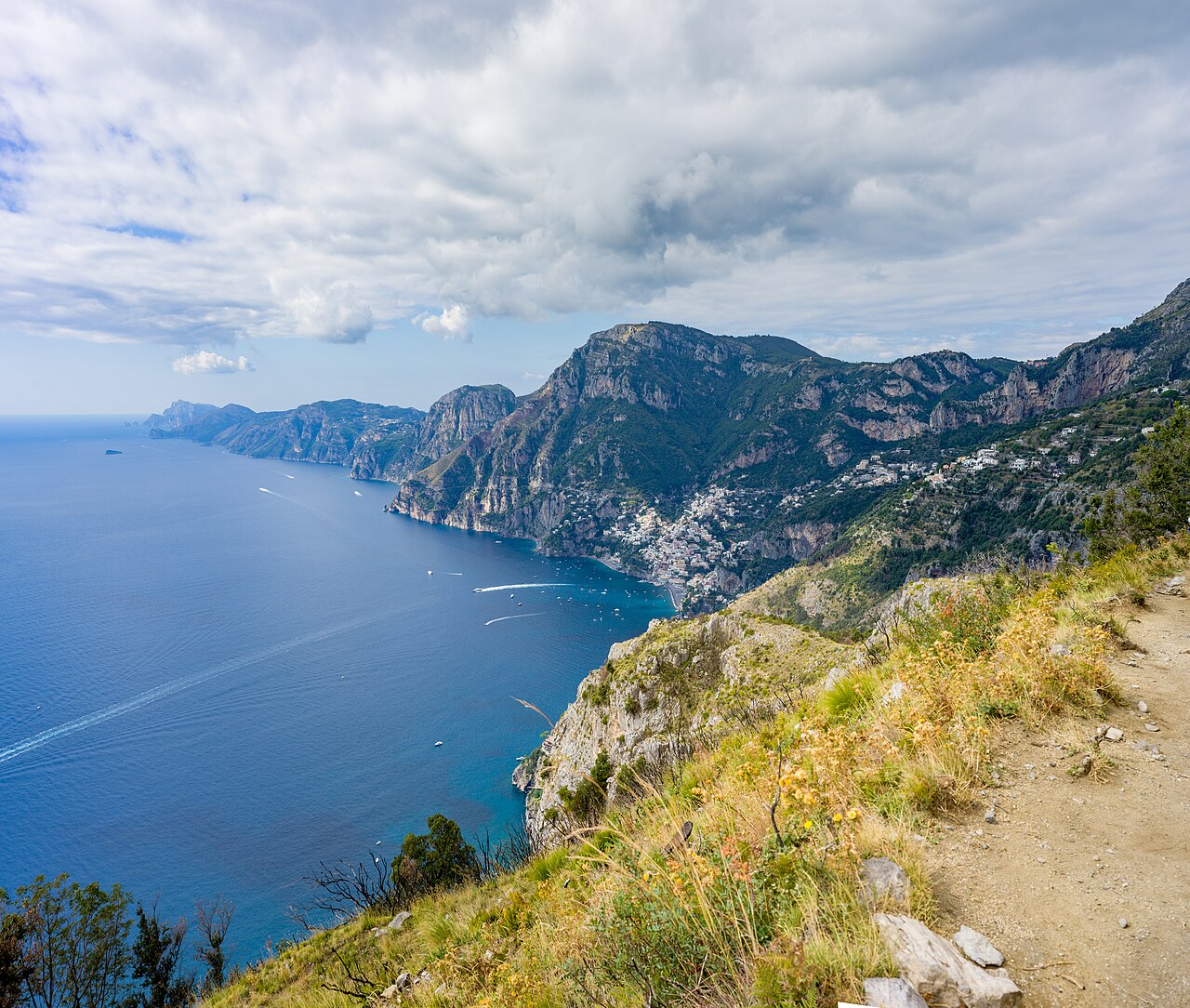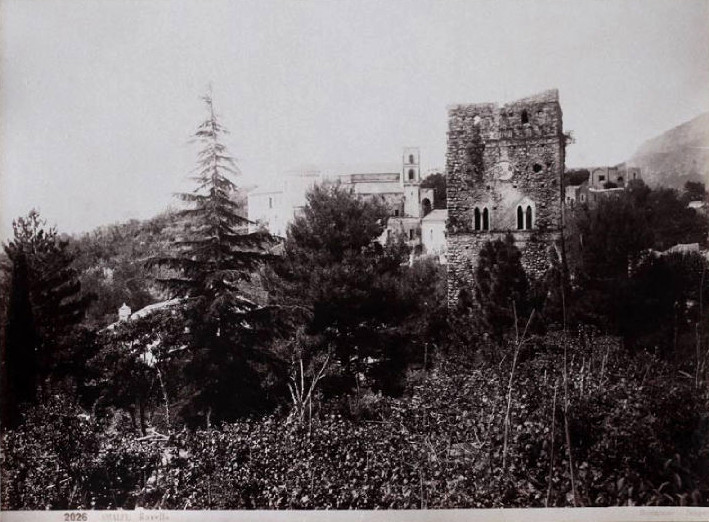
Villa Rufolo is the reason many travellers fall for Ravello, the quiet hill town that sits above Amalfi like a balcony over the Gulf of Salerno. The villa was built in the thirteenth century by the Rufolo family, among the richest merchants of the Amalfi republic, whose wealth was famous enough for Boccaccio to put one of them in the Decameron. Its architecture reflects Amalfi's trade with the Arab and Byzantine world: you enter through a tall gate tower, then reach the Moorish Cloister, a small courtyard of interlaced arches and delicate carved decoration. The villa later fell into decay, and in the nineteenth century the Scottish botanist Sir Francis Nevile Reid bought and restored it, laying out the gardens that make it famous today. The garden is on two levels. The upper garden runs along a linden avenue toward the old chapel; the lower garden, with geometric flowerbeds that change with the seasons, ends at the terrace with the view everybody photographs: umbrella pines framing the coast as it falls away toward Maiori and Minori, the Torre Maggiore rising behind. In May 1880 Richard Wagner visited and reportedly declared he had found the magic garden of Klingsor for his opera Parsifal, a link that gave Ravello its identity as the city of music. Every summer the Ravello Festival builds its stage in the lower garden, cantilevered over the void, for concerts with a sea backdrop. The main tower houses a small museum. Fit: couples above all, garden lovers, music fans, and anyone who wants a slower, more elegant side of the Amalfi Coast.
Why Ravello: perched about 350 metres above the sea, Ravello is cooler and calmer than Positano or Amalfi, with no beach and no ferry crowds. Its Duomo, with bronze doors and a pulpit of mosaics, faces the villa across the piazza, and a short walk away the gardens of Villa Cimbrone end at the Terrace of Infinity, lined with marble busts above a sheer drop. Many visitors do both villas in one unhurried day.
How to do it well: come in the morning, before the day-trip groups arrive by bus from Amalfi, or late in the afternoon, when the light softens. Walk the route as designed: gate tower, Moorish Cloister, upper garden, then down to the lower garden and the belvedere. Check whether the tower museum is open and whether any exhibition is on. In summer, look at the festival programme; a concert here at sunset is one of the great experiences in Italy, but tickets sell out.
Practicals: Ravello is reached by SITA bus or taxi from Amalfi, a winding climb of around twenty to thirty minutes; there is little parking. The villa is at Piazza Duomo, in the centre of town. In winter, the coast is quieter and some services close, but the villa remains a lovely visit on a clear day. Trade-off: the famous terrace can be busy at midday in summer; time your visit and the reward is one of the finest views on the coast.
What to expect
The experience
A self-guided walk through a medieval gate tower, Moorish cloister and terraced gardens to a belvedere over the Amalfi Coast, with a small museum in the main tower.
Best time
Early morning or late afternoon for soft light and fewer groups; summer evenings for Ravello Festival concerts.
How long
An hour to an hour and a half.
Tips
Arrive before the midday bus groups. Combine with Ravello's Duomo and Villa Cimbrone's Terrace of Infinity. Check the festival calendar if visiting in summer.
Quick picks
- Best for
- Ravello's most famous view and a garden full of history.
- Families
- Short and scenic, though better for older kids than toddlers.
- Couples
- One of the most romantic gardens in Italy, especially at a sunset concert.
- Pair with
- The Positano, Amalfi and Ravello day trip; the Path of the Gods.
- Time needed
- Half a day in Ravello including Villa Cimbrone.
Good questions
What is Villa Rufolo famous for?+
Its terraced gardens and the view over the Amalfi Coast, its Moorish cloister, the visit of Richard Wagner in 1880, and the Ravello Festival stage built over the sea in the lower garden.
How do I get to Ravello?+
Take a SITA bus or taxi up from Amalfi, about twenty to thirty minutes on a winding road. The villa is on Piazza Duomo in the centre of Ravello.
Villa Rufolo or Villa Cimbrone?+
Both if you can; they are a short walk apart. Villa Rufolo has the medieval architecture and the famous pine-framed view; Villa Cimbrone has larger gardens and the Terrace of Infinity.
When is the Ravello Festival?+
It runs in the summer months, with concerts on the stage in the villa's lower garden. Check the festival programme and book early, as the best dates sell out.
Is it worth visiting in winter?+
Yes on a clear day. The coast is much quieter, the views are as good, and Ravello feels like a village again, though some hotels and restaurants close for the season.