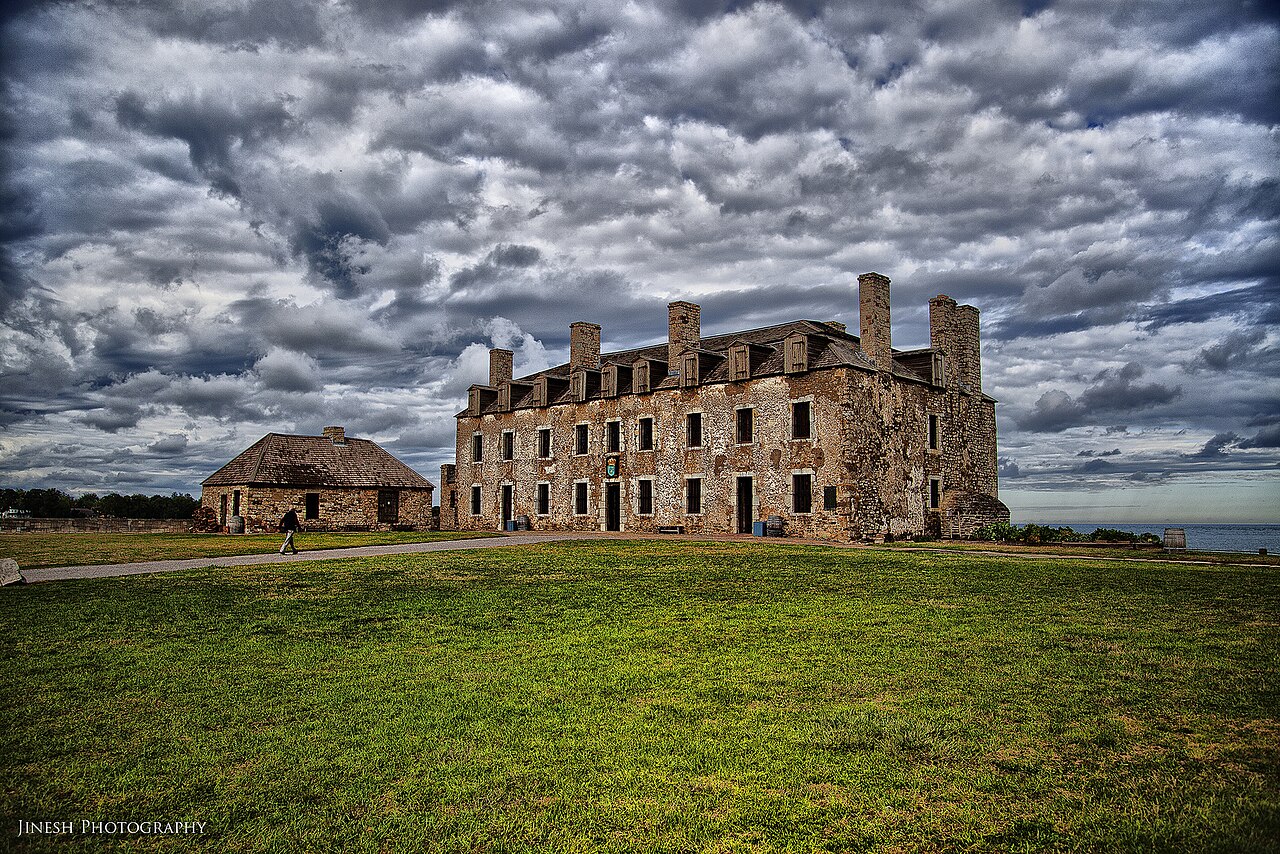
Old Fort Niagara is the best history site in the Niagara region and a fine reason to drive half an hour north from the falls. The fort guards the mouth of the Niagara River where it flows into Lake Ontario, at Youngstown, New York, a position so strategic that France, Britain and the United States fought over it for more than a century. Its centerpiece is the so-called French Castle, a stone building completed in 1726 that was disguised as a trading house to avoid alarming the region's Indigenous nations, and that is now among the oldest buildings in the Great Lakes region. Around it stand British-era redoubts, earthworks, a powder magazine and barracks, and above the parade ground fly the flags of the three nations that held it. The British captured the fort from France in 1759 during the French and Indian War; it passed to the United States after the Revolution, was seized again by the British in a night attack during the War of 1812, and was returned after the war. The site is run by the non-profit Old Fort Niagara Association within Fort Niagara State Park, and its collection includes original artifacts such as an 1812 garrison flag displayed in the visitor center. In the warmer months, costumed interpreters demonstrate musket and artillery firing and daily military life, and the fort hosts encampments and re-enactments on major weekends. Off-season, the fort keeps its doors open but on reduced days: from mid-October to the end of December it opens Wednesday to Sunday from 10am to 4pm, with daily opening from 26 to 31 December, and it is closed on Thanksgiving, Christmas Day and New Year's Day. From January to March it is open Wednesday to Sunday. Adult admission is about twenty dollars, children less, with discounts for seniors, military and AAA or CAA members. Ticket sales end thirty minutes before closing.
The site's strategic value is obvious the moment you stand on the ramparts: the fort commands the river mouth and the lake, and whoever held it controlled the route between Lake Ontario and the upper Great Lakes. The French established a post here in the seventeenth century and built the stone castle in 1726. The British siege of 1759 was one of the key victories of the French and Indian War. After the American Revolution, the British held on to the fort until 1796 under the terms of Jay's Treaty, and in December 1813 they captured it again in a surprise night assault, holding it until the end of the War of 1812. Across the river, Canada's Fort George at Niagara-on-the-Lake faced it, and the two forts traded cannon fire during the war.
How to visit: Old Fort Niagara is in Youngstown, about half an hour's drive north of Niagara Falls, New York along the Niagara Scenic Parkway. Start in the visitor center for the orientation and artifacts, then walk through the gate into the fort and explore the French Castle, where the rooms are furnished as they might have been in the colonial era, before climbing the ramparts for views over Lake Ontario and across the river to Canada. Allow two to three hours. In summer, check the daily schedule of demonstrations. In the off-season, dress warmly; much of the site is outdoors and exposed to the lake wind, but the castle and visitor center offer shelter. The Fort Niagara State Park grounds around the fort have lakeside walks and picnic areas.
Who should go: anyone interested in early American and Canadian history, families with school-age children (the cannon and musket demonstrations are a hit in season), and visitors looking for a calmer half-day away from the crowds at the falls. It pairs well with Lewiston, a pretty village on the drive back, and with a visit to the Canadian side's historic Niagara-on-the-Lake, just across the river, for anyone with documents to cross the border at the Lewiston-Queenston Bridge.
What to expect
The experience
A self-guided visit to a restored eighteenth- and nineteenth-century fort, with a visitor center, the French Castle, ramparts and, in season, costumed demonstrations.
Best time
Summer for musket and artillery demonstrations; off-season Wednesday to Sunday for quiet exploring.
How long
Two to three hours.
Tips
Open Wednesday to Sunday 10am to 4pm from mid-October to year end, daily 26 to 31 December; closed Thanksgiving, Christmas and New Year's Day. Dress for lake wind. Ticket sales stop thirty minutes before closing.
Quick picks
- Best for
- History lovers and families with school-age children.
- Families
- Cannons, ramparts and living history make it a fun lesson; children five and under enter free.
- Couples
- A crisp autumn afternoon on the ramparts above Lake Ontario, then dinner in Lewiston.
- Pair with
- Niagara Falls State Park on the same day, and Niagara-on-the-Lake across the river.
- Time needed
- Half a day including the drive from the falls.
Good questions
Is Old Fort Niagara open in November?+
Yes, on reduced days: from mid-October to 31 December it opens Wednesday to Sunday from 10am to 4pm, closed on Thanksgiving and Christmas, with daily opening from 26 to 31 December.
How much is admission?+
About twenty dollars for adults and less for children, with ages five and under free and discounts for seniors, military and AAA or CAA members. Special events may cost more.
What is the French Castle?+
A stone building completed by the French in 1726, the oldest structure at the fort and one of the oldest in the Great Lakes region, furnished to show colonial life.
How far is it from Niagara Falls?+
About half an hour's drive north of Niagara Falls, New York, at Youngstown, where the Niagara River meets Lake Ontario.
Is it interesting for kids?+
Yes, especially in summer, when interpreters demonstrate musket and cannon firing. The ramparts and castle rooms are fun to explore year-round.