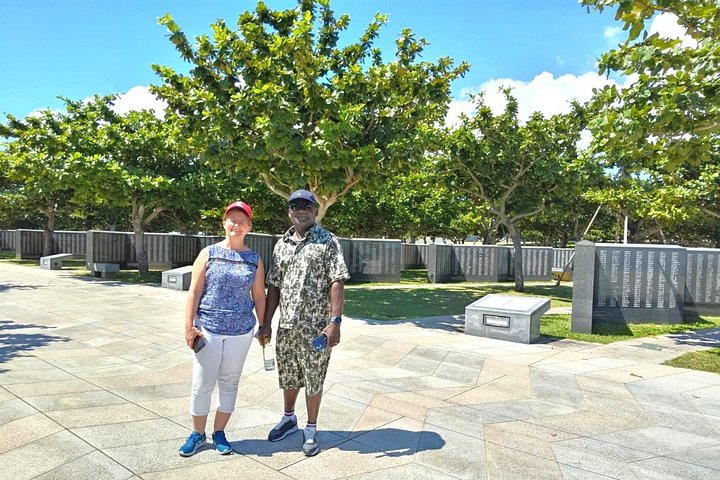
Peace Memorial Park sits on the southern tip of the main island, on the coast where the Battle of Okinawa ended in 1945. It is one of the most thoughtful places to visit in Japan. The Okinawa Prefectural Peace Memorial Museum tells the story of the Battle of Okinawa and the years of hardship that followed, using photographs, testimony, objects and reconstructed scenes. It does not shy away from the suffering of civilians, who made up a large part of the dead, and a free audio guide is available in English and several other languages. Outside, the park is a long, open stretch of grass and sea cliffs, and the Cornerstone of Peace, a set of curved granite walls, carries the names of people who died in the war, regardless of their nationality or whether they were soldiers or civilians.
Allow at least two hours. The museum is open from nine in the morning until five in the afternoon, with last admission at half past four, and it closes only for a few days at the turn of the year. Admission is very low, and the audio guide is free. The exhibits are extensive and emotional, and many visitors find that an hour is enough for the galleries, with another hour for the park and the Cornerstone. Photography rules vary by gallery, so check the signs and follow them.
Getting there takes planning. From Naha it is around twenty kilometres, a drive of about forty minutes, or a bus ride that involves a change at Itoman, and taxis are available for a fixed fare range from the city. Many visitors combine the park with Okinawa World and the Himeyuri Peace Museum in a single southern day, which is a rewarding but sombre itinerary. A guided tour can add context if you prefer, though the museum and park work perfectly well on your own.
Visit with respect. The park is a place of mourning for many families, and on the anniversary of the end of the organised fighting in late June it hosts a memorial service. Dress modestly, keep voices low, and leave plenty of time to sit by the sea and reflect. Bring water and a hat, because the park is open and exposed, and give yourself a gentler stop afterwards, such as a seaside cafe on the way back to Naha.
What to expect
The experience
A museum with a free audio guide followed by a walk through the open memorial park to the Cornerstone of Peace.
Best time
Morning, when it is cooler and quieter, with time to spare before the museum closes.
How long
Two to three hours including the park.
Tips
Pick up the free English audio guide, dress modestly, bring water and a hat, and allow time to sit and reflect.
Quick picks
- Best for
- Visitors who want to understand the Battle of Okinawa and its place in the island's story.
- Families
- Suitable for older children and teenagers with some preparation, but the content is heavy for younger ones.
- Couples
- A reflective visit rather than a light outing, best followed by a quiet meal by the sea.
- Pair with
- Okinawa World and the Himeyuri Peace Museum on a southern day, or Shuri Castle Park for the wider history.
- Time needed
- Allow two to three hours.
Good questions
What are the museum's opening hours?+
It is open from 9:00 to 17:00, with last admission at 16:30. It closes from 29 December to 3 January.
How much does it cost?+
Admission is very low, around a few hundred yen for adults and less for children. The audio guide is free and available in English and several other languages.
What is the Cornerstone of Peace?+
It is a set of curved granite walls in the park inscribed with the names of those who died, regardless of nationality or whether they were soldiers or civilians.
How do I get there from Naha?+
By car it takes about forty minutes. By bus you change at Itoman, and taxis are another option from the city.
Is it suitable for children?+
Older children and teenagers can gain a lot with preparation, but the exhibits cover distressing events. Younger children may find parts upsetting.